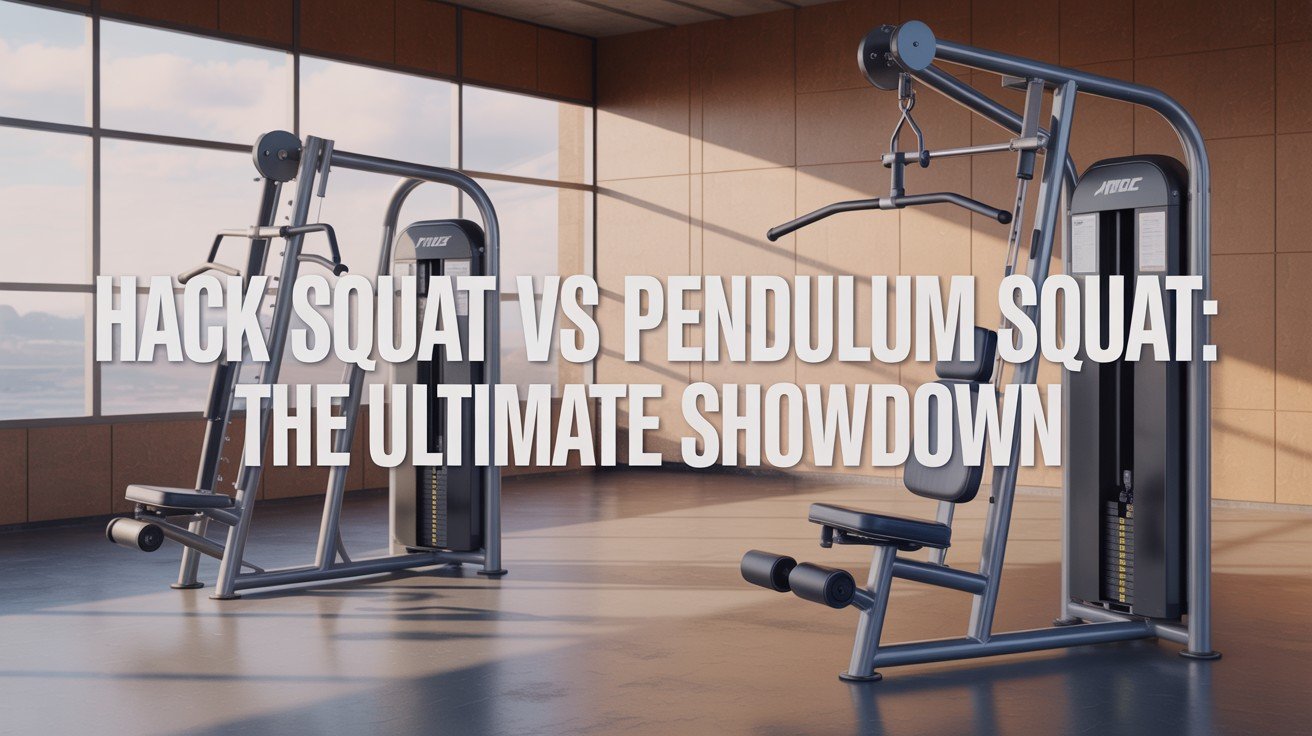
Choosing between the hack squat and the pendulum squat can be confusing because both aim to build strong legs, yet they feel very different once you start using them. Your body mechanics, past injuries, and overall comfort on the machine affect how well your quads, glutes, and hamstrings respond.
From real training experience, these machines do not feel the same for every lifter. One may feel smooth and easy to control, while the other feels uncomfortable or harder to push through. Knowing how each one moves and where it places tension helps you make better choices for steady progress.
This guide explains how both machines work, the muscles they focus on, and what you can expect from each. By the end, you will know which option supports your goals and helps you build stronger legs.
What Is a Pendulum Squat?

The pendulum squat moves in a curved arc pattern like a swing instead of a straight path. This isn’t your typical fixed-track machine. The arc follows your body’s natural movement and allows deeper depth than barbell squats or free weights.
The design gives you serious advantages. Guided and stable movement reduces lower-back stress through controlled motion. Adjustable foot placement lets you shift emphasis between quads and glutes based on your goals.
Your quads do most of the work throughout the entire range of motion. Glutes and hamstrings kick in especially at the bottom position. The deeper you go, the more your glutes fire while hamstrings help control the descent and power you back up.
Benefits of the Pendulum Squat
- Deeper range of motion than most squat variations allow, with the guided path removing fear of losing balance.
- High quad recruitment with significant glute and hamstring involvement throughout the movement.
- Joint-friendly and beginner-friendly since the guided path reduces technical risk and prevents tipping over.
- Multipurpose capability in some models for lunges, split squats, and calf raises beyond just squatting.
- Lower back stays protected while beginners feel confident and advanced lifters enjoy the deep stretch and muscle tension.
What Is a Hack Squat?
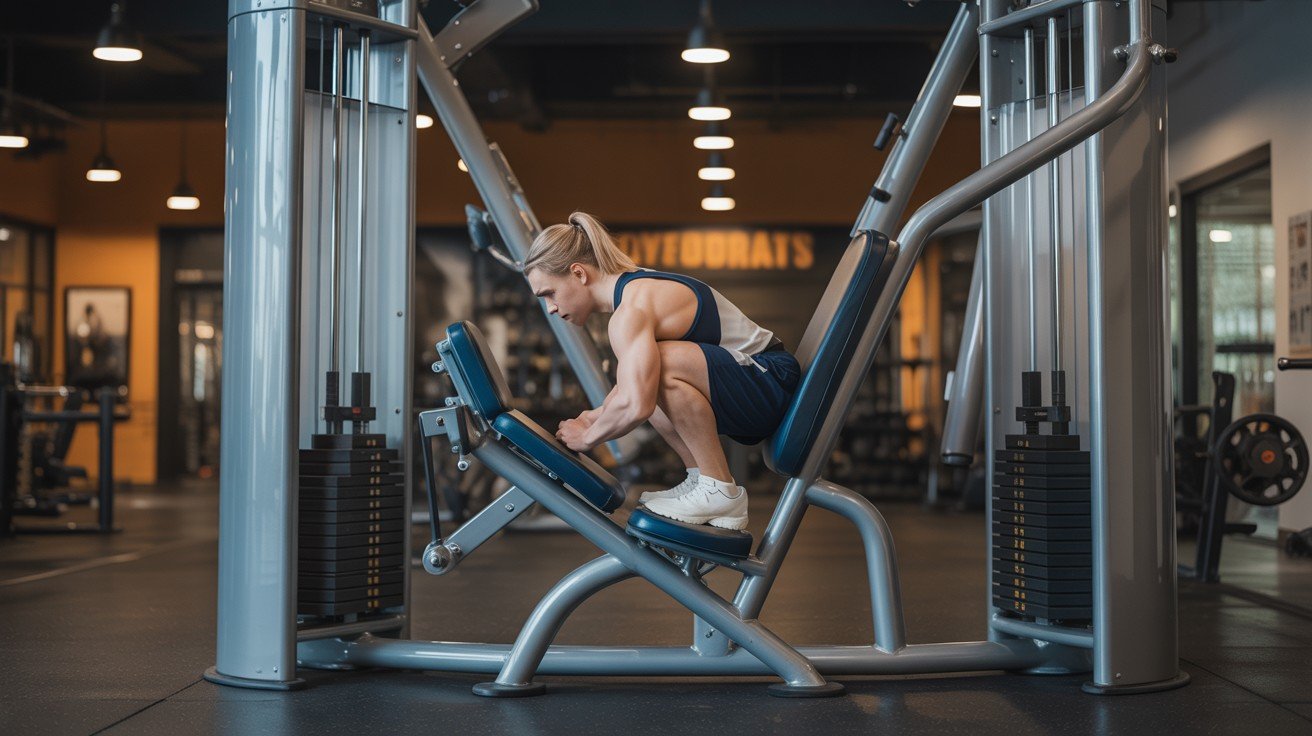
The hack squat machine runs on a vertical or angled track with a fixed straight path. You stand on a platform, lean back against padded supports, and push straight up. The design looks intimidating, but actually makes squatting easier and more stable.
You load weight plates onto the sled above your shoulders while your back and shoulders press against the pads. The supports keep your spine protected from compression and stress throughout the movement. The straight track prevents you from leaning forward or losing your position.
The hack squat is a quad demolisher with your quadriceps doing almost all the work. Glutes, hamstrings, and calves provide secondary support based on foot placement. Higher foot placement engages more posterior chain, while lower placement emphasizes quads even more.
Benefits of the Hack Squat
- Excellent quad isolation with minimal involvement from other muscles, allowing you to target your quads directly.
- Very stable for beginners who lack squatting confidence, with supports that keep you locked in position.
- Allows heavy load progression safely due to the fixed movement path that won’t let you cheat or break form.
- Less technical compared to barbell squats with no balance required, making it easy to master in one session.
- Push to failure safely because the machine catches the weight if you can’t finish a rep, preventing injury.
Direct Comparison: Pendulum Squat vs Hack Squat
These machines look similar but feel completely different when you’re under load. The pendulum moves in an arc. The hack squat moves straight up and down. That difference matters more than you’d think.
| Aspect | Pendulum Squat | Hack Squat |
| Muscle Activation | Hits the entire leg harder with a deeper range of motion and more glute and hamstring involvement | Concentrates fire directly on quads with laser focus and minimal posterior chain work |
| User Experience | “Full-leg fatigue” felt in the glutes for days after training | “Quad burn” that leaves quads screaming, but glutes barely worked |
| Joint Stress | Minimizes lower-back strain through a curved path and reduces spinal loading | A stable path supports heavy loading with proper spinal alignment and back support |
| Safety Profile | Safer for people with lower back issues who need reduced compression | Safer for beginners who lack balance or confidence with rock-solid stability |
| Range of Motion | Allows deeper knee flexion and hip drop due to the curved movement path | Controlled but more limited depth because of the straight track design |
| Muscle Stretch | A deeper range creates more muscle stretch for potentially more growth | Limited range focuses on pure quad overload with heavy weight |
| Learning Curve | More challenging in lower positions, suitable for intermediate lifters | Takes five minutes to learn, easiest for beginners due to the natural pattern |
| Flexibility Requirements | Beginners struggle initially, as flexibility limits the bottom position depth | Accommodates everyone immediately because the supports do half the work |
| Availability | More specialized, found in strength-focused facilities only | Common in commercial gyms everywhere, including budget chains |
| Home Gym Value | Offers multi-functionality for lunges, split squats, and calf raises | Serves one dedicated purpose with similar space requirements |
| Best For | Full-leg development, back issues, intermediate lifters seeking variety | Pure quad isolation, beginners, heavy progressive overload |
| Spotter Needed | No spotter required due to the guided curved path | No spotter required due to fixed straight track |
Real-World User Experiences & Subjective Opinions
I’ve listened to hundreds of lifters compare these machines. Everyone has strong opinions. Some swear by one and hate the other. Your body type and injury history will determine which camp you fall into.
What Users Typically Love About Pendulum Squats
The most common praise I hear: “deepest quad stretch I’ve ever felt.” People with back problems especially love this machine. It lets them squat heavy without spine compression or pain.
Top benefits users report:
- “Deepest quad stretch I’ve ever felt” during the bottom position • Great for people with back issues who can’t barbell squat • Feels more natural for some than a hack squat’s rigid track • Easier to maintain safe form under fatigue without losing position
Lifters with long femurs prefer the pendulum. The arc path accommodates their proportions better. You can maintain good form even when your legs are burning and shaking.
What Users Typically Love About Hack Squats
“Unmatched quad pump” is what I hear most about hack squats. You walk away with your quads so swollen they feel like they might split your skin. The fixed path lets you push to complete failure safely.
Top benefits users report:
- Unmatched quad pump and muscle fullness after every session • Perfect for progressive overload without balance or technique concerns • Great for pushing heavy reps without worrying about stability issues • Reliable for consistent quad growth over time with measurable progress
Competitive bodybuilders love hack squats for quad development. You can load heavy, stay safe, and isolate exactly what you want to grow. The mental energy required is minimal compared to free weights.
Common Complaints About Each
No machine is perfect. Both have legitimate drawbacks depending on your body and goals. Here’s what people actually complain about in real gym conversations.
- Pendulum squat feels unstable for beginners learning the movement pattern, and is harder at the bottom when flexibility is limited.
- Pendulum squat availability is limited as it’s not found in many gyms, especially budget chains, making access difficult.
- Hack squat creates knee pressure for some lifters with poor foot positioning, requiring careful stance adjustment to avoid discomfort.
- Hack squat provides less glute and hamstring involvement, which limits full-leg development compared to the pendulum squat.
- Body proportions affect comfort as tall lifters feel cramped on hack squats while short lifters struggle with the pendulum squat’s excessive range of motion.
Hack Squat vs Pendulum Squat Based on Goals
Your training goal determines which machine wins. Stop asking which is “better” and start asking which fits your specific situation. The answer changes based on what you’re trying to accomplish.
| Training Goal/User Type | Pendulum Squat | Hack Squat |
| Pure Quad Hypertrophy | Provides quad work but engages more muscles, reducing pure isolation | Winner: Allows heavier loading capacity, stable path isolates quads without balance requirements, deep knee flexion with heel elevation for maximum quad stretch |
| Overall Leg Development | Winner: Engages multiple leg muscles throughout the movement arc, higher range of motion works muscles through the full length, and more functional variations are available for weak points | Builds quads well but provides less glute and hamstring involvement, limiting complete lower body development |
| Knee/Back Concerns | Best for back pain: Less back stress due to curved path and reduced spinal loading, keeps spinal compression low | Best for weak stabilizers: More overall support with back pads, safer for beginners who need extra stability |
| Athletes Needing Power & Depth | Winner: Deeper hip flexion matches athletic positions, arc path trains power through natural movement patterns, and builds strength at extreme ranges needed in competition | Works for hypertrophy but doesn’t train functional depth as well, less transfer to sport-specific demands |
| Best Users | Intermediate lifters, athletes (football, Olympic lifting, track), people with back issues, and those seeking balanced leg development | Beginners, bodybuilders focused on quad size, lifters who can safely load heavy weights, and those with weak stabilizers |
| Primary Benefit | Complete lower body development with posterior chain recruitment and athletic carryover | Maximum quad isolation and hypertrophy with progressive overload capacity |
Belt Squat and Other Alternatives
You’re probably wondering where belt squats fit into this discussion. Many lifters compare all three machines when choosing equipment. Belt squats offer unique benefits that neither hack nor pendulum squats provide.
Why Belt Squats Enter the Discussion
Belt squats remove 100% of spinal loading. Zero compression on your back. The weight hangs from a belt around your hips while you squat. This is revolutionary for people with back injuries or pain.
Key benefits:
- Zero spinal loading makes it great for people with back pain or injuries • Strong quad stimulus with less overall fatigue and systemic stress
You can train your legs hard without beating up your spine. Recovery is faster because you’re not taxing your entire nervous system. Lifters with herniated discs can still build legs using belt squats.
How Belt Squats Compare to Pendulum & Hack Squats
Belt squats occupy a middle ground between the other two machines. They provide quad emphasis like hack squats, but with a deeper range like pendulum squats. The lack of spinal load is the game-changer.
Belt squat vs hack squat:
- Similar quad emphasis, but belt squat removes axial load completely • Belt squat allows higher training frequency without spine fatigue
Belt squat vs pendulum squat:
- Pendulum delivers a deeper range of motion through the curved path • Belt squat is more stable for high-volume work without balance concerns
If I could only own one machine, I’d probably choose a belt squat. It’s the most versatile and joint-friendly option. But it doesn’t isolate quads as well as a hack squat or work glutes as much as a pendulum.
How to Choose the Right Machine for YOU?
Stop looking for the “perfect” machine. It doesn’t exist. The right choice depends on your body, your goals, and what equipment you can actually access. Let’s make this decision simple.
Based on Goals
Your training goal makes this decision almost automatic. Match your goal to the machine’s strength. Don’t overthink it.
Choose hack squat for pure quad isolation and maximum hypertrophy. Choose a pendulum for full-leg development and joint-friendly training. Each machine has a clear strength that matches specific goals.
Want massive quads? Hack squat. Want balanced legs? Pendulum squat. Want both? Use both machines on different training days or in the same workout.
Based on Biomechanics
Your body’s structure determines which machine feels better and works better. Some people are built for hack squats. Others thrive on pendulum squats. You won’t know until you try both.
Limb length affects which machine fits your proportions better. Hip structure determines how deep you can squat comfortably. Ankle mobility limits the bottom position depth on both machines.
Tall lifters with long femurs often prefer pendulum squats. Short lifters with good ankle mobility crush hack squats. Your skeleton isn’t wrong find the machine that matches it.
Based on Gym Setup
Your available equipment makes the decision for you sometimes. Work with what you have instead of wishing for what you don’t. Both machines build impressive legs when used correctly.
Home gyms benefit from pendulum squats, offering multipurpose features for lunges, calf raises, and split squats. Commercial gyms typically have hack squats that are more accessible and available in most facilities. Each setup has its advantages based on what’s available.
Building a home gym on a budget? One pendulum squat replaces several machines. Training at a commercial gym? The hack squat is probably already there waiting for you.
Programming Tips for Both Machines
Knowing how to program these machines separates average results from exceptional results. Rep ranges, intensity, and exercise order all matter. Here’s how I program both machines for myself and my clients.
Sets, Reps & Intensity
Different rep ranges create different adaptations. Match your reps to your goal. Heavy weight with low reps builds strength. Moderate weight with moderate reps builds size. Lightweight with high reps creates a pump.
Intensity guidelines:
- Strength: 4-6 heavy reps at 85-90% of your max • Hypertrophy: 8-12 moderate reps at 70-80% of your max • High-volume finishers: 15-20 reps at 50-60% of your max
Start with strength work when you’re fresh. Move to hypertrophy ranges mid-workout. Finish with high-rep burnout sets if you want extra volume. Your muscles need all three stimulus types to maximize growth.
Combining Both in One Leg Day
You can use both machines in the same workout without killing yourself. The key is proper exercise order and managing fatigue intelligently. This combination works well when programmed correctly.
Do hack squats heavy first when you’re fresh for maximum load. Follow with pendulum squats second for additional volume and deep stretch. This sequence optimizes both machines’ strengths.
The hack squat’s stability lets you push heavy weights safely even when fatigued. The pendulum’s deep stretch works well for volume accumulation after strength work. Rest 2-3 minutes between sets of both exercises.
Common Mistakes for Both Machines
Even experienced lifters make basic errors on these machines. Small mistakes rob you of results and increase injury risk. Here’s what I see constantly at the gym and how to fix it.
- Incorrect foot placement that shifts stress to the knees or hips instead of targeting the quads properly
- Not going deep enough wastes the machine’s range of motion benefit and limits muscle development.
- Lack of core stability allows your torso to collapse forward during the movement.
- Locking knees at the top removes tension from muscles and stresses joints unnecessarily.
- Using excessive weight forces partial reps and cheating instead of a controlled full range of motion
Conclusion
Choosing between the hack squat and the pendulum squat can feel unclear because both aim to build strong legs, yet they work differently once you try them. Your body mechanics, injury history, and comfort during the movement all affect which one supports your quads, glutes, and hamstrings more effectively.
From time spent training and observing others, these machines rarely feel the same for two people. One might feel smooth and controlled, while the other feels difficult or uncomfortable. Knowing how each machine moves and where it places tension helps you train with confidence and steady progress.
This guide explains how both machines function, the muscles they focus on, and what you can expect from each. By the end, you will know which option matches your goals and helps you build strong and balanced legs.
Frequently Asked Questions
Which is better for building quads: hack squat or pendulum squat?
The hack squat is better for pure quad isolation and hypertrophy. Its stable path lets you load heavier weights safely with minimal interference from other muscles. The pendulum squat works quads effectively but also engages glutes and hamstrings significantly, making it better for overall leg development rather than quad-focused growth.
Is the pendulum squat or hack squat safer for bad knees?
Both machines are joint-friendly when used correctly. The pendulum squat’s curved path often feels better for people with back issues due to reduced spinal loading. For knee concerns, experiment with foot placement on both machines. The hack squat’s stability may feel safer initially, but individual biomechanics vary significantly.
Can beginners use the hack squat and the pendulum squat?
Yes, but the hack squat is easier for beginners. It takes about five minutes to learn due to its stable, natural movement pattern. The pendulum squat requires more practice because the bottom position feels awkward initially and demands better flexibility. Beginners should start with the hack squat first.
Which machine allows you to lift a heavier weight?
The hack squat allows heavier loading due to its stable, fixed track and back support. The supports keep you locked in position, letting you push maximum weight safely. The pendulum squat’s curved path requires more control and stability, which typically limits how much weight you can handle compared to hack squats.
Can you use both the hack squat and the pendulum squat in one workout?
Yes, combining both works well with proper programming. Do hack squats heavy first when fresh for maximum load, then follow with pendulum squats for additional volume and deep stretch. Rest 2-3 minutes between sets. This sequence optimizes each machine’s strengths without excessive fatigue or overtraining your legs.