Dead stretching is a slow, natural method for sizing up ear piercings without using tapers. This guide will teach you exactly how it works and why it’s safer than traditional methods.
You’ll learn what dead stretching means, how to do it correctly, and what materials work best. I’ve spent years researching safe stretching practices to bring you accurate, tested information.
If you’re ready to start stretching your ears the right way, this article covers everything you need to know.
We’ll walk through each step so you can avoid common mistakes and keep your piercings healthy.
What Is Dead Stretching?

Dead stretching is when you let your piercing naturally expand to fit larger jewelry. You don’t force anything through the hole.
Instead, you wait until your ear tissue relaxes enough to accept the next size up.
Here’s what dead stretching means in simple terms: you insert jewelry that’s slightly heavier or just one size bigger, then wait. Your body does the work.
The weight of the jewelry gently pulls down on your piercing over time. This creates a slow, controlled stretch.
What does dead stretching mean for your ears specifically? It means no pushing, no pain, no tears. Your piercing hole gradually gets bigger on its own schedule. This can take weeks or even months per size.
When people ask “what is dead stretching ears,” they’re asking about this patient process. Your ear tissue is flexible.
Given enough time and the right conditions, it will stretch to accommodate new jewelry sizes.
What is a dead stretching piercing technique? It applies to any piercing, not just earlobes.
Some people use it for septum piercings, nostrils, or other body piercings.
The principle stays the same: let time and gentle weight do the work.
How Dead Stretching Works
Your body naturally adapts to jewelry size through gentle, consistent pressure over time.
Dead Stretching Ears Step-by-Step Overview

Wait months between sizes, go up one gauge at a time, and only size up when jewelry slides in easily.
Healing time matters more than speed. Wait at least 2-3 months between stretches. Some people need 4-6 months, especially at larger sizes.
Sizing up correctly means going one gauge at a time. Never skip sizes. A 1mm jump is ideal.
When are your ears ready? Your jewelry should slide in with minimal effort. If you need to push or it hurts, you’re not ready.
Dead Stretching Septum – Is It Different?

Cartilage stretches slower than earlobes and needs 4-6 months between sizes.
Dead stretching septum piercings require extra care. Your septum is cartilage, not soft tissue like earlobes. Cartilage doesn’t stretch as easily and takes longer to heal.
Extra care tips: Wait 4-6 months minimum between sizes, use extra lubrication, never force anything through cartilage, watch for prolonged soreness, and consider professional help.
Cartilage has less blood flow than earlobes. This means slower healing and higher infection risk if damaged.
Why Kits Beat Random Pieces
Complete kits prevent size-skipping and ensure consistent material quality throughout.
Kits remove guesswork. You get consistent sizing jumps. This prevents accidentally skipping sizes or buying incompatible pieces.
Best sizes to start with: If you have regular pierced ears (18g or 20g), begin with a kit starting at 16g or 14g. Move to 12g, then 10g, then 8g, and so on.
Buying a full kit ensures you won’t be tempted to skip ahead. Each size prepares your piercing for the next.
Kit Pros and Cons

Kits save money and guarantee proper progression but cost more upfront.
Pros: Cost savings compared to individual pieces, matched materials throughout, guaranteed correct sizing progression, and having your next size ready.
Cons: Higher upfront cost, may include sizes you never reach, storage requirements, and quality varies between brands.
Choose kits from reputable body jewelry companies. Check reviews and verify actual measurements.
Dead Stretching vs Tapers: Key Differences
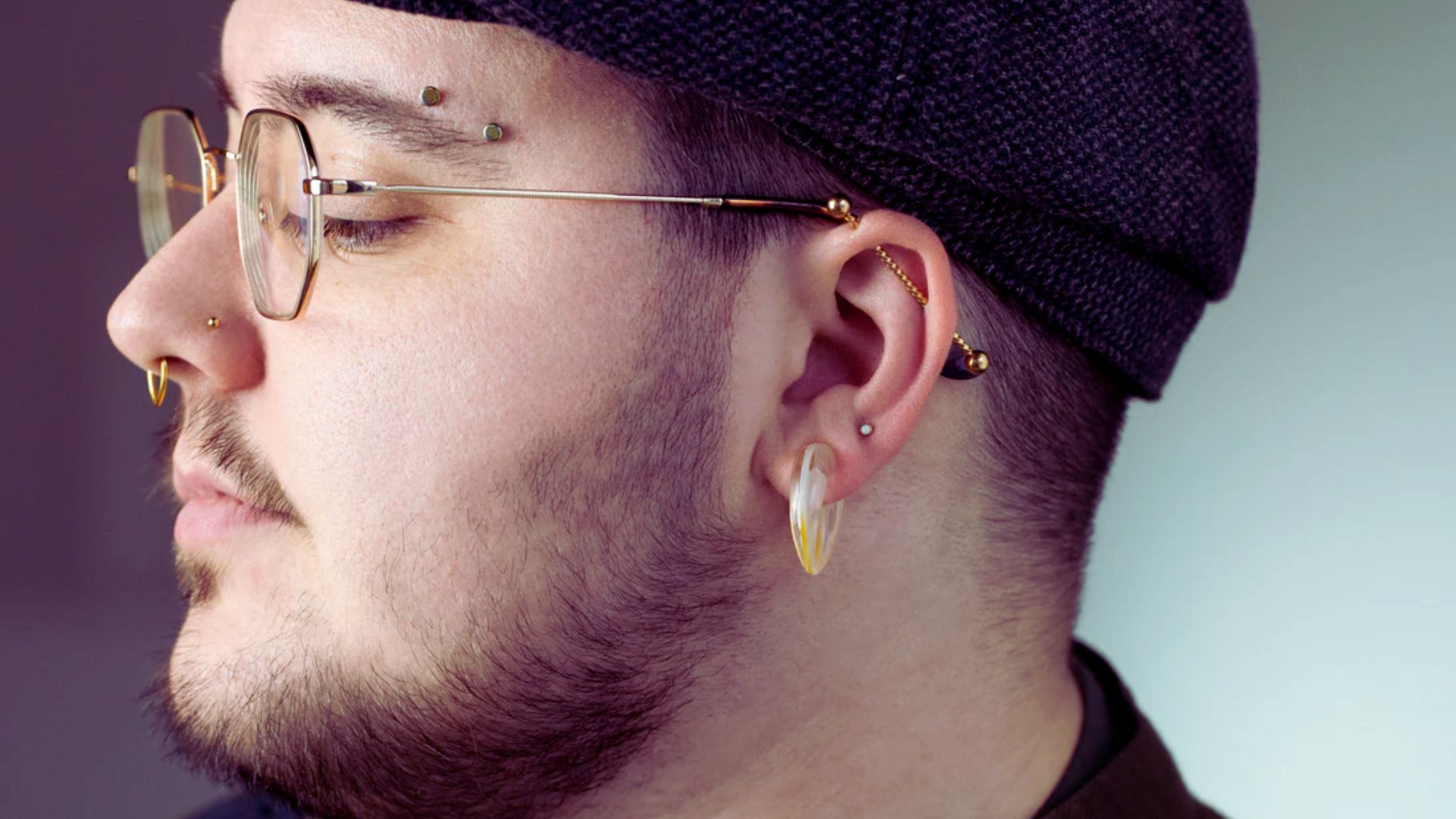
Dead stretching uses time and gravity while tapers force immediate size changes.
| Aspect | Dead Stretching | Tapers |
|---|---|---|
| Method | Insert jewelry one size bigger and wait for natural expansion | Cone-shaped tool forces jewelry through immediately |
| Timeline | Weeks to months per size | Instant size change |
| Tissue Impact | Gradual expansion without tearing | Creates micro-tears and scar tissue |
| Safety | Lower blowout risk, healthier tissue | Higher risk of blowouts and damage |
| Feeling | Jewelry slides in easily when ready | Often painful, requires pushing |
| Professional Opinion | Preferred by most professionals | Used only for very small sizes (18g-14g) |
Risks of Dead Stretching (and How to Avoid Them)

Know the warning signs and stop immediately if you notice pain or damage.
Blowouts happen when you stretch too fast. Tissue pushes out the back, creating permanent scarring.
Irritation comes from dirty jewelry or wrong materials. Keep everything clean and use glass, titanium, or high-quality steel.
Pain means stop. Dead stretching should feel comfortable. Sharp pain, burning, or stinging means damage.
Skipping sizes is the biggest mistake. Each jump should be 1mm or less. Bigger jumps guarantee tears and blowouts.
If you damage your piercing, size down immediately. Go back to your previous size and let it heal 6-12 months before trying again.
Pause stretching if you have any pain, visible damage, bleeding, crusty discharge, or if your next size won’t slide in easily.
Taking breaks doesn’t mean failure. Smart stretchers know when to wait.
Aftercare Tips for Healthy Dead Stretching Ears
Daily cleaning and massage keep your stretched piercings healthy and prevent complications.
- Clean jewelry and piercing daily with saline solution or antimicrobial soap, rinse with warm water, and dry completely before reinserting
- Massage earlobes with jojoba oil, vitamin E oil, or emu oil for 5 minutes daily to increase blood flow and prevent scar tissue buildup
- Stay hydrated and eat protein-rich foods to support tissue repair and keep your piercing channel healthy
- Avoid sleeping on fresh stretches and give ears “naked days” once fully healed to improve circulation
- Monitor for thinning lobes and downsize if needed, as healthy stretched piercings last a lifetime with proper care
Conclusion
Dead stretching works because it respects your body’s natural pace. You’ll avoid most complications by staying patient and using quality materials.
I’ve seen too many people rush and regret it. Take your time. Your ears will thank you years from now. Start with a good glass kit and commit to the waiting periods.
Check out quality dead stretching kits and glass plugs from trusted body jewelry suppliers. Your stretching experience depends on the choices you make today.
Go slow, stay safe, and enjoy the process.
Frequently Asked Questions
What’s Dead Stretching and Is It Painful?
Dead stretching lets your piercing naturally expand to fit the next jewelry size through gentle weight and time. Done correctly, it causes zero pain. Any discomfort means you’re moving too fast.
Can Dead Stretching Be Reversed?
Yes, stretched piercings can shrink if you remove jewelry. Smaller sizes (under 2g/6mm) often close significantly. Larger sizes may shrink but typically leave a permanent hole.
What Is Dead Stretching for Beginners?
For beginners, dead stretching means waiting until jewelry slides in easily before sizing up. Start with glass or titanium single flare plugs, wait 2-3 months between sizes, and never force anything.
What Is Dead Stretching Ears vs Gauges?
Dead stretching is the method, gauges are the measurement system. Gauges (like 14g, 12g, 10g) measure jewelry thickness while dead stretching is how you move between sizes safely.
How Long Does Dead Stretching Take?
Dead stretching takes 2-6 months per size depending on your body. Smaller sizes (14g to 8g) stretch faster while larger sizes need more time. Always prioritize healing over speed.