
I wasted two years doing dumbbell curls with zero bicep growth. My arms stayed flat no matter how hard I worked.
Then one trainer asked me a simple question: “Why aren’t you using cables?” That single switch changed everything.
My biceps finally started growing because of one thing dumbbells can’t provide: constant tension.
Most people never learn proper cable bicep curl form. They miss out on variations like one arm cable bicep curl and high cable bicep curl that target different parts of the muscle.
I’m showing you exactly how to perform every variation correctly. Your arm growth starts today.
What is a Cable Bicep Curl and Why You Should Do It

A cable bicep curl uses a cable machine to create resistance as you curl the handle toward your shoulder. Simple concept, powerful results.
The cable provides constant tension throughout the entire range of motion. Your biceps never get a break, even at the top or bottom.
This beats dumbbells for muscle building. With free weights, tension drops at certain angles. With cables, tension stays consistent from start to finish.
The exercise is also joint-friendly. Less stress on your wrists and elbows compared to barbell curls.
Your mind-muscle connection improves dramatically. You feel exactly where the bicep is working throughout each rep.
Even when performing a one arm cable bicep curl, these benefits apply. The cable doesn’t discriminate based on variation.
How to Perform a Cable Bicep Curl: 7 Key Steps
Proper form makes or breaks your results. Follow these steps exactly for maximum bicep growth.
Step 1: Set Up the Machine

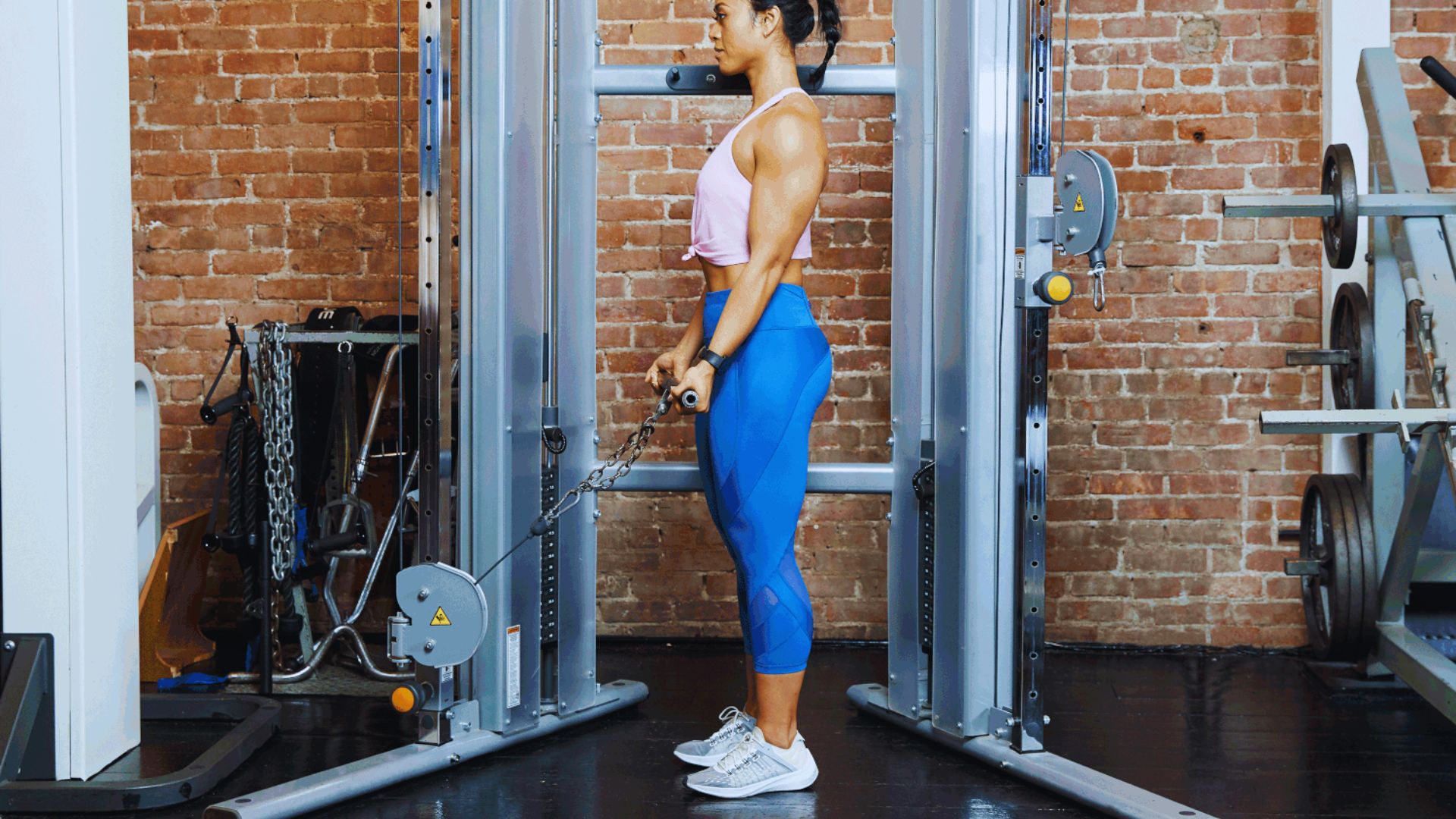
Adjust the pulley to the lowest position for standard curls. Select a weight you can control for 10 to 15 reps.
Attach your chosen handle. A single handle works for unilateral work. A straight bar or rope works for both arms together.
Don’t start too heavy. You’ll sacrifice form and rob yourself of gains.
Step 2: Position Yourself Correctly

Stand upright with feet shoulder-width apart. Keep your knees slightly bent, not locked out.
Engage your core like you’re bracing for a punch. This prevents leaning or using body momentum.
Position yourself about one foot away from the machine. You want slight tension on the cable even at the bottom.
Your posture sets up everything else. Get this wrong and the whole movement falls apart.
Step 3: Grip the Handle Properly

Use an underhand grip with palms facing up. This is the supinated position that targets your biceps best.
Keep your wrist neutral and straight. Don’t let it bend backward or curl forward.
Squeeze the handle firmly but don’t death-grip it. Tension should be in your biceps, not your forearms.
Step 4: Start the Curl

Slowly bend your elbow and curl the handle toward your shoulder. The movement should take about 2 seconds going up.
Keep your elbow tucked against your side. It shouldn’t move forward, backward, or flare out.
Avoid using body momentum. If you’re leaning back or swinging, the weight is too heavy.
Your bicep does all the work. Nothing else should move except your forearm.
Step 5: Squeeze at the Top

Hold the peak contraction for 1 to 2 seconds. This is where maximum muscle activation happens.
Focus on connecting your mind to your bicep. Feel the muscle working and contracting hard.
Don’t rush this part. The squeeze at the top separates okay gains from great gains.
Step 6: Lower the Weight Slowly

Control the descent for 2 to 3 seconds. Don’t let the weight just drop back down.
Maintain constant tension through the entire lowering phase. This eccentric portion builds serious size.
Your bicep should still be working hard even as you straighten your arm.
Letting the weight crash down wastes half the exercise’s effectiveness.
Step 7: Repeat with Proper Form

Perform 3 to 4 sets of 10 to 15 reps. Maintain perfect cable bicep curl form on every single rep.
If your form breaks down, stop the set. Bad reps don’t build muscle, they build injuries.
Try variations like the high cable bicep curl or single arm cable bicep curl for variety. Different angles hit your biceps in new ways.
Cable Bicep Curl Variations You Should Try

Adding variations prevents plateaus and targets your biceps from multiple angles. Here are the best ones.
One arm cable bicep curl isolates each arm individually. This fixes strength imbalances between your left and right side.
You’ll notice if one arm is significantly weaker. Address it before the gap gets worse.
High cable bicep curl starts with the pulley set above shoulder height. This emphasizes the upper portion of your bicep and creates a better peak.
The movement feels different but the burn is incredible.
Single arm cable bicep curl is basically the same as one arm variation. The terms get used interchangeably.
The benefit is the same: focused attention on one bicep at a time with no cheating.
Benefits of Cable Bicep Curls
Understanding why this exercise works helps you commit to doing it correctly. The benefits are hard to ignore.
Key advantages:
- Constant tension: Cable resistance never drops throughout the movement
- Joint-friendly: Less wrist and elbow strain compared to barbells
- Adaptable weight: Perfect for beginners and advanced lifters alike
- Better mind-muscle connection: You feel exactly where the bicep is working
- Versatile angles: Adjust pulley height for different bicep stimulation
- Unilateral options: Fix imbalances with single arm variations
These benefits stack up over time. Consistent cable work builds arms that actually grow, not just arms that get sore.
Equipment Needed

You don’t need much to perform cable bicep curls effectively. Here’s what you’ll use.
A cable machine with adjustable pulley is essential. Most gyms have at least one, usually several.
Attachments give you options. A single handle works for one arm cable bicep curls. A straight bar or EZ curl bar works for both arms. A rope attachment creates a different grip angle.
If you’re training at home without a cable machine, resistance bands work as an alternative. Anchor them low and curl the same way.
The resistance curve isn’t quite identical to cables, but bands still provide that constant tension advantage over dumbbells.
Tips for Perfect Cable Bicep Curl Form
Small form tweaks make massive differences in your results. Pay attention to these details.
Form requirements:
- Keep elbows tucked: Don’t let them drift forward or flare to the sides
- Engage your core: Prevent body sway and momentum stealing
- Use slow, controlled motion: 2 seconds up, 1 second squeeze, 3 seconds down
- Don’t grip too hard: Focus tension in biceps, not forearms
- Full range of motion: Go from fully extended to fully contracted
- Breathe properly: Exhale on the curl up, inhale on the way down
Form beats weight every single time. I’d rather see you curl 20 pounds with perfect technique than 50 pounds with sloppy momentum.
Conclusion
Your next arm day is where everything changes. No more excuses about genetics or slow growth.
I challenge you to replace your first bicep exercise with cables for the next 30 days. Track your arm measurements on day 1 and day 30.
The difference will be undeniable if you commit to proper form and actually show up consistently.
Stop scrolling and start curling. Your biceps won’t build themselves sitting on the couch.
Which cable variation are you testing first? Drop your answer below and hold yourself accountable.
Let’s see who’s still committed in a month. The pump is waiting for you.
Frequently Asked Questions
Can I do cable bicep curls at home?
Yes, with resistance bands or home pulley systems. Anchor the band low and use the same form cues as cable curls.
Should I use heavy weight for cable bicep curls?
Focus on form first, heavy weight can compromise technique. Build up gradually while maintaining perfect control throughout each rep.
What’s the difference between a cable curl and dumbbell curl?
Cable curls maintain constant tension throughout the movement, while dumbbells vary resistance with gravity. Cables keep muscles working harder at all points.
How do I know I’m doing the curl correctly?
Keep elbows tucked, move slowly, and feel peak contraction at the top. Your bicep should burn without body momentum helping.
How often should I include cable curls in my workout?
2 to 3 times per week with proper rest for recovery. Your biceps need time to repair and grow between sessions.