Assault bikes are no longer just for elite athletes. They are showing up in home gyms and fitness centers everywhere. And for good reason.
This article covers what makes assault bikes so effective, who should use them, and how to get the most out of every session.
You will also find workout tips, real user insights, and answers to common questions.
Whether you are a beginner or a seasoned trainer, this guide will help you train smarter and see real results.
What Is an Assault Bike and How Does It Work?

Understanding how this machine works helps you use it better and get more from your training.
An assault bike uses a large fan as its resistance source. The harder you pedal and push, the more resistance the fan creates.
This means there is no cap on how intense your workout can get. It grows with your effort.
Unlike standard stationary bikes, an assault bike has moving handlebars. You push and pull them while pedaling at the same time.
This motion activates your arms, shoulders, chest, and back alongside your legs. Your core works the entire time to keep you stable.
Top Assault Bike Benefits for Full-Body Fitness
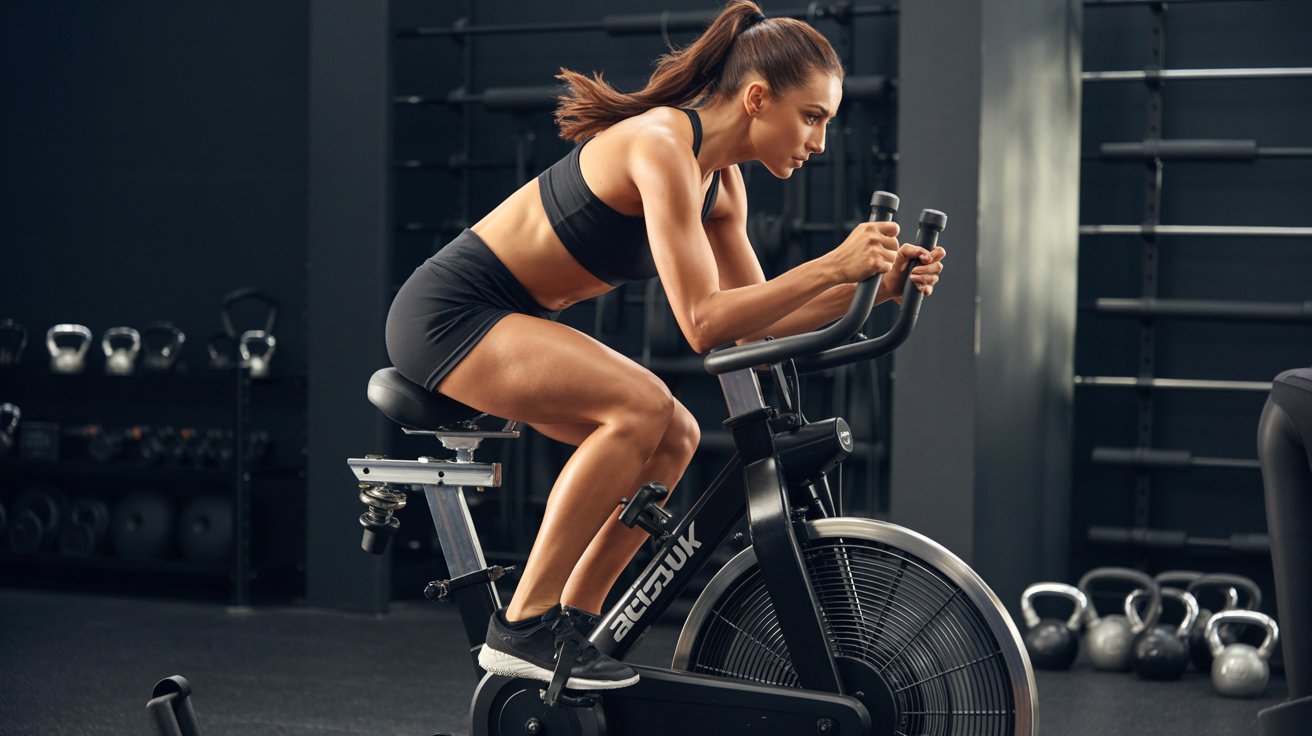
These benefits explain why so many people are adding the assault bike to their regular training routine.
Full-Body Muscle Engagement
Your legs drive the pedals. Your arms push and pull the handles. Your core braces throughout.
All of this happens in one continuous movement, conditioning multiple muscle groups at the same time.
Improves Cardiovascular Endurance
Regular sessions push your heart and lungs to work harder. Over time, your heart pumps more efficiently and your stamina improves in daily life and other physical activities.
Supports Aerobic and Anaerobic Training
For aerobic work, ride at a steady pace to build base fitness. For anaerobic work, go all out in short bursts to increase power and burn more calories. You simply change how hard you push.
High Calorie Burn for Weight Loss
Because so many muscles work at once, your body burns more energy per minute. The afterburn effect keeps your metabolism elevated for hours after you finish riding.
Low-Impact but High-Intensity Exercise
The circular motion is smooth and gentle on your joints. This makes it a strong option for people recovering from injuries or anyone who wants intense cardio without the wear and tear of running.
Builds Strength and Muscular Endurance
The self-regulating resistance means your muscles always work against a load that matches your output.
Over time, this builds endurance in your arms, legs, and core while also developing explosive strength.
Time-Efficient Workouts
A 20-minute session with intervals can match the benefit of a much longer steady-state workout. Even 10-minute sessions done consistently can produce measurable results over time.
Sample Weekly Workout Plan
A balanced weekly plan helps you build fitness without overtraining.
Day 1 – HIIT Session

Start the week with 15 minutes of high-intensity intervals. Go hard for 20 seconds and rest for 40 seconds. Repeat 8 to 10 times.
This gets your heart rate up fast and burns a solid amount of calories in a short time.
Day 2 – Rest or Light Activity

Give your body a break. You can go for a light walk or do some gentle stretching. Avoid anything intense so your muscles can start recovering from Day 1.
Day 3 – Steady-State Ride

Ride at a steady, moderate pace for 25 minutes. You should feel challenged but still able to breathe comfortably. This session builds your aerobic base and supports fat metabolism.
Day 4 – Strength Training with Bike Intervals

Pair your resistance exercises with short bike intervals. After each strength set, hop on the bike for 30 seconds at high effort. This keeps your heart rate elevated and adds conditioning volume to your session.
Day 5 – Rest

Take a full rest day. Sleep well, stay hydrated, and let your muscles repair. Rest is where progress actually happens.
Day 6 – Mixed Session

Combine HIIT and steady-state riding in one session. Start with 10 minutes of intervals, then finish with 15 minutes at a moderate pace. This challenges both your aerobic and anaerobic systems in a single workout.
Day 7 – Rest

Close out the week with complete rest. Reflect on your progress, stay consistent, and get ready to repeat the cycle next week.
Air Assault Bike Benefits Compared to Other Cardio Machines

Seeing how the assault bike stacks up against other equipment helps you make a better choice for your goals.
Assault Bike vs Treadmill
Treadmills create a significant impact on the knees and hips over time. The assault bike keeps movement low-impact while still reaching high heart rates and engaging your upper body.
Assault Bike vs Elliptical
Elliptical resistance is usually preset and limited. The assault bike resistance is infinite. The harder you go, the harder it gets, making it far more effective for serious conditioning.
Why the Air Bike Stands Out
No other cardio machine offers the same combination of unlimited resistance and full-body activation.
The assault bike fits into any training style, from beginner cardio to elite conditioning. That combination is rare in a single piece of equipment.
Assault Bike Benefits for Different Fitness Goals

The assault bike supports a wide range of fitness goals depending on how you train.
Weight Loss and Fat Burning
Short bursts of maximum effort followed by rest periods are highly effective for fat loss. The assault bike makes this type of training straightforward and measurable.
Strength and Endurance Building
Longer, steady efforts build muscular endurance and aerobic capacity. This is valuable for anyone who wants to feel stronger and perform better over time.
Sports Performance Training
Athletes use the assault bike to build power and conditioning without extra joint stress. It trains both aerobic and anaerobic systems required in competitive sports.
General Fitness and Beginners
Beginners can ride at a comfortable pace and still activate major muscle groups. As fitness improves, intensity and session length can increase gradually.
Common Mistakes That Reduce Assault Bike Benefits
Avoiding these errors helps you train more effectively and stay injury-free.
- Poor Posture and Setup – Adjust the seat so your knees have a slight bend at the bottom of each pedal stroke. Keep your back straight and core tight throughout the ride.
- Using Only Legs – Push and pull the handles with equal effort to activate your arms, chest, and back for a true full-body session.
- Starting Too Intense – Start at 60 to 70 percent effort and build gradually. Let your body adapt before pushing to maximum intensity.
- Ignoring Recovery – Include rest days, stay hydrated, and give your muscles time to recover between hard sessions.
- Skipping Warm-Up – Always spend 3 to 5 minutes at low intensity before pushing hard. Jumping straight into intense effort increases the risk of muscle strain and poor performance.
Tips to Get the Most Out of Assault Bike Workouts
Small habits and consistent actions lead to big results over time.
- Start with shorter sessions and increase gradually
- Keep proper posture and hand position throughout every ride
- Track your sessions, including time, distance, and effort
- Mix interval training with steady riding to target different goals
- Commit to a regular schedule, even if sessions are short
Conclusion
The assault bike delivers real results for anyone willing to put in the effort.
After trying dozens of cardio machines over the years, I keep coming back to the assault bike. It is honest. You get out exactly what you put in. No settings to fiddle with. No excuses. Just effort and results.
If you are looking for a machine that builds strength, burns fat, and conditions your entire body in one session, this is it.
Start slow, be consistent, and trust the process. Drop a comment below and share how the assault bike has worked for you. I would love to hear your story.
Frequently Asked Questions
What are the main assault bike benefits?
It works your entire body, improves cardiovascular endurance, burns calories efficiently, and supports both strength and fat loss.
Is an air assault bike good for weight loss?
Yes. High-intensity sessions burn a large number of calories and keep your metabolism elevated well after the workout ends.
How often should you use an assault bike?
Three to five sessions per week works well. Mix intense days with lighter rides and allow recovery time between hard efforts.
Is it beginner-friendly?
Yes. Beginners can ride at a comfortable pace and still get a solid workout. The resistance adjusts automatically to your effort.
What are the disadvantages of assault bikes?
The main drawbacks are fan noise, high initial difficulty for beginners, and a short learning curve with the push-pull movement.