The angled Smith machine squat is one of the most overlooked exercises in the gym.
If you’ve stood under that bar and felt unsure about foot placement or which way to face, you’re not alone. I’ve been there too.
In this guide, I’ll walk you through everything, from basic setup to common mistakes. You’ll get clear steps, form tips, and answers to the questions most people forget to ask.
I’ve trained with Smith machines for years, and I know what works.
Let’s get started.
Angled Smith Machine Squat Basics

The angled Smith machine moves on a fixed rail that tilts slightly, usually between 5 and 7 degrees.
This angle mimics a more natural squatting path compared to a straight vertical machine. The bar travels in a guided track, so your stabilizer muscles do less work.
This makes it a solid choice for beginners building confidence or for lifters recovering from injury. Still, good form matters just as much here as with a free barbell squat.
Which Way to Face on an Angled Smith Machine
The direction you face changes the feel of the entire movement. Try both and see what works for your body.
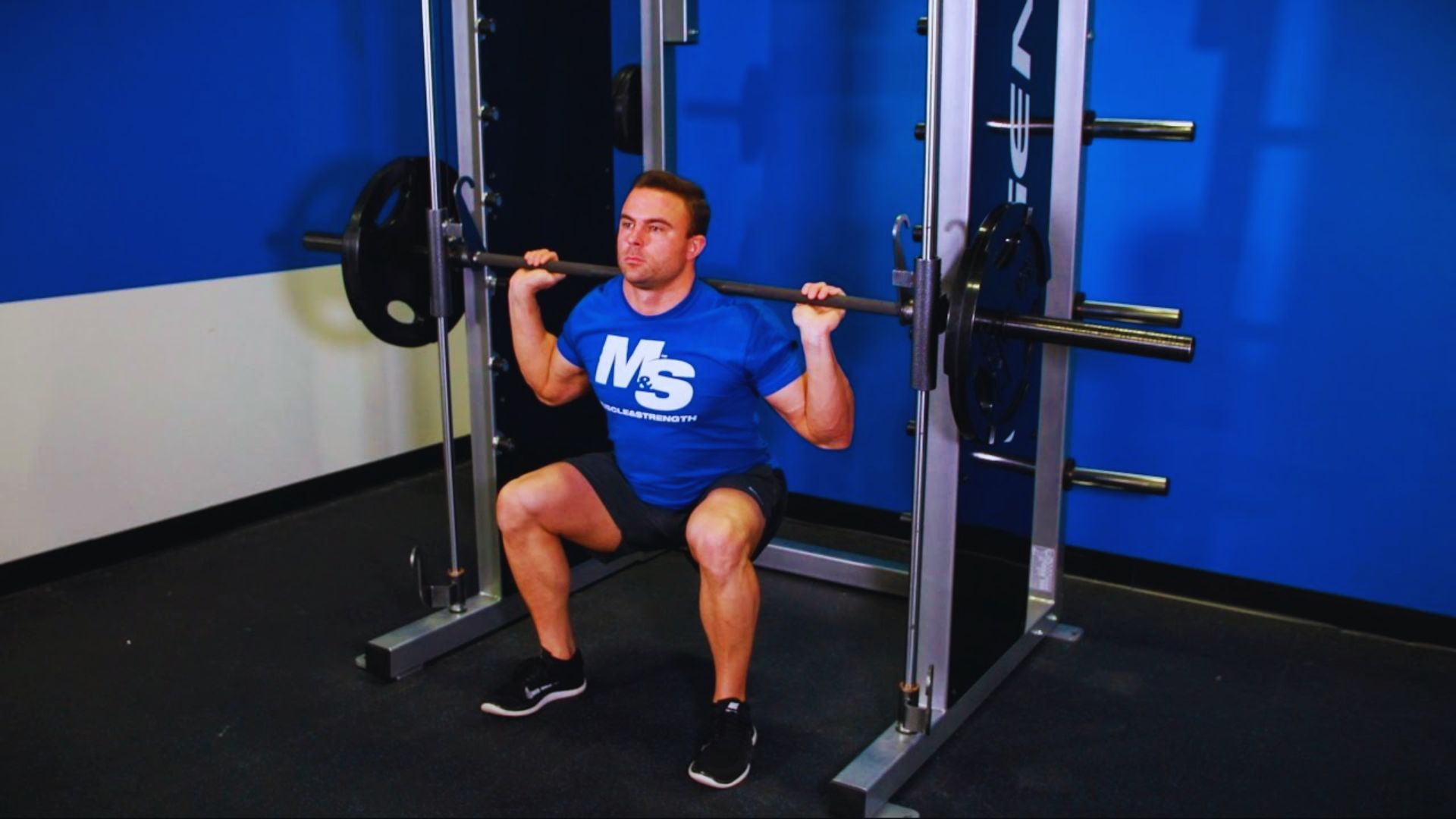
Facing Toward the Machine
Facing the machine gives you a more controlled movement path. The angle supports your natural squatting motion, making it a go-to choice for beginners.
Your knees track better, and the bar path feels less forced. If you’re new to this machine, start here.
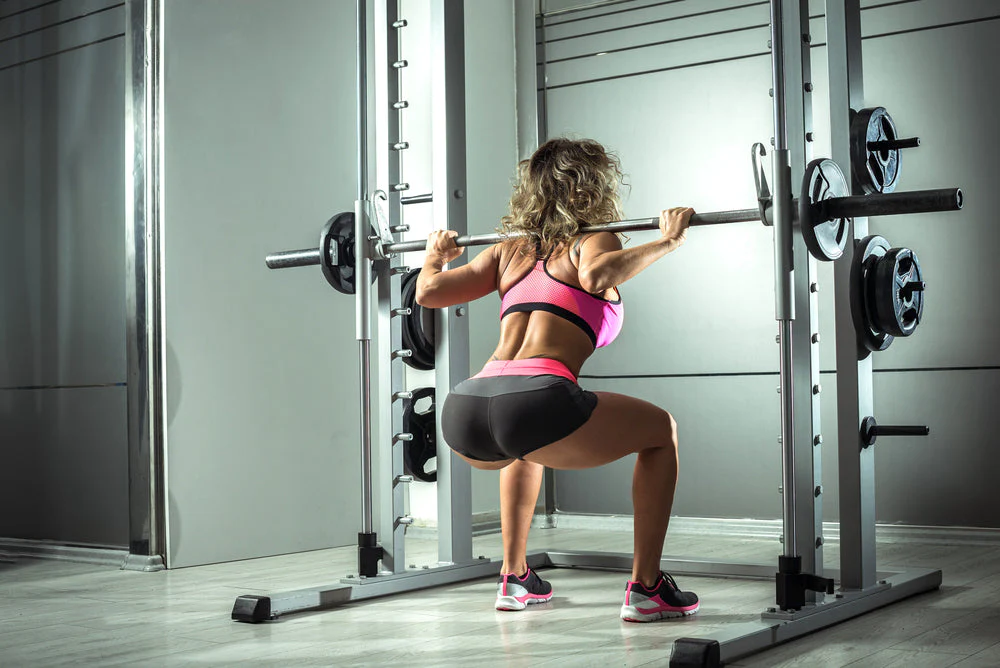
Facing Away from the Machine

Facing away adds more challenges. Your glutes and quads work harder because the bar angle shifts the load differently.
Experienced lifters often prefer this direction for greater muscle engagement. It takes more body awareness, so build up to it gradually.
How to Do the Angled Smith Machine Squat

Follow these steps carefully. Each one sets you up for a safer, more effective rep.
Step 1: Set the Bar Height Position the bar at about shoulder level so you can unrack it comfortably without standing on your toes.
Step 2: Position Your Feet Slightly Forward Stand with feet shoulder-width apart and slightly in front of your body to match the machine’s angled path.
Step 3: Brace Your Upper Body Place the bar on your upper back, keep your chest up, and engage your core to maintain a stable spine.
Step 4: Lower With Control Bend your knees and hips to descend slowly, keeping your back straight and knees tracking over your toes.
Step 5: Drive Up Through Your Heels Push through your heels to return to the starting position, fully extending your hips at the top.
Benefits of the Angled Smith Machine Squat
The angled Smith machine squat gives you real results when done right. Here’s what you gain.
- The guided bar path reduces the risk of losing balance, making heavy sets feel more controlled.
- It lets you focus on quad and glute activation without worrying about stabilizing a free bar.
- The fixed track is great for injury recovery, since you can control the range of motion easily.
- It works well for progressive overload, you can add weight in small increments with more confidence.
- It fits any fitness level, from first-timers learning to squat to advanced lifters adding volume.
Key Form Tips
Good form makes the difference between results and injury. Keep these five points in mind every single set.
- Keep your core tight from start to finish, a loose core puts pressure on your lower back.
- Don’t let your knees cave inward; push them out in line with your toes throughout the movement.
- Lower yourself slowly, a two to three second descent gives your muscles more time under tension.
- Avoid locking your knees at the top; keep a slight bend to protect the joint.
- Look straight ahead, not down, a neutral neck helps maintain a straight spine.
Conclusion
The angled Smith machine squat is worth adding to your leg day.
I remember the first time I used a Smith machine, I had no idea which way to face or where to put my feet. Once I figured out the setup, the movement clicked fast.
Now you have the steps, the tips, and the know-how. Give it a try on your next leg day and see how it feels.
If this helped you, drop a comment below or share it with a gym friend who needs it.
Frequently Asked Questions
Is the angled Smith machine better than a regular squat?
It depends on your goal. The angled Smith machine offers more control and stability. Free squats build more overall strength because they engage stabilizer muscles more.
How far should my feet be in front of the bar?
Your feet should sit slightly forward of your hips, not directly below the bar. This matches the machine’s angle and keeps your knees from traveling too far forward.
Can beginners use the angled Smith machine squat?
Yes, it’s actually a great starting point. The guided bar helps beginners learn squat mechanics without the balance challenges of a free barbell.
How much weight should I start with?
Start light, even just the bar. Focus on form first, then add weight in small steps once your movement feels solid and consistent.
Should I use a squat pad on the Smith machine?
You can if the bar feels uncomfortable on your upper back. However, learning to position the bar correctly on your traps is worth the effort over time.