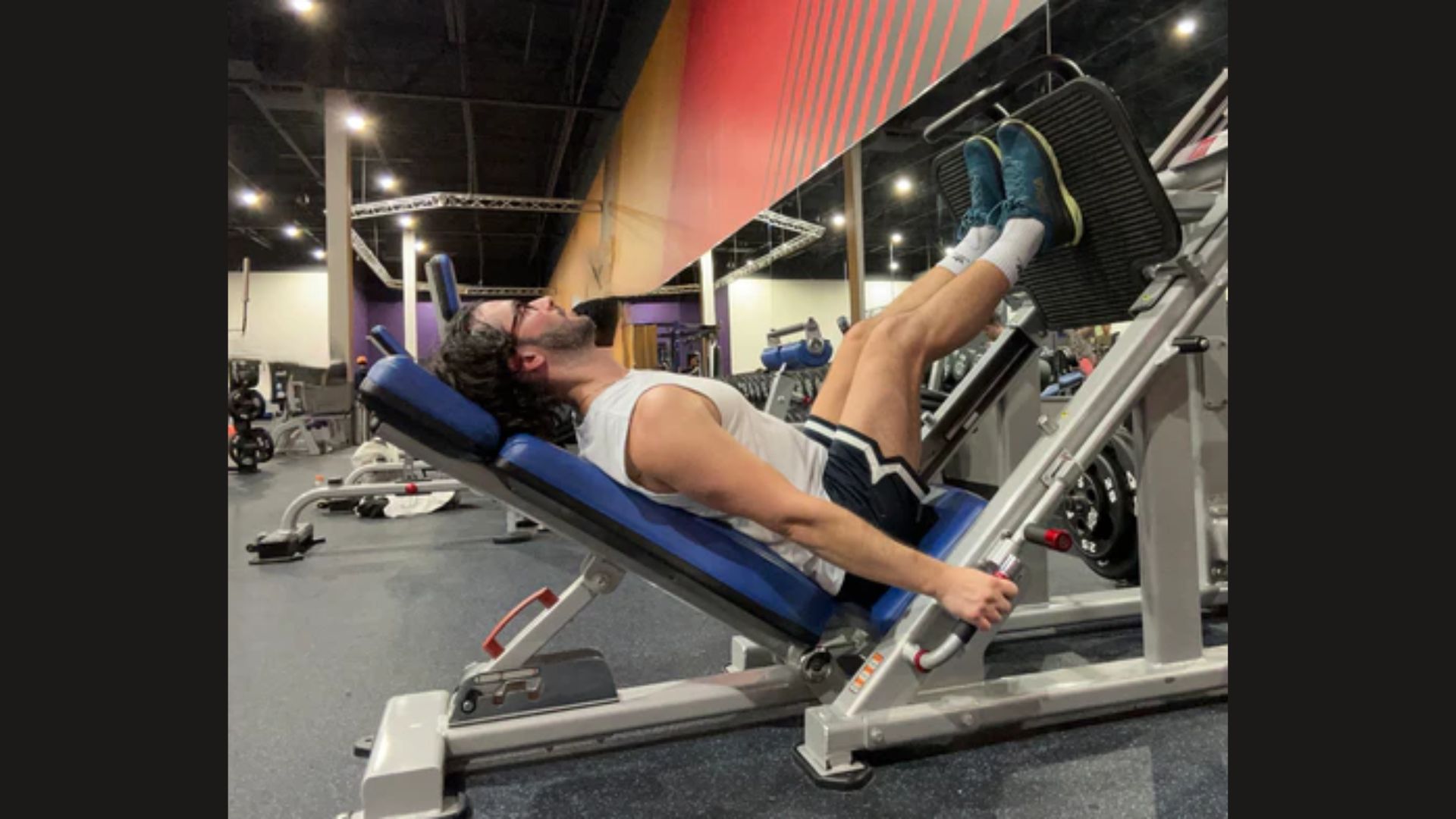
I pressed heavy on leg day for months. My quads were sore every time.
My glutes? Barely felt a thing. Nobody told me that foot placement was the whole game.
Most people just load up the machine and push. But where your feet sit on that platform decides which muscles actually do the work.
Get your leg press foot placement for glutes right and you’ll finally feel that burn where it counts.
So what’s the correct position? What are you doing wrong right now? And how do you fix it fast?
Let’s get into it.
Why Foot Placement Matters on the Leg Press
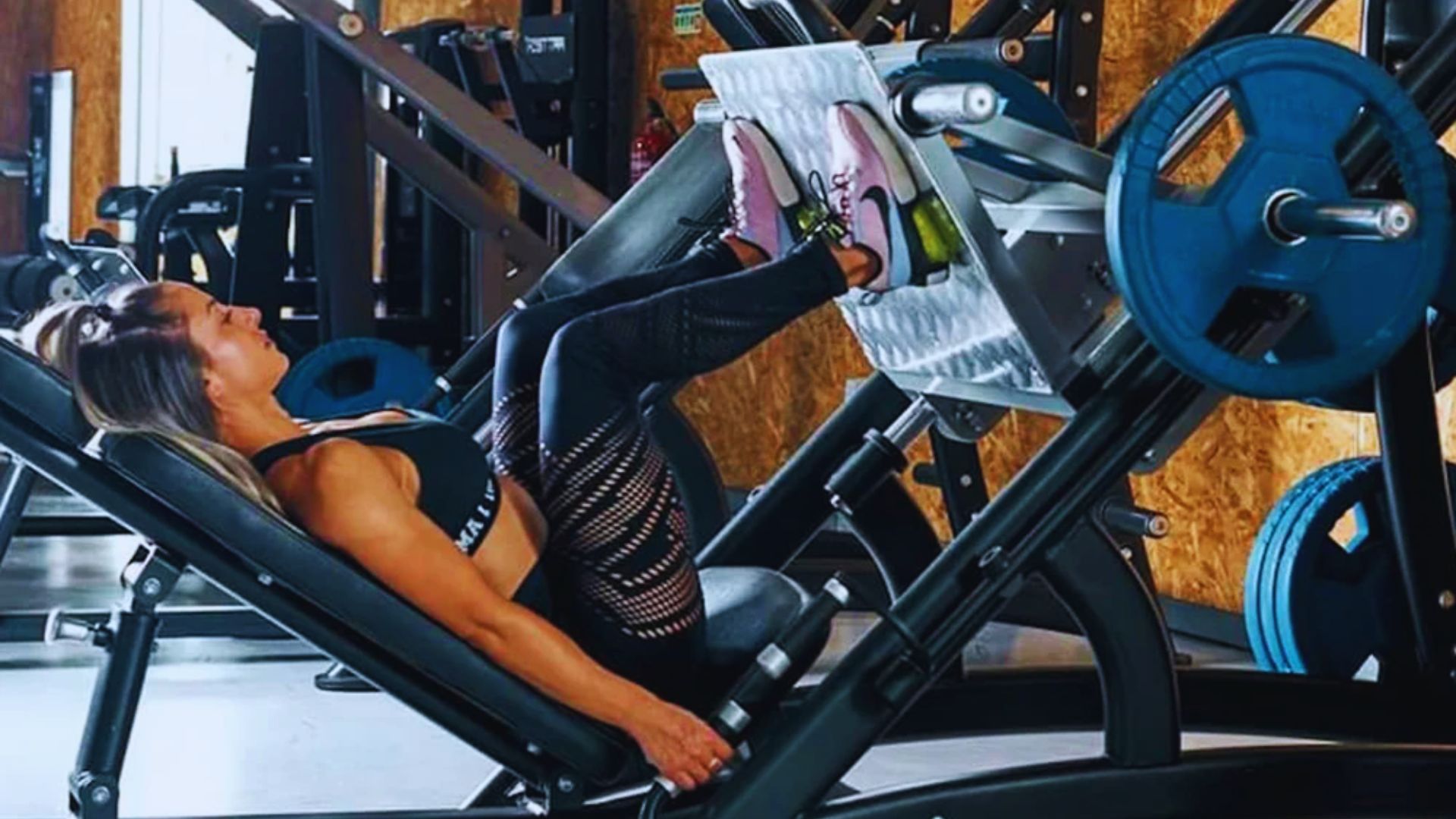
Where you place your feet decides which muscles do the work. Move them lower and your quads take over. Move them higher and your glutes and hamstrings have to step up.
This comes down to biomechanics. A higher foot position increases hip flexion during the movement. More hip flexion means more glute involvement. It’s that straightforward.
Quad-dominant pressing happens when your knees travel far past your toes. Glute-dominant pressing happens when the hips are doing most of the bending and extending.
Your range of motion matters too. The deeper you press, the more your glutes get stretched and loaded. Cutting the movement short means leaving most of the glute work on the table.
Best Leg Press Foot Placement for Glutes (Step-by-Step Guide)
These are the exact adjustments I made that finally got my glutes firing on leg press. Go through each one and apply them in order.
Step 1: Position Your Feet Higher on the Platform
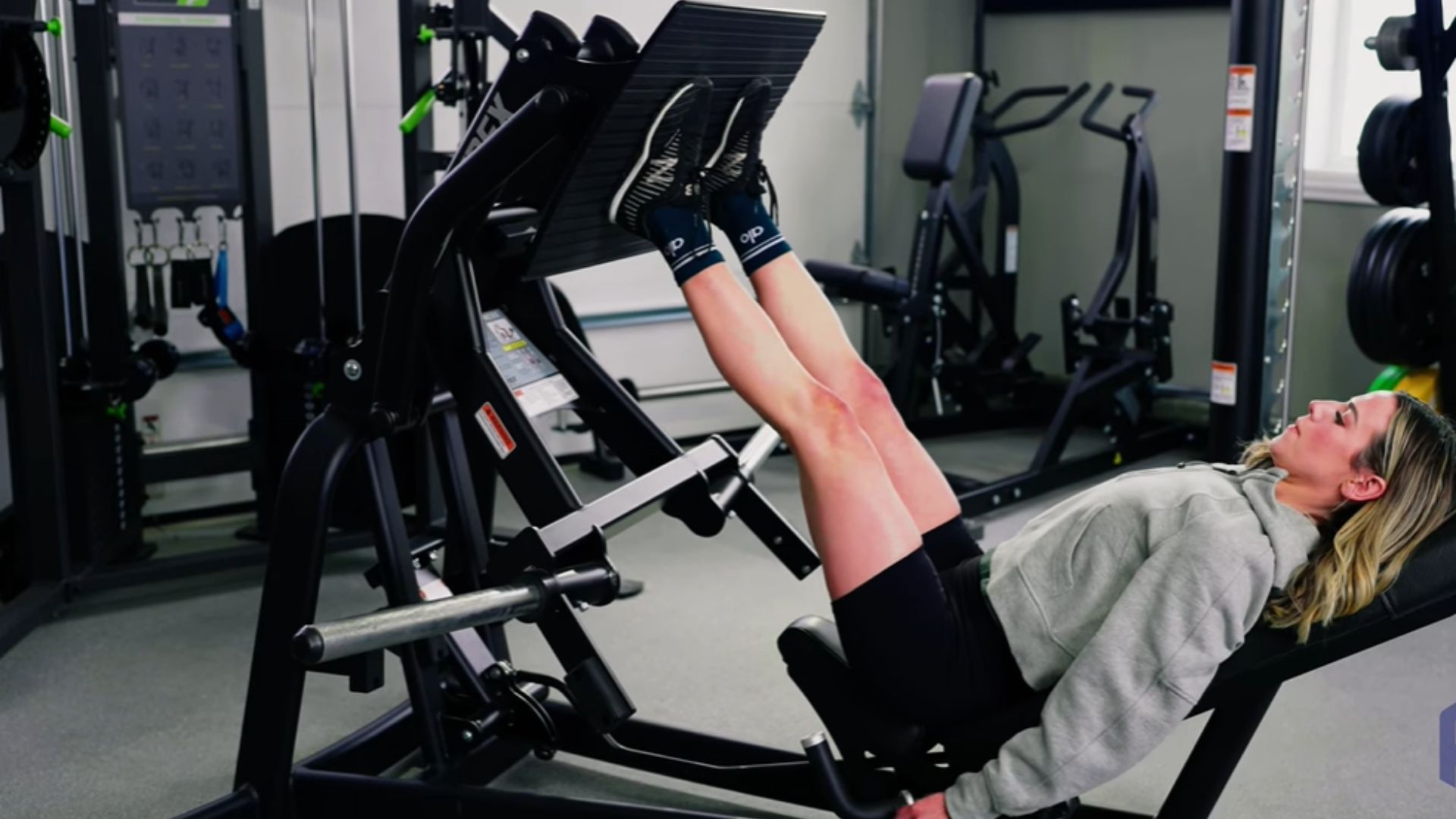
Placing your feet in the upper half of the platform is the single biggest change you can make for glute activation. It increases the amount of hip flexion at the bottom of the rep.
More hip flexion means your glutes are stretched further under load. That stretch is where the real growth stimulus comes from.
A lower foot position shortens that range and puts the stress on your knees and quads instead. If you’ve been pressing with your feet in the middle or lower section, move them up now.
Step 2: Use a Shoulder-Width to Slightly Wider Stance
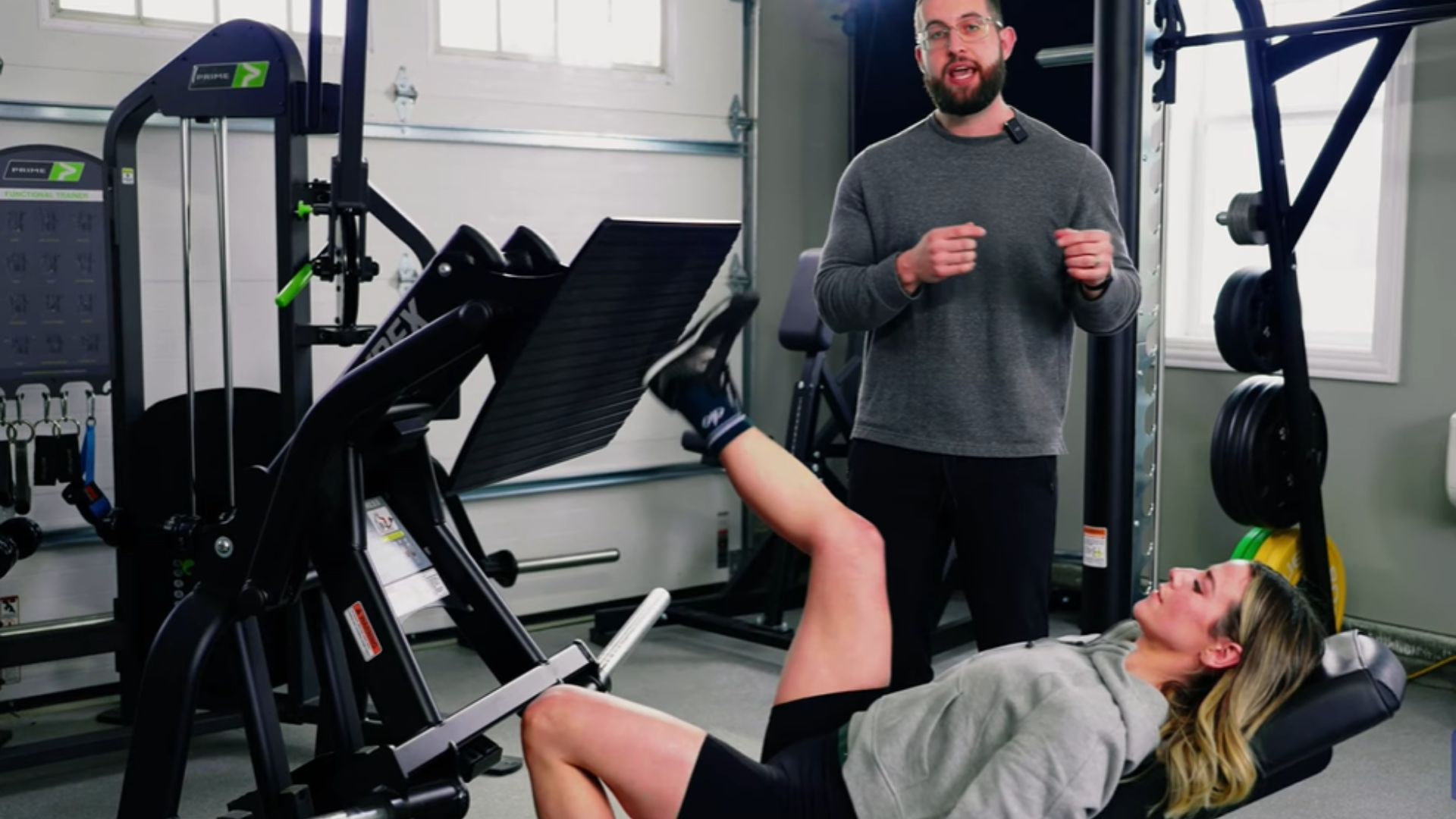
A shoulder-width stance or just slightly wider gives your hips room to flex properly. That space is what allows the glutes to engage through the full range of motion.
A narrow stance closes off the hips and forces the quads to compensate. You’ll feel it in your knees before you ever feel it in your glutes.
Going too wide has its own issues and can stress the hip joints. Shoulder-width is the sweet spot for most people.
Step 3: Turn Toes Slightly Outward
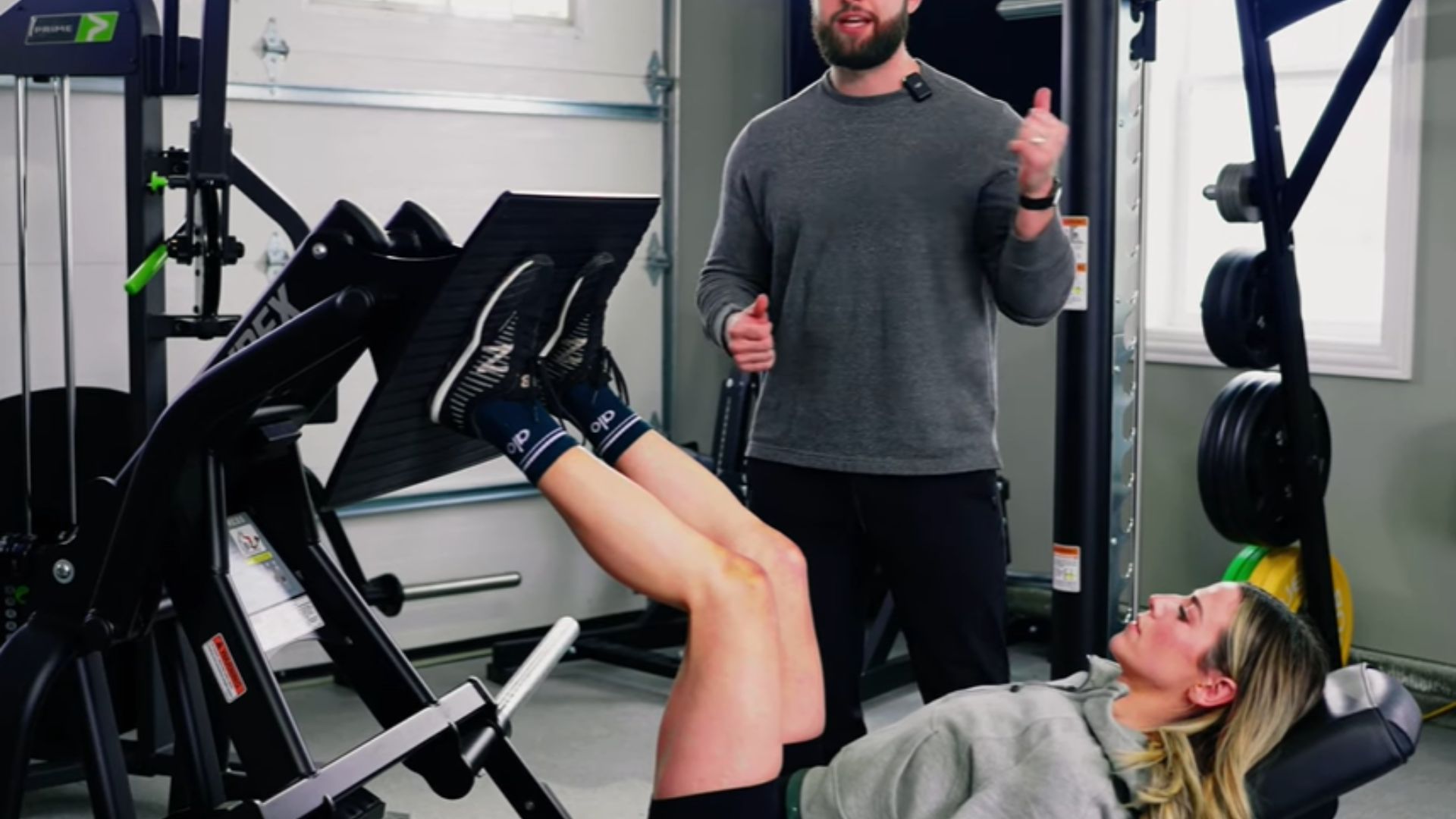
Point your toes out at roughly 15 to 30 degrees. This small adjustment makes a real difference in how much glute max you recruit.
It works by improving hip external rotation during the press. Your glute max is a hip external rotator, so this position puts it in a better mechanical spot to contract.
Don’t overdo it. A slight angle is enough. Forcing your feet too far out can strain the knees over time.
Step 4: Push Through Your Heels
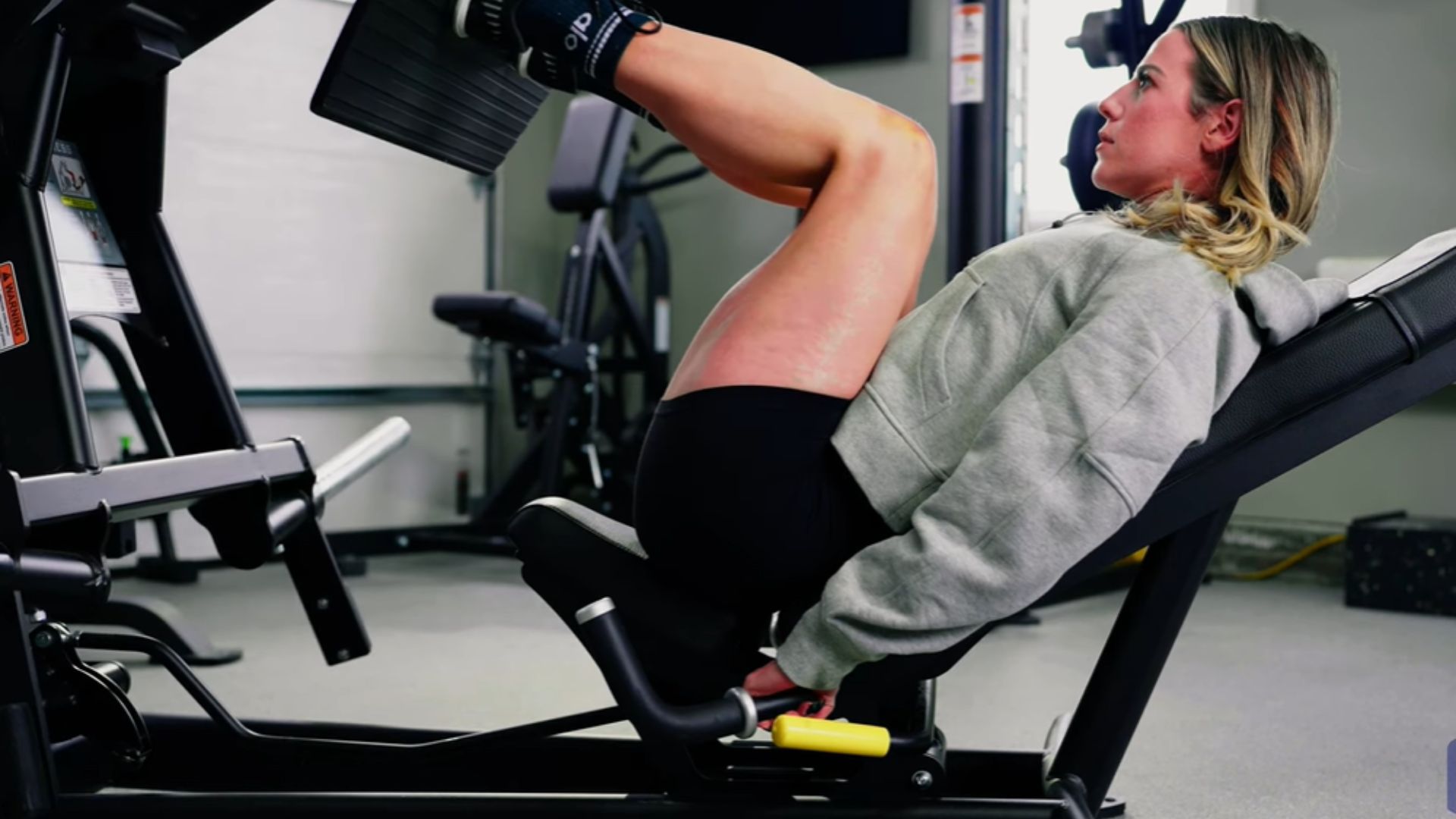
This cue alone fixed my glute activation more than anything else. When you push the platform away, drive through your heels, not your toes.
Pressing through your toes shifts the focus forward to the quads. Pressing through your heels keeps the tension back at the hips and glutes where you want it.
Think of it this way. Try to keep your toes lightly touching the platform but not pressing into it. Let your heels do the driving.
Step 5: Control the Eccentric (Lowering Phase)

The lowering phase is where your glutes get their biggest stretch. Rushing through it is one of the most common ways people lose glute gains on this exercise.
Lower the platform slowly, around two to three seconds down. Go as deep as your hip mobility allows while keeping your lower back flat against the pad.
Partial reps cut off the bottom of the movement where glute activation peaks. Full range, controlled reps will always beat half reps with heavier weight.
Seated Leg Press Foot Placement for Glutes (Key Adjustments)
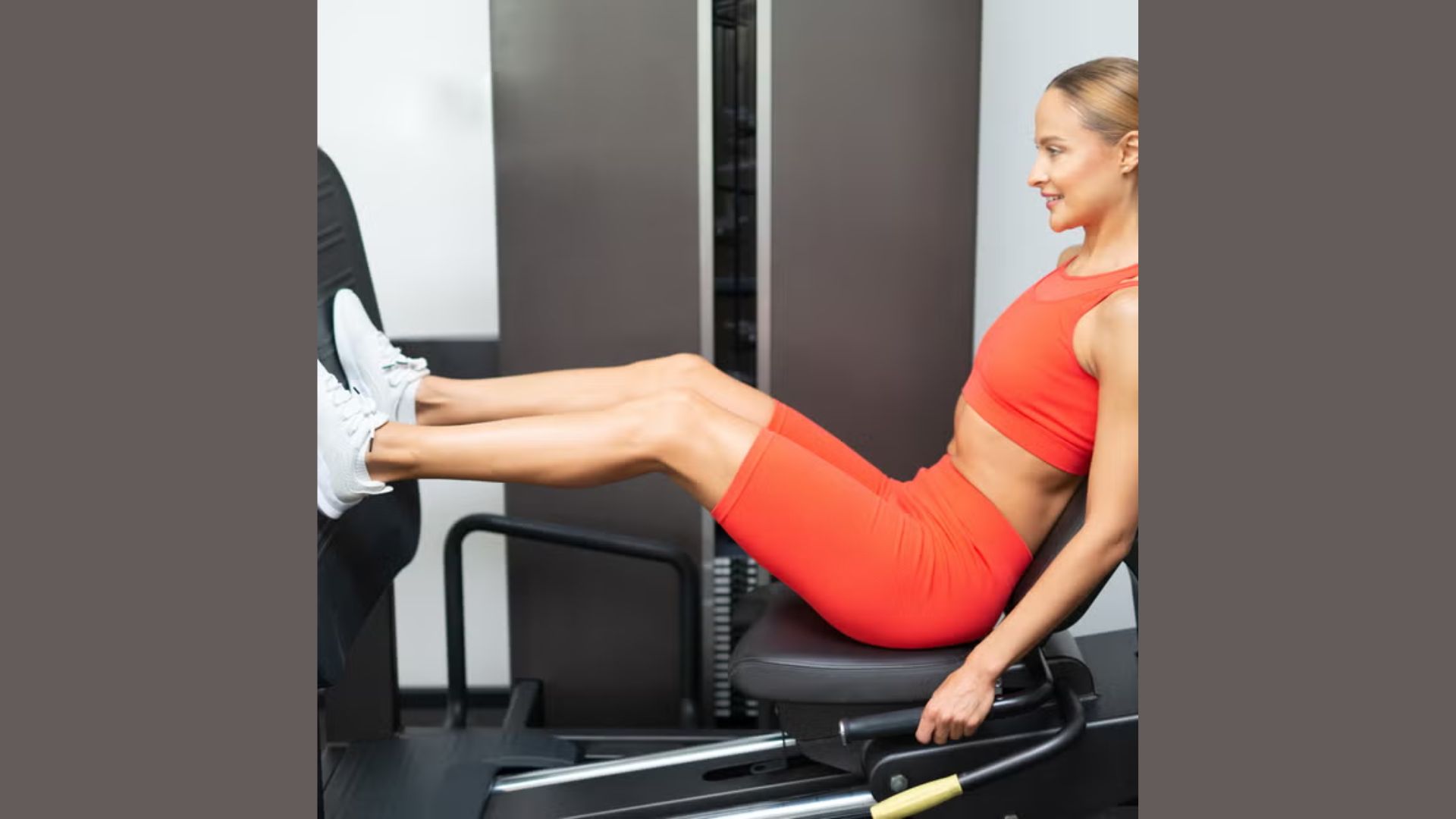
The seated leg press works a little differently from the standard 45-degree machine. The angle of your hips at the start position is more upright, which changes how the muscles load.
Getting your seated leg press foot placement for glutes right takes a few extra adjustments.
Here’s what to focus on:
- Feet high and slightly wide: Same principle applies here. High placement increases hip flexion even with the upright seated angle.
- Keep your lower back pressed into the seat: If your hips tuck under at the bottom, you’ve gone too deep for your current mobility. Reduce the range slightly.
- Knees track over toes: Don’t let them cave inward. That shift reduces glute engagement and stresses the joints.
- Toes still slightly outward: The same 15 to 30 degree angle works just as well on the seated version.
Small tweaks like these make the seated version just as effective for glute work as the angled machine. Don’t skip them.
Common Foot Placement Mistakes That Kill Glute Activation
Most people don’t realize their foot placement is costing them glute growth. These mistakes are easy to make and just as easy to fix once you know what to look for.
Watch out for these:
- Feet too low on the platform: This is the most common issue. Low placement puts the stress directly on the quads and takes the glutes out of the equation.
- Stance too narrow: A narrow stance closes the hips and makes quad dominance almost unavoidable.
- Pressing through the toes: This shifts tension forward and away from the glutes completely.
- Cutting the range of motion short: Partial reps mean you never reach the depth where glute stretch and activation are highest.
- Letting knees cave inward: This reduces hip external rotation and pulls the glutes out of the movement.
Fix these first before adding more weight or volume. Form issues compound over time and make progress harder, not easier.
High vs Low Foot Placement (Glutes vs Quads Explained)
The difference between high and low foot placement is bigger than most people think.
Here’s a simple breakdown:
|
Feature |
High Foot Placement |
Low Foot Placement |
|
Primary muscles worked |
Glutes and hamstrings |
Quads |
|
Hip flexion |
Greater |
Lower |
|
Knee stress |
Less |
More |
|
Glute stretch at bottom |
Deep and effective |
Minimal |
|
Best for |
Glute growth, hip strength |
Quad development |
|
Range of motion feel |
Hip-dominant |
Knee-dominant |
If glute growth is your goal, keep those feet high. Simple as that.
Pro Tips to Maximize Glute Growth on Leg Press
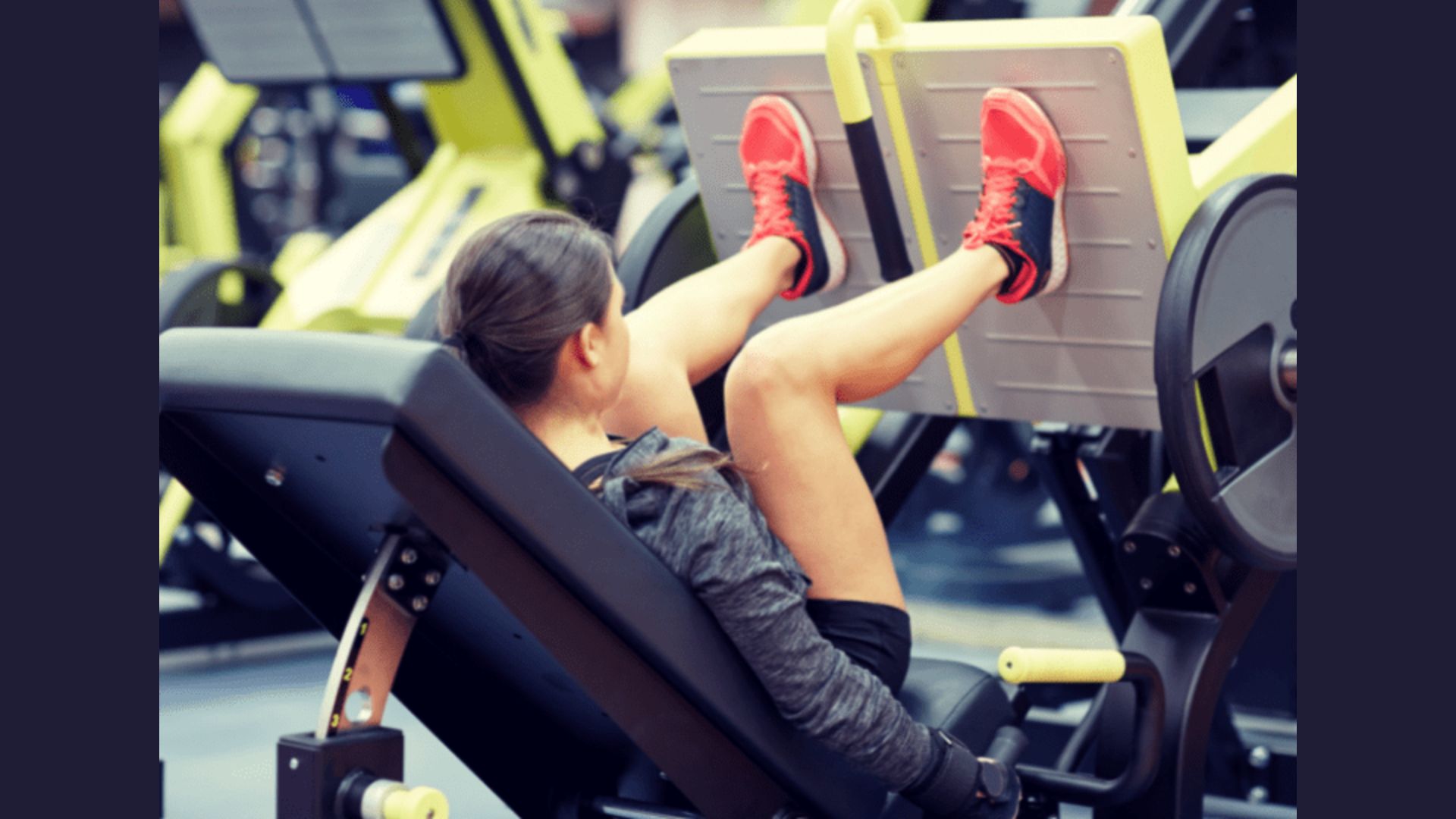
Getting the foot position right is a great start. But these extra tips are what separate average results from real progress.
- Add a pause at the bottom: Hold the deepest position for one to two seconds on each rep. This removes momentum and forces the glutes to work harder to push back up.
- Try single-leg pressing: One leg at a time increases the load on each glute individually and fixes imbalances between sides.
- Use a mind-muscle cue: Before each set, squeeze your glutes once. That pre-activation helps your brain connect to the muscle during the actual movement.
- Go lighter than you think: Most people ego-load the leg press. Dropping the weight and focusing on full range will do more for your glutes than stacking plates with half reps.
- Finish with straight arm pulldowns or hip thrusts: Pairing leg press with a glute isolation move at the end of a session reinforces the activation pattern.
Small adjustments done consistently beat big changes done occasionally. That applies here more than anywhere.
Conclusion
Here’s the truth. Most people will read this, nod along, and then plant their feet in the exact same spot they always have. Don’t be that person.
Your next leg session is a chance to actually test this. One small change in foot position can make a rep feel completely different.
The glutes don’t grow from guessing. They grow from doing the right things repeatedly.
So go try it. Then come back and tell me how it felt in the comments. And if this helped, share it with someone who’s been blaming genetics for flat glutes.
Frequently Asked Questions
What Is the Best Leg Press Foot Placement for Glutes?
Place your feet high on the platform, shoulder-width or slightly wider, with toes angled out about 15 to 30 degrees. This position increases hip flexion and shifts the load directly onto the glutes.
Does Higher Foot Placement Really Target Glutes More?
Yes, placing your feet higher increases hip flexion during the press, which moves the emphasis from the quads to the glutes and hamstrings. It’s one of the most effective adjustments you can make on this machine.
Is Seated Leg Press Effective for Glutes?
Yes, the seated leg press can be very effective for glutes as long as you apply the right foot placement and go deep enough to stretch the muscle. Small adjustments to position and depth make a big difference.
How Deep Should I Go on Leg Press for Glutes?
Go as deep as your hip mobility allows while keeping your lower back flat against the pad. The deeper the range of motion, the more your glutes are stretched and loaded under tension.
Why Do I Feel My Quads More Than Glutes on Leg Press?
This usually comes down to low foot placement, a narrow stance, or not going deep enough into the rep. Adjusting all three at once will shift the tension back to where it belongs.