
I trained my back for a year before realizing I was only building half of it. Wide from the front. Flat from the side. Zero depth.
The lat pulldown vs seated row choice isn’t a choice. These exercises build completely different parts of your back.
I found this after reading lat pulldown vs seated row reddit threads wondering why my physique looked unbalanced. \
The lat pulldown vs seated row benefits hit different muscles entirely.
Let me show you what one year of mistakes taught me about building a complete back.
Lat Pulldown vs Seated Row: Why This Comparison Matters

Compound pulling exercises build your entire back. But not all pulls work the same muscles equally.
Lat pulldowns are vertical pulls. Seated rows are horizontal pulls. This difference changes everything.
One builds width. The other builds thickness. Beginners need both from day one. Athletes use both for complete development.
What Is a Lat Pulldown?

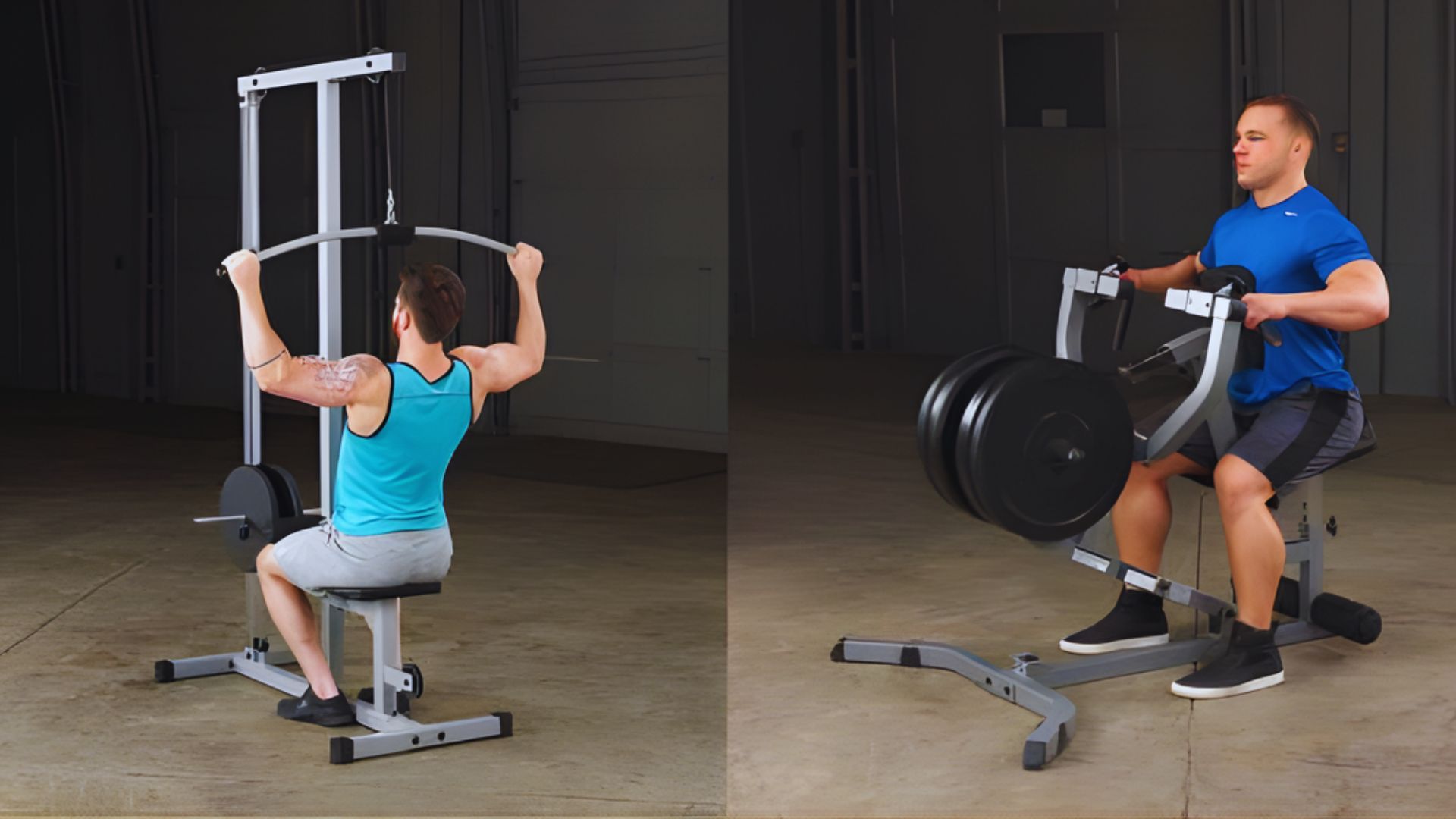
A lat pulldown involves sitting at a cable machine and pulling a bar down from overhead to your upper chest.
The movement mimics a pull-up but with adjustable resistance. It dominates every back program for good reason.
Muscles Targeted in the Lat Pulldown
Your latissimus dorsi does most of the work. These are the massive wing muscles on your back sides.
The biceps, rhomboids, trapezius, and rear deltoids all fire as secondary movers. Your core and forearms stabilize throughout.
Lat pulldowns specifically target back width. That’s why bodybuilders use them to build the classic V-taper from shoulders to waist.
How to Perform the Lat Pulldown Effectively
Proper form on lat pulldowns took me months to nail down. I see people butcher this movement daily.
Step-by-step execution:
- Sit with thighs secured under the pad
- Grip the bar slightly wider than shoulder width, palms facing away
- Pull shoulder blades down and back before starting
- Drive elbows down and back toward your hips
- Bring the bar to upper chest, torso slightly leaned back
- Squeeze shoulder blades together hard at the bottom
- Control the weight back up slowly over 2-3 seconds
- Breathe out during the pull, breathe in on the way up
Focus on feeling your lats contract. If your biceps burn more than your back, you’re doing it wrong.
What Is a Seated Row?
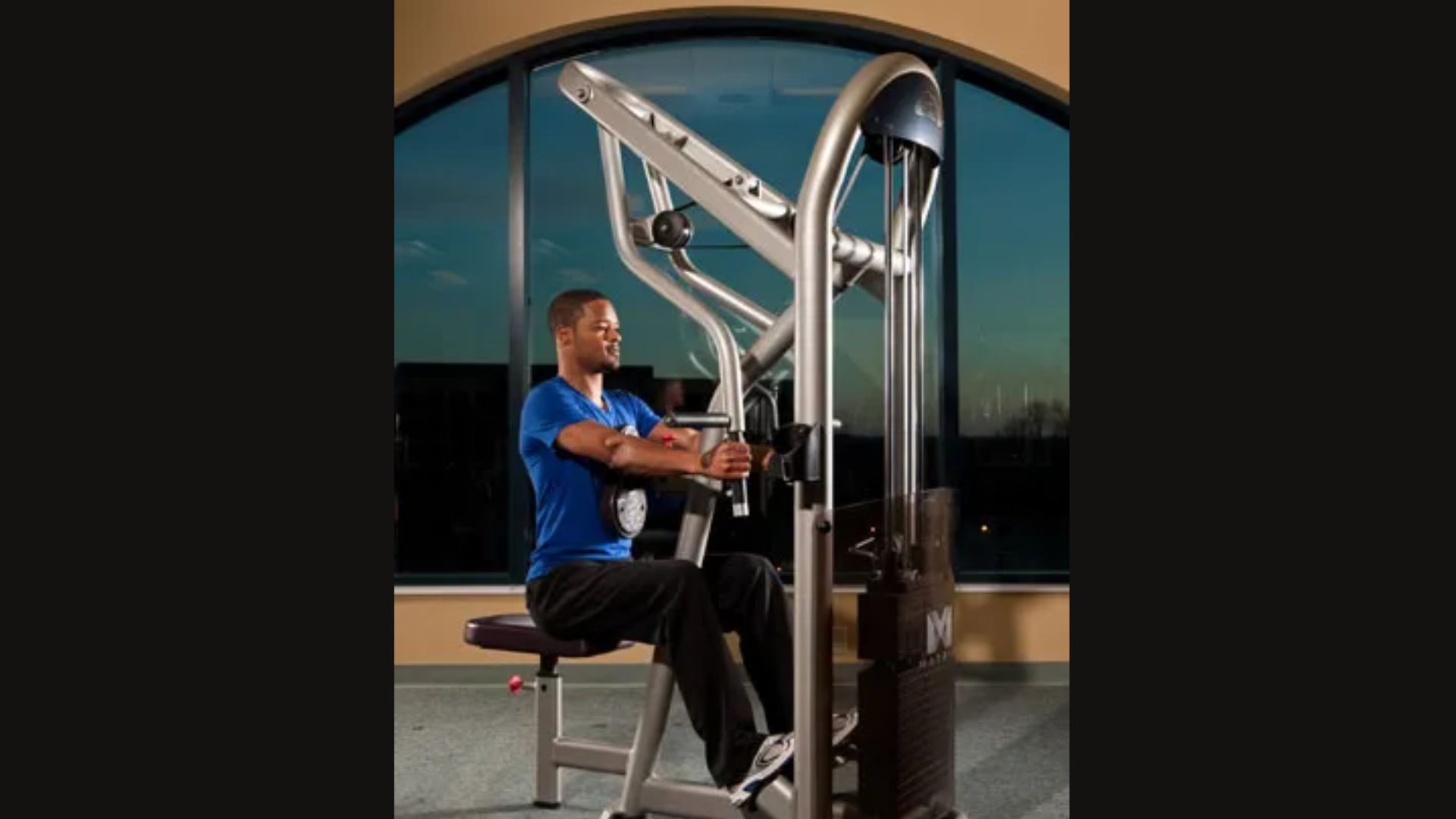
A seated row has you sitting upright pulling a handle toward your midsection. Your feet brace against a platform.
You pull the handle straight back while keeping your back neutral. This builds thickness that makes you look massive from the side.
Muscles Targeted in the Seated Row
Your rhomboids and middle trapezius get hammered as primary movers. These muscles between your shoulder blades do the heavy lifting.
The lats, biceps, and rear deltoids work as secondary movers. Postural muscles in your lower back and core keep you stable.
Seated rows focus on back thickness. They build that dense, powerful look from the side.
How to Perform the Seated Row Effectively
I changed my entire back development when I fixed my seated row form. The difference showed up in four weeks.
Execution breakdown:
- Sit upright with chest out and slight natural arch in lower back
- Plant feet firmly with knees slightly bent
- Start with arms fully extended and shoulder blades protracted forward
- Pull the handle to your lower ribcage by driving elbows straight back
- Squeeze shoulder blades together at peak for 1 second
- Slowly extend arms back out under control
- Keep torso stable, minimal rocking
Your back should feel pumped after rows. Not your lower back or biceps.
Lat Pulldown vs Seated Row: Key Differences
Understanding these differences changed how I program back training. Here’s the exact comparison.
| Feature | Lat Pulldown | Seated Row |
|---|---|---|
|
Movement pattern |
Vertical pull |
Horizontal pull |
|
Main muscles worked |
Latissimus dorsi |
Rhomboids, middle traps |
|
Back development focus |
Width and V-taper |
Thickness and density |
|
Skill level |
Beginner-friendly |
Beginner-friendly |
|
Best for goals |
Wide back, pull-up strength |
Thick back, posture |
These exercises complement each other. One builds width from the front. The other builds thickness from the side.
Use both to develop a complete back that looks impressive from every angle.
Lat Pulldown vs Seated Row Benefits for Strength and Hypertrophy

The lat pulldown vs seated row benefits stack differently. I program both for every client.
Lat pulldowns build vertical pulling strength and create that wide shoulder-to-waist ratio. Seated rows dominate for posture correction and thickness.
Prioritize lat pulldowns for pull-up strength or width. Focus on seated rows if posture or thickness matters more.
Beginners should do both from day one. Your back needs both movement patterns for balanced development.
Which Is Better for Your Fitness Goals?

For wider backs, lat pulldowns win. For better posture, seated rows are superior.
Athletes benefit more from lat pulldowns for explosive pulling power. Beginners should start with both using light weight.
My recommendation? Do both in every back workout. They complement each other perfectly for complete development.
Programming Tips: How to Include Both in Your Workout
Smart programming uses both movements in the same session. I structure back days around this principle.
Sample beginner back workout:
- Lat pulldowns: 3 sets of 10-12 reps
- Seated rows: 3 sets of 10-12 reps
- Face pulls: 2 sets of 15 reps
- Dumbbell rows: 2 sets of 12 reps per arm
Your back needs 48-72 hours between sessions to grow. Don’t hit the same exercises two days in a row.
Conclusion
Here’s your test. Do both exercises tomorrow and count how many reps you get at the same weight. I guarantee one will be significantly harder. That’s your weak link.
Take action now: Drop a comment with your rep counts for each exercise. Tell me which one destroyed you more.
I’ll personally analyze your numbers and tell you exactly which part of your back you’ve been neglecting.
No generic advice. Real feedback based on your actual performance gap.
Let’s identify your weakness and build a plan to fix it this month.
Frequently Asked Questions
Is lat pulldown or seated row better for beginners?
Both are equally beginner-friendly and should be included from day one. Lat pulldowns might feel slightly more natural initially.
Can I replace pull-ups with lat pulldowns?
Lat pulldowns are an excellent substitute if you can’t do pull-ups yet. However, progress toward unassisted pull-ups for maximum strength gains.
Should I do lat pulldown and seated row on the same day?
Yes, absolutely do both in the same workout for balanced development. They target different areas and complement each other.
Which exercise builds more back thickness?
Seated rows build significantly more thickness because they target rhomboids and middle traps. Lat pulldowns focus on width.
How much weight should I use for each exercise?
Start with 50-60% of your bodyweight for lat pulldowns and 60-70% for seated rows. Focus on perfect form for 10-12 reps first.