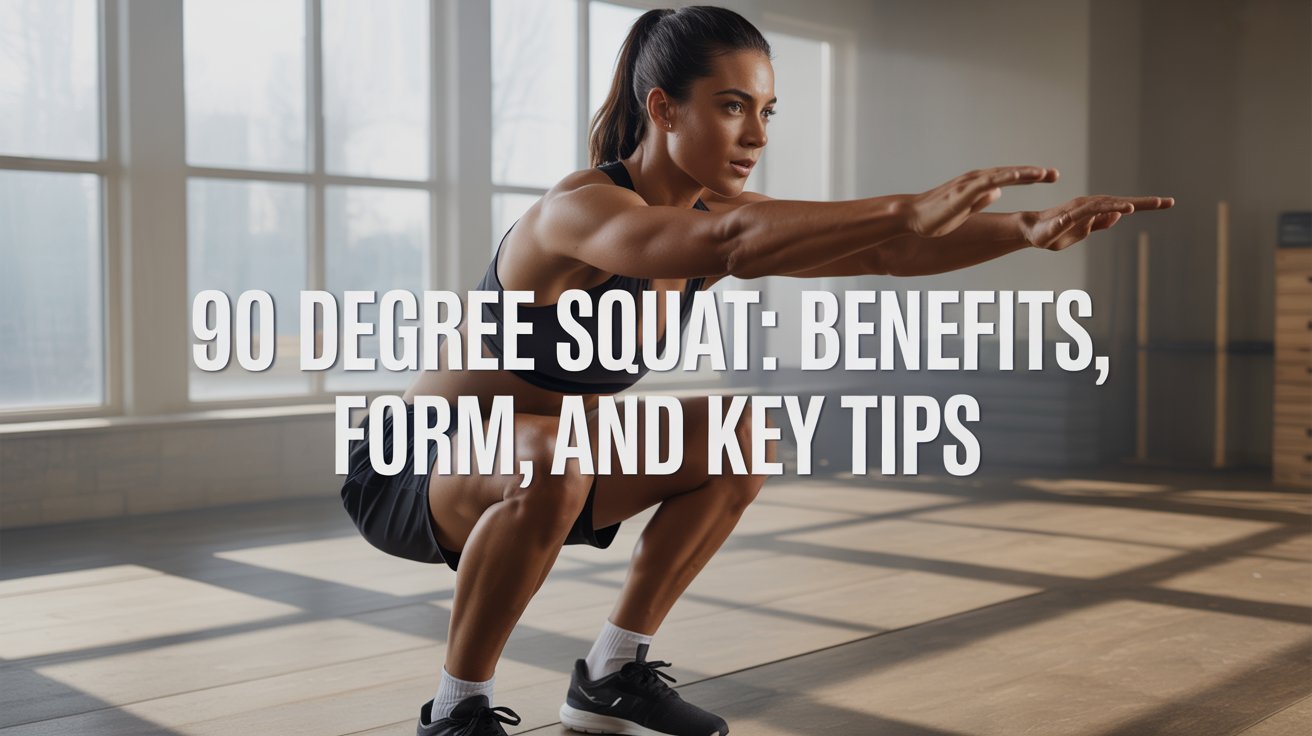
The fitness world debates how deep you should squat. Some trainers push for full depth, while others recommend stopping at parallel. This matters for your results and safety.
A 90-degree squat means lowering until your thighs become parallel to the floor. Your knee joint forms a right angle at the bottom. This variation sits between shallow and deep squats.
This guide covers what makes the 90-degree squat unique, how it compares to full squats, and when to use it. You’ll learn the benefits, proper form, and common mistakes to avoid.
What is a 90 Degree Squat?
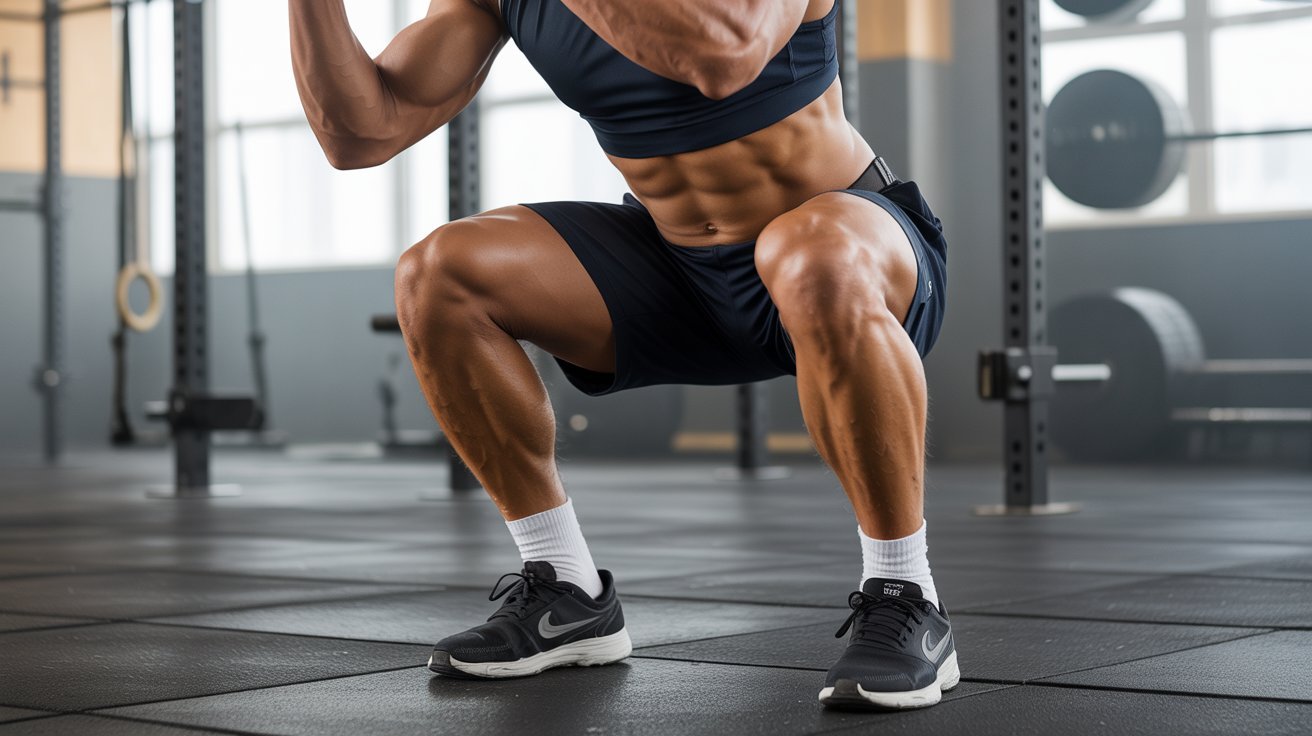
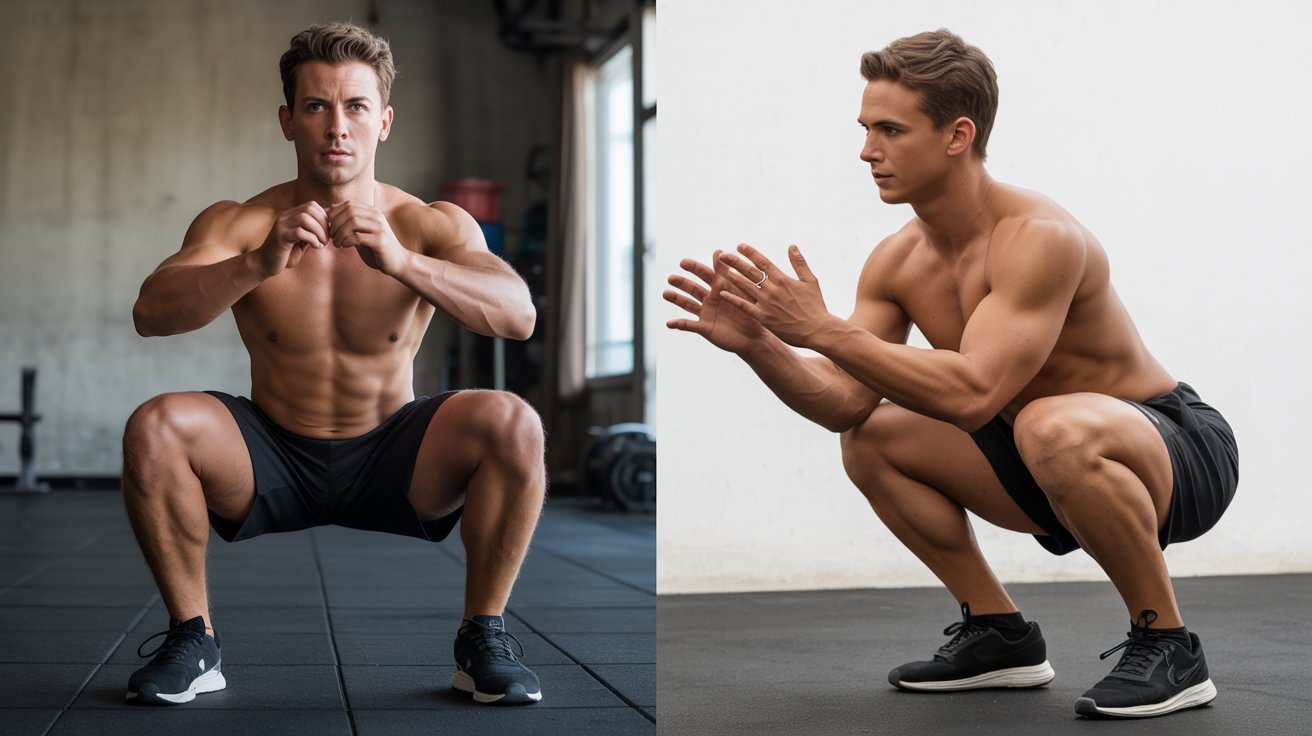
The 90-degree squat is a variation where you lower until your thighs are parallel to the ground. Your knee joint creates a 90-degree angle. Your hip crease should be level with your knee at the bottom.
This differs from partial squats, which don’t reach parallel, and full squats, which go below parallel. The key is maintaining that depth where your thighs form a flat line with the floor. Your knees should track over your toes without caving inward.
90 Degree Squat vs Full Squat: Understanding the Differences
These two squat styles serve different purposes in fitness programs. Knowing when to use each one helps you train smarter and avoid injury.
Here’s the comparison table:
|
Aspect |
90-Degree Squat |
Full Squat |
|
Range of Motion & Muscle Engagement |
Stops when thighs reach parallel, maintains more tension on quadriceps throughout the movement keeps constant quad tension |
Continues until the hip crease drops below the knee, bringing glutes and hamstrings into play more strongly, spreading work across more muscle groups |
|
Performance & Strength |
Preferred by athletes needing explosive power, shorter range allows heavier weights and maximum strength matches jumping and sprinting mechanics, trains quick, powerful movements from parallel |
Builds strength through a greater range of motion, improves flexibility, and overall leg development works well for people with good mobility |
|
Joint Stress & Safety |
Places less stress on knees and hips, reduces compression forces on the knee joint, requires less hip flexion, is better for people with knee problems or previous injuries, ideal for older adults and injury recovery. |
Requires greater joint mobility, increases compression force, needs more hip flexion, and works well for people with good mobility and healthy joints |
Key Benefits of 90 Degree Squats
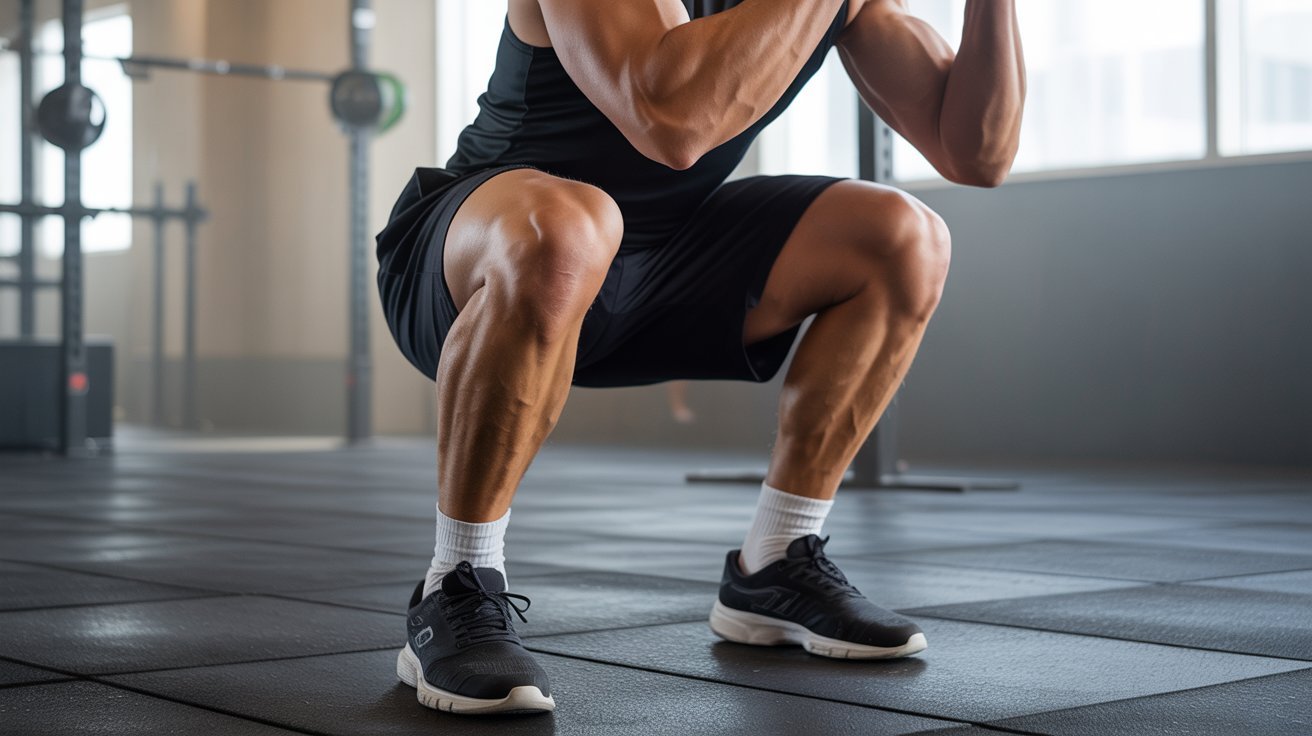
This squat variation offers specific advantages that make it valuable for many fitness goals. Understanding these benefits helps you decide when to include them in your routine.
Reduced Stress on Knee and Hip Joints
Stopping at parallel decreases pressure on your knee cartilage and ligaments. When you go deeper, your knees handle more compression force. The 90-degree squat keeps this force manageable. Your hip joint experiences less extreme flexion, which helps if you have tight hips or previous injuries.
The force distributes more evenly across your leg muscles at this depth. Your quadriceps absorb much of the load, taking pressure off your joints. This makes the 90-degree squat ideal for people who need to protect their knees while building leg strength.
Enhanced Quadriceps Development
The parallel position keeps your quads under tension for the entire movement. Your quadriceps work continuously to control your descent and push you back up. This constant tension helps build muscle size and strength. Unlike deeper squats, where your glutes take over, the 90-degree squat focuses on your front thigh muscles.
This variation also improves muscular endurance in your quads. The sustained tension trains your muscles to work longer under load. If your goal is bigger, stronger quads, the 90-degree squat delivers excellent results.
Beginner-Friendly and Easier to Master
New lifters find the 90-degree squat easier to learn than full-depth squats. The shorter range requires less flexibility and balance. You can focus on basic technique without worrying about getting stuck at the bottom. This builds confidence and proper movement patterns.
The reduced complexity means less injury risk for novices. Beginners often struggle with the balance needed for deep squats. Starting with parallel squats lets you develop strength and coordination safely. Once you master the form, you can decide if deeper squats fit your goals.
Superior Control and Stability
The limited range improves your balance during the exercise. You spend less time in unstable positions at the bottom. This makes it easier to maintain proper form. Better control means you can move the weight smoothly and powerfully.
This controlled movement helps develop explosive power. Many athletes use the 90-degree squat to train rapid force production. The parallel position matches the starting point for jumps and sprints. You can load the movement heavily while maintaining clean technique.
How to Perform a 90 Degree Squat with Proper Form?
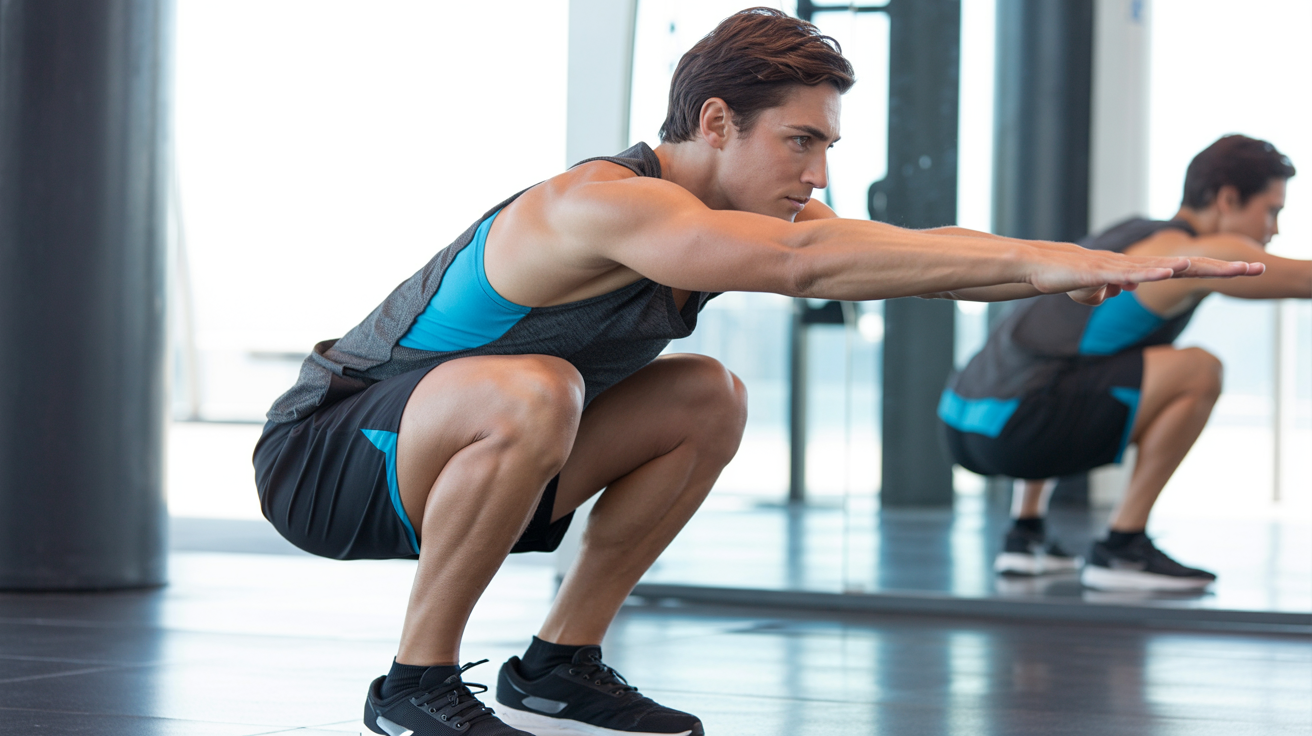
Start with feet shoulder-width apart, and toes pointed slightly out. Place the barbell across your upper back if using weight. Stand tall with your chest up and core tight. Take a deep breath before you begin.
Lower yourself by bending at your hips and knees together. Push your hips back as if sitting into a chair. Keep your chest forward and back straight. Descend until your thighs become parallel to the floor. Your knees should stay in line with your toes. Pause briefly at the bottom.
Drive through your heels to stand back up. Push the floor away and squeeze your glutes at the top. Keep your core engaged throughout. Breathe out as you rise. Reset and repeat. Make sure each rep reaches true parallel depth.
When to Choose 90 Degree Squats?
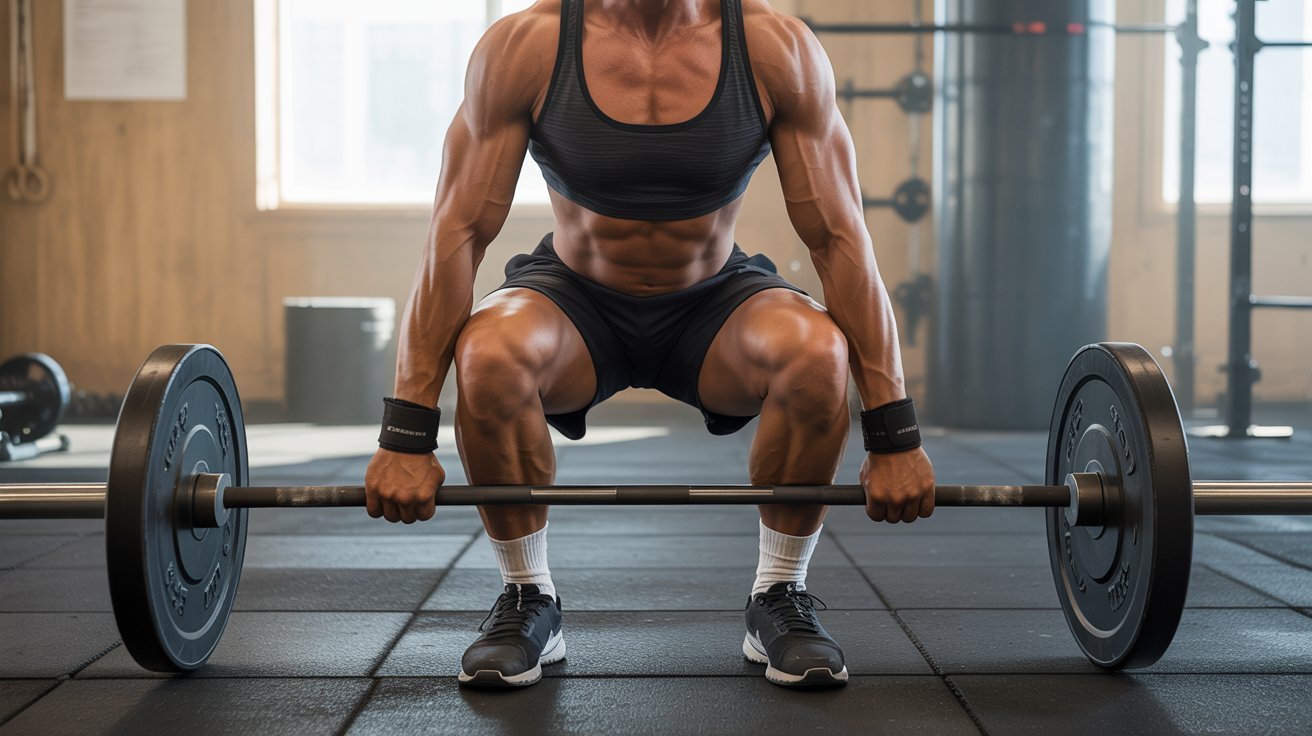
If you have knee pain or a history of knee injuries, parallel squats offer a safer option. The reduced depth protects your joints while building strength. People with limited hip mobility also benefit. You don’t need extreme flexibility to hit parallel. The 90-degree squat works well during rehabilitation from lower-body injuries.
Athletes who focus on explosive power should include this variation regularly. The movement matches jumping and sprinting mechanics. Powerlifters use parallel squats to overload their legs with heavier weights. If your goal emphasizes maximum strength rather than flexibility, the 90-degree squat fits perfectly. This variation helps maintain leg strength without excessive joint fatigue.
Common Mistakes to Avoid
Even a simpler squat variation requires attention to detail. Watch out for these errors that reduce effectiveness and increase injury risk.
Many people think they reach parallel but stop too high. Not hitting true 90-degree turns, your squat into a partial rep. Use a mirror or record yourself to check depth. Some lifters lean too far forward, shifting stress to their lower back. Others let their knees cave inward, straining the knee joint.
- Not reaching true 90 degrees creates partial reps that limit results
- Excessive forward lean puts stress on your lower back
- Knees caving inward damages the knee ligaments and reduces power
- Neglecting core engagement makes you unstable
- Rushing through prevents proper muscle tension
- Poor foot positioning throws off balance and knee alignment
Take your time with each rep and focus on quality over quantity. Record your sets occasionally to spot these issues.
Expert Tips for Maximizing Your 90 Degree Squat Results
Small adjustments can make a big difference in your progress. These strategies help you get more from every workout.
Smart training means gradually increasing the challenge over time. Start with bodyweight squats and add weight slowly. Mix weighted and bodyweight versions throughout your week. Always warm up your hips, knees, and ankles before squatting. Give your legs at least 48 hours to recover between hard sessions.
- Use progressive overload by adding weight or reps each week
- Mix barbell, dumbbell, and bodyweight variations
- Spend 10 minutes warming up with leg swings and light squats
- Allow full recovery between sessions to prevent overtraining
- Pair squats with lunges and step-ups for balanced leg strength
- Place a box behind you to ensure consistent depth
- Progress to deeper squats only when you master the parallel form
Consistency matters more than any single workout. Track your depth and weight to ensure steady progress.
Conclusion
The 90-degree squat provides specific benefits for building leg strength safely. This variation reduces joint stress while developing powerful quadriceps. You can lift heavier weights and train more frequently than with deeper squats.
Both parallel and full squats have a place in training programs. Your choice should depend on your body, history, and goals. Individual factors like flexibility, past injuries, and athletic needs matter more than following one rule.
Focus on performing whatever depth you choose with excellent form. Clean technique beats excessive depth every time. The best squat is the one you can do safely and consistently.
Frequently Asked Questions
Does Squatting to 90 Degrees Build Muscle Effectively?
Yes, the 90-degree squat builds muscle effectively, especially in your quadriceps. The constant tension promotes muscle growth. Both parallel and full squats build muscle when performed with proper form and progressive overload.
How Many Reps Should I Do for 90 Degree Squats?
Your rep range depends on your goals. For maximum strength, do 3 to 6 reps with heavy weight. For muscle building, do 8 to 12 reps. For endurance, aim for 15 to 20 reps with a lighter weight.
Can I Do 90 Degree Squats Every Day?
Daily squatting can work if you manage intensity carefully. Your muscles need recovery time to grow stronger. Most people do better squatting 3 to 4 times per week with rest days between sessions.
What Weight Should I Use for 90 Degree Squats?
Start with just your bodyweight until you master the form. Once you can do 15 clean reps, add light weight like 10 or 20 pounds. Increase by 5 to 10 pounds when you complete all sets easily.
Are 90 Degree Squats Good for Weight Loss?
Yes, squats burn calories and support weight loss when combined with proper nutrition. This exercise works large muscle groups, increasing calorie burn. For best results, combine squats with cardio and healthy eating.