Trying to choose between spider curls vs preacher curls? I get it. Both exercises target your biceps, but they work differently.
In this guide, I’ll break down how each curl works, which muscles they hit, and which one fits your goals.
I’ve spent years testing both movements in my own training. You’ll learn the key differences in body position, range of motion, and muscle emphasis.
I’ll also show you when to use each curl, how to do them correctly, and whether you can combine both. By the end, you’ll know exactly which bicep exercise works best for you.
What Are Spider Curls?
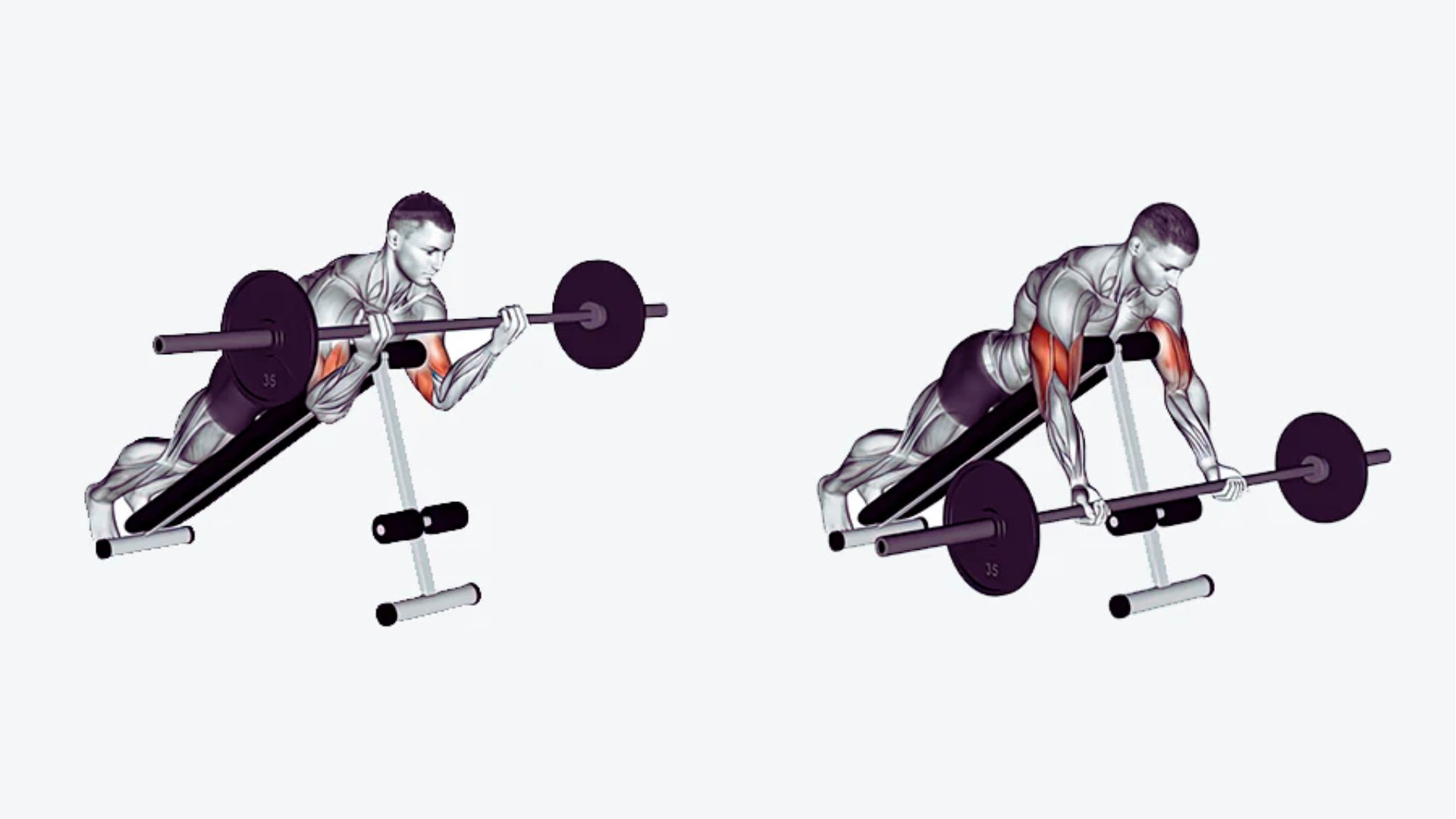
Spider curls are a bicep isolation exercise where you lean forward over an incline bench with your arms hanging straight down. This position keeps constant tension on your biceps throughout the movement.
You lie face-down on an incline bench set at 45-60 degrees. Your chest rests on the pad. Your arms hang perpendicular to the floor. You curl the weight up while keeping your upper arms stationary.
Larry Scott popularized this exercise in the 1960s. The forward-leaning position eliminates momentum and cheating.
Your upper arms stay locked in place for complete isolation. The exercise creates a strong peak contraction at the top and emphasizes the short head (inner bicep).
What Are Preacher Curls?
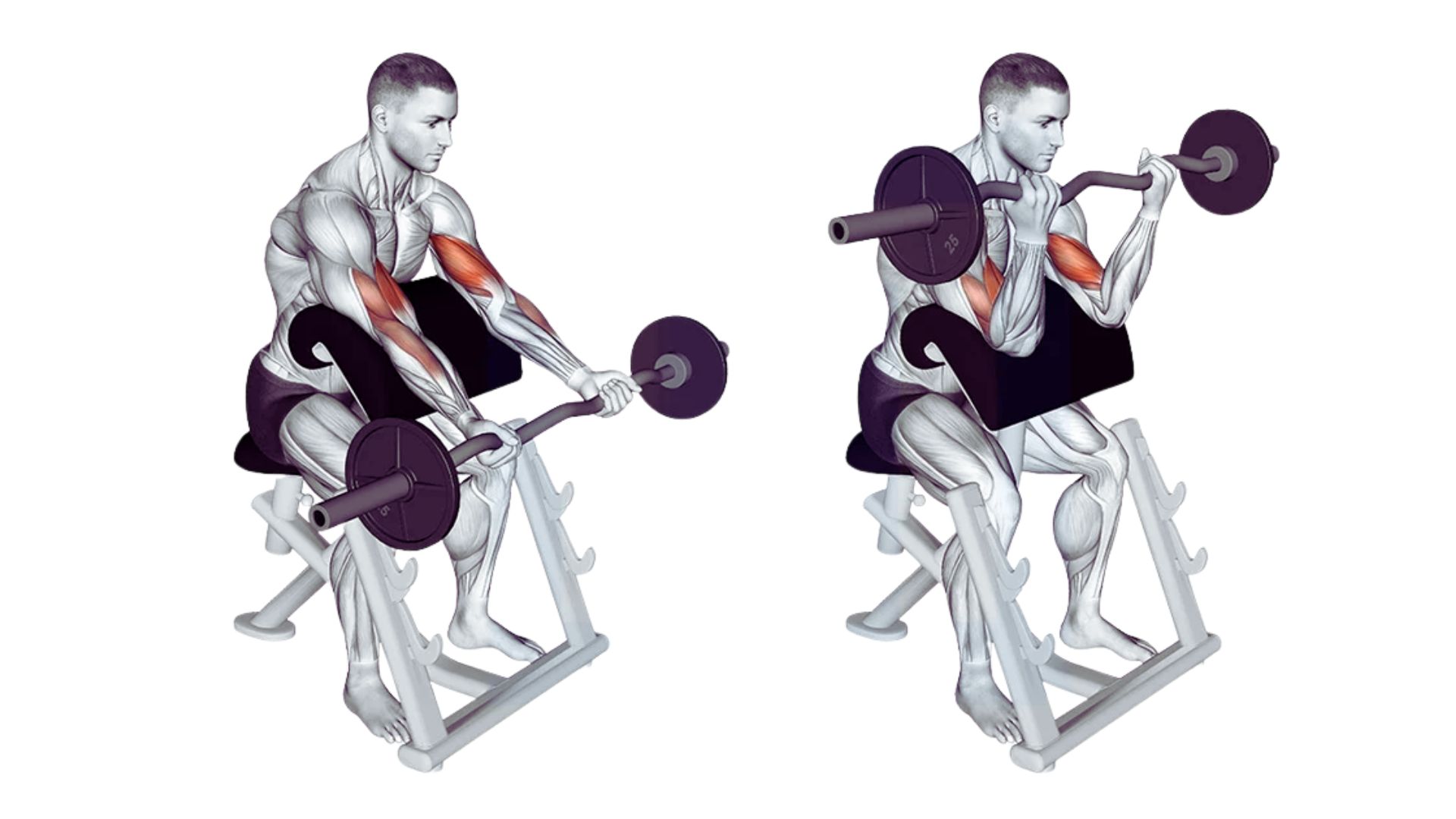
Preacher curls are a bicep isolation exercise performed on a preacher bench with your upper arms resting on an angled pad while you curl a weight.
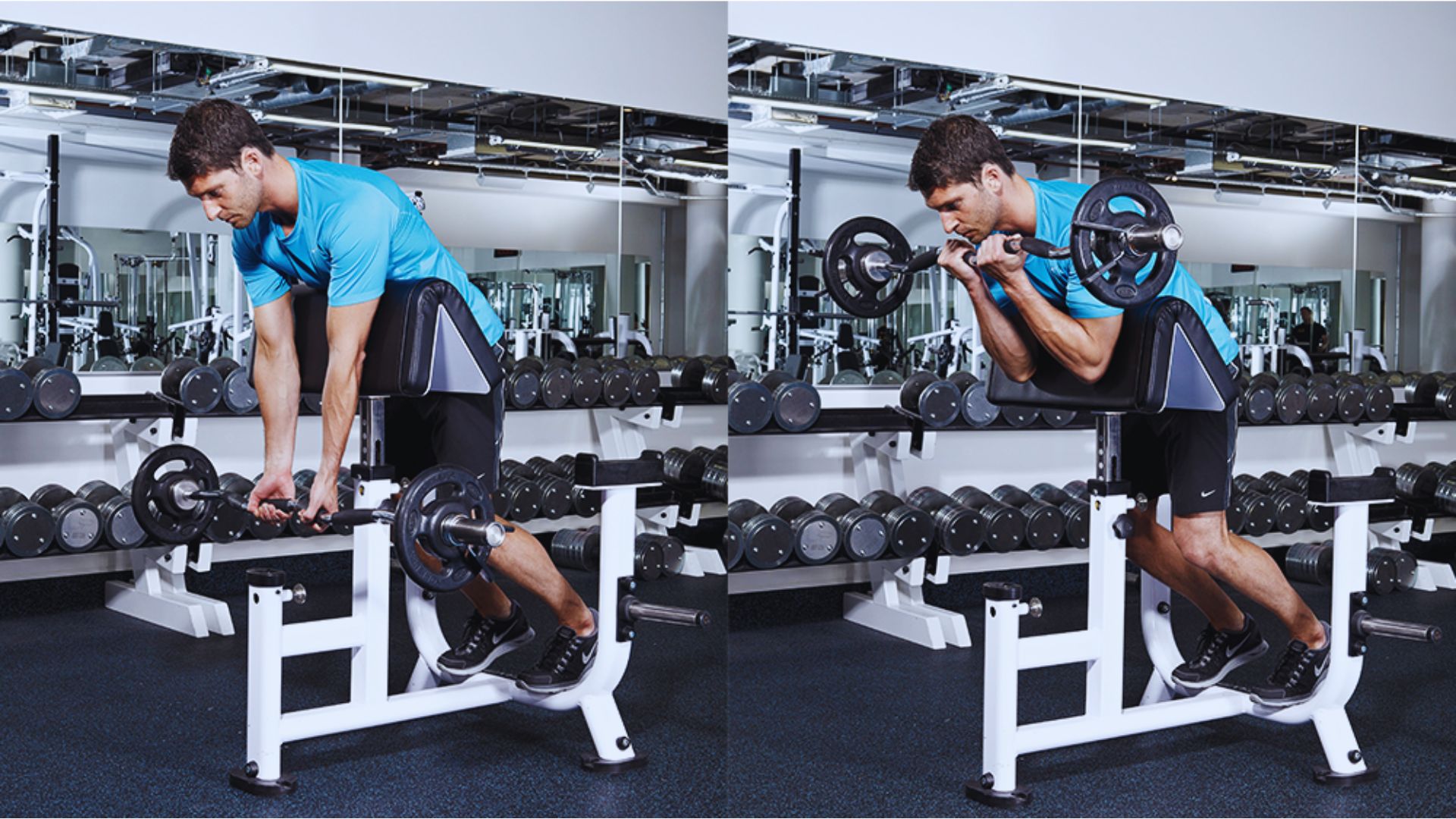
You sit or stand at the bench with your upper arms flat against the pad. The pad angles down at 45-60 degrees. You curl a barbell, dumbbells, or EZ-bar up toward your shoulders. This position prevents swinging and keeps your upper arms locked in place.
Preacher curls eliminate momentum and target the outer bicep effectively. The fixed arm position makes the movement simple to master. You can lift heavier weights safely, and the bench supports your spine during the exercise.
Spider Curls vs Preacher Curls: Key Differences
These exercises look similar but have important differences that affect your results.
|
Factor |
Spider Curls |
Preacher Curls |
|
Body Position |
Lean forward over the incline bench, chest on the pad, arms hanging straight down |
Sit upright at the preacher bench, arms resting on the angled pad |
|
Range of Motion |
Shorter range, maximum tension at peak contraction |
Longer range, maximum tension in the middle of the movement |
|
Muscle Emphasis |
Targets the short head (inner bicep) more |
Emphasizes the long head (outer bicep) more |
|
Difficulty Level |
Harder to perform, requires good body awareness |
Easier to learn, beginner-friendly, with a stable position |
|
Weight Used |
30-50% less weight, demands a strict form |
Allows heavier loading for strength and size |
|
Best For |
Muscle quality, definition, and peak contraction |
Building maximum strength and size |
|
Injury Risk |
Lower back protected, watch the bicep tendon at the bottom |
Generally safe, avoid a full lockout to protect tendons |
|
Who Should Use |
Intermediate to advanced lifters with solid technique |
Beginners and anyone focused on progressive overload |
For balanced bicep development, include both exercises in your routine. Each targets different parts of the bicep muscle.
Spider Curls – How to Perform, Muscles Worked & Benefits
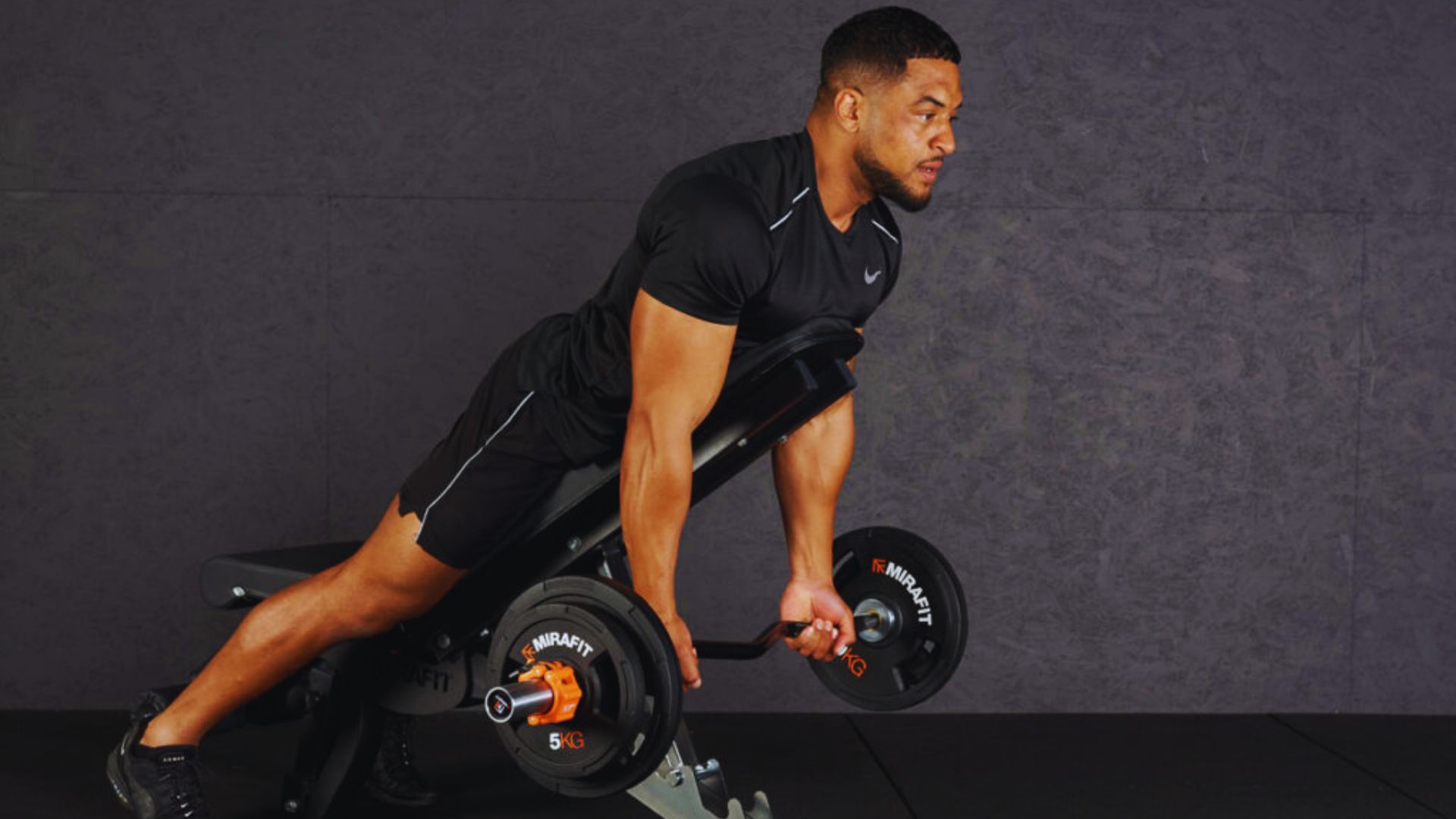
Spider curls are an effective bicep isolation exercise that targets the short head and creates peak contraction for better definition.
How to Perform Spider Curls
Set an incline bench to 45-60 degrees. Stand or kneel behind the bench and lean your chest against the pad.
Let your arms hang straight down on the other side of the bench. Keep your armpits near the top edge of the pad.
Hold dumbbells or an EZ-bar with palms facing up. Curl the weight up toward your shoulders while keeping your upper arms against the pad.
Squeeze at the top for 1-2 seconds. Lower the weight slowly with control. Stop just before your arms fully straighten.
Keep your elbows locked in place throughout. Don’t let them move forward or backward during the movement.
Muscles Targeted
The biceps brachii short head gets the most work. This is the inner bicep that creates width when viewed from the front.
The biceps brachii long head also works, but less than in preacher curls. This is the outer bicep that creates the peak.
Brachialis sits underneath your biceps. It adds thickness to your upper arms and pushes the biceps up.
Brachioradialis is the forearm muscle near your elbow. It helps with the curling motion and grip strength.
Key Benefits & Outcomes
Maximum peak contraction happens at the top of the movement. This builds the bicep peak effectively and creates better muscle separation.
Improved definition and symmetry come from the constant tension. The exercise targets weak points and balances arm development.
Better range of motion than standard curls. The forward lean allows a full bicep stretch at the bottom and complete contraction at the top.
Eliminates momentum and cheating. The supported position forces strict form and keeps all tension on your biceps throughout the movement.
Common Mistakes to Avoid
Simple errors reduce effectiveness and can cause injury. Watch out for these common mistakes.
- Installing too many or too few recessed lights. Too many create glare and waste electricity. Too few leave dark spots that strain your eyes.
- Incorrect spacing and poor alignment. Uneven spacing looks sloppy and creates lighting gaps.
- Ignoring task lighting needs. Ambient lighting alone is not enough for safe food prep.
- Skipping a lighting plan before installation. Starting without a plan leads to expensive fixes.
- Placing lights too close to walls or cabinets. Keep lights at least 12 inches from walls to prevent harsh shadows.
Preacher Curls – How to Perform, Muscles Worked & Benefits
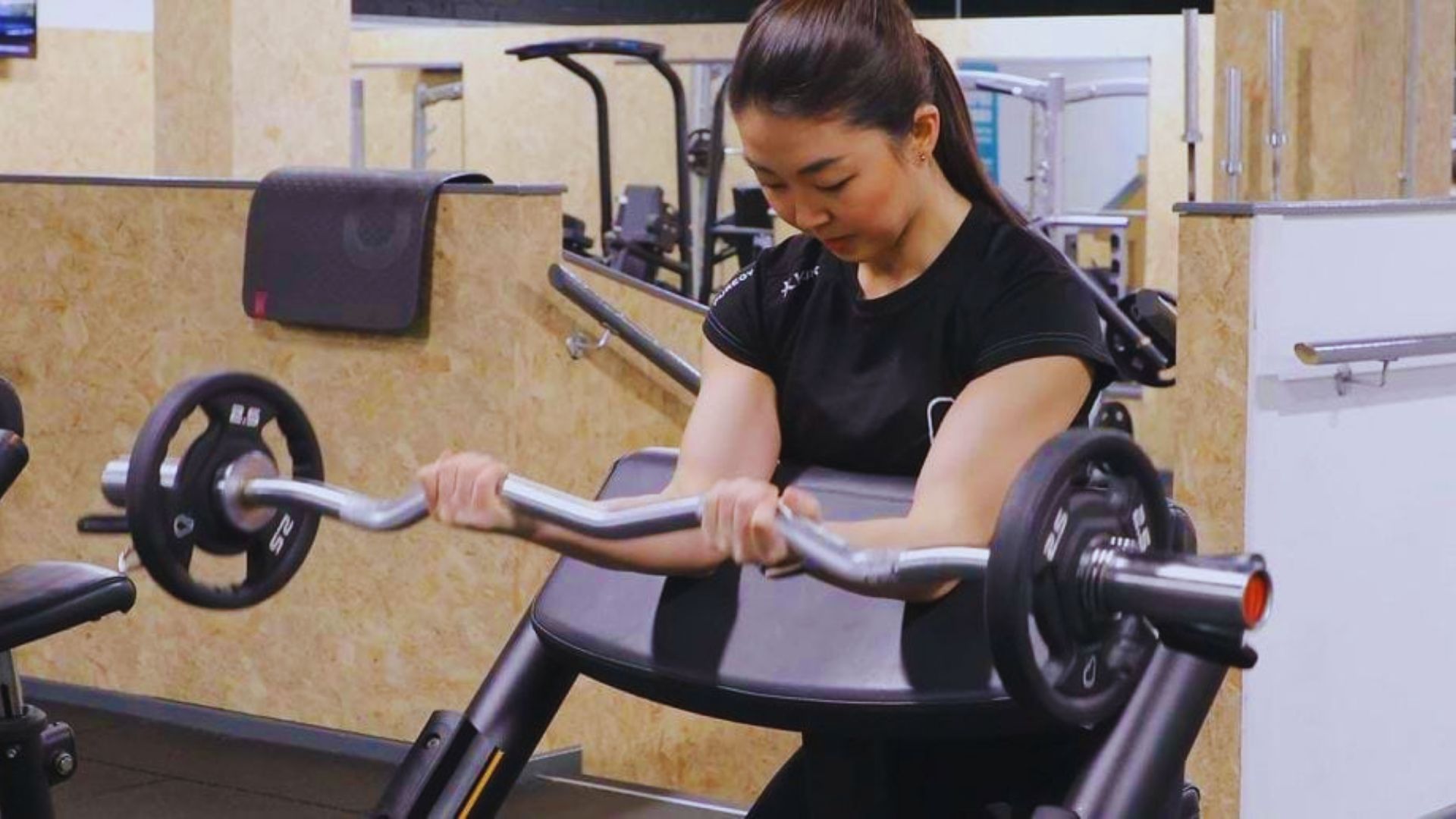
Preacher curls are a fundamental bicep isolation exercise that builds overall mass and allows you to lift heavier weights safely.
How to Perform Preacher Curls
Adjust the preacher bench so your armpits rest at the top of the pad when seated. Position your upper arms flat against the angled pad.
Grip a barbell, EZ-bar, or dumbbells with an underhand grip at shoulder width. Start with your arms extended but not locked out.
Curl the weight up by contracting your biceps. Keep your upper arms pressed against the pad. Squeeze hard at the top when your forearms reach near-vertical.
Lower the weight back down with control over 2-3 seconds. Stop just before full lockout to maintain tension on your biceps.
Breathe out as you curl up. Breathe in as you lower the weight.
Muscles Targeted
The biceps brachii long head receives primary activation. This is the outer portion of your bicep that creates the visible peak.
The biceps brachii short head also works significantly. Both heads contract together to curl the weight.
Brachialis lies beneath your biceps and adds arm thickness. It assists with elbow flexion and overall arm size.
The brachioradialis runs along your forearm. It supports grip strength and assists with the curling motion.
Key Benefits & Outcomes
Maximum bicep mass comes from handling heavier loads. The stable bench position lets you focus purely on moving weight.
Progressive overload builds strength effectively. You can add weight week after week and track clear progress.
Beginner-friendly movement pattern. The fixed arm position prevents cheating and teaches proper bicep isolation from day one.
Lower injury risk when performed correctly. The bench supports your back and eliminates momentum, keeping stress on muscles instead of joints.
Common Mistakes to Avoid
Simple errors reduce effectiveness and can cause injury. Watch out for these common preacher curl mistakes.
- Lifting your elbows off the pad. Keep your upper arms glued to the pad throughout the entire movement.
- Locking out completely at the bottom. Stop just short of lockout to keep tension on your biceps instead of your joints.
- Using only the top half of the range. Lower the weight all the way down for full muscle activation.
- Leaning back during the curl. Your torso should stay stable. Leaning reduces bicep activation.
- Gripping too wide or too narrow. Use a shoulder-width grip for best results and proper muscle emphasis.
- Dropping the weight quickly. Control the negative portion slowly. This is where muscle growth happens.
Which Curl is Best for Your Goals?
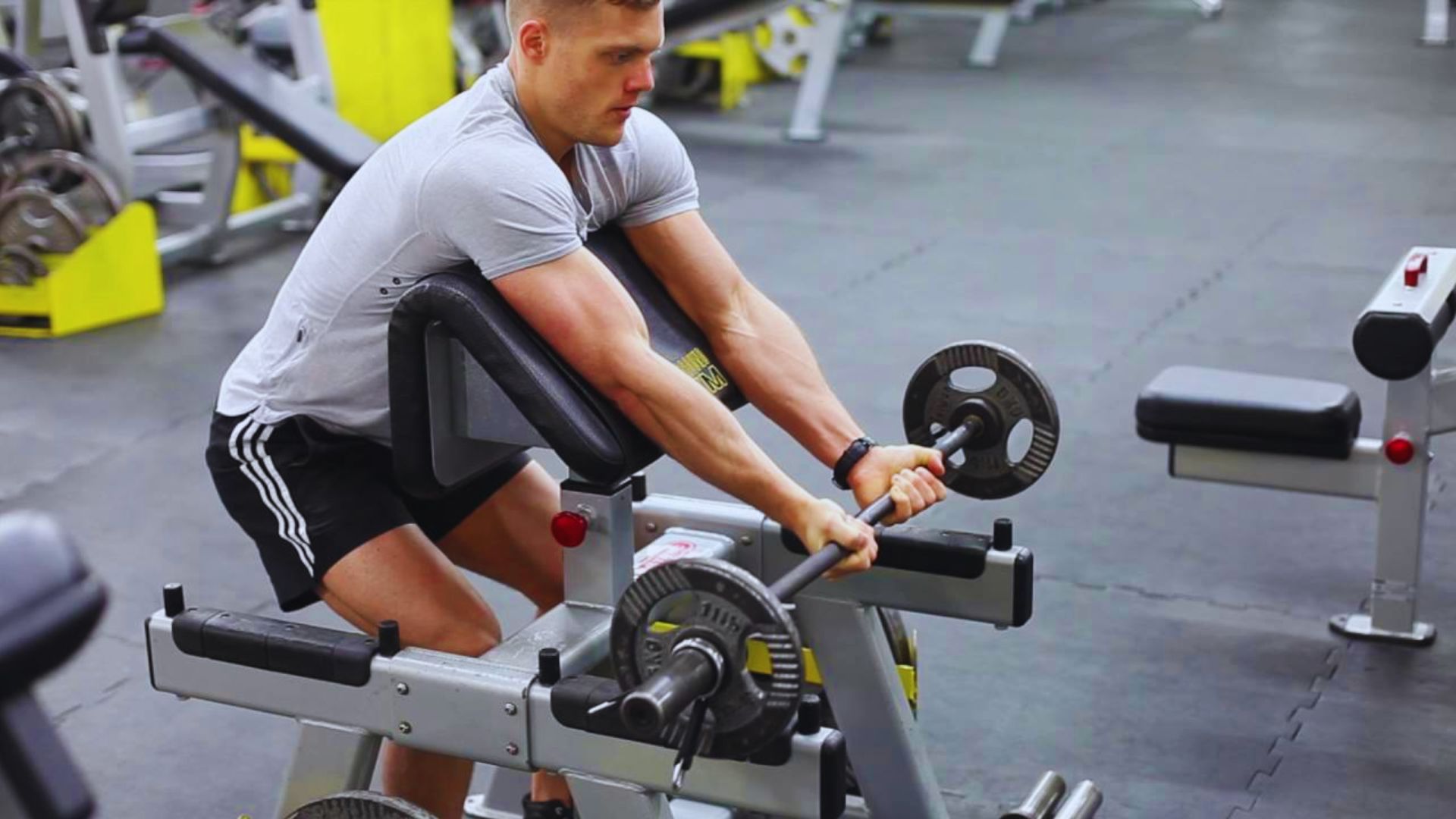
Your training goals determine which curl works better for you.
Beginners should start with preacher curls for 2-3 months to master proper technique, then add spider curls once form is solid.
Advanced lifters need both exercises. Rotate between them every 4-6 weeks or include both in the same workout.
For muscle size and mass, choose preacher curls with 3-4 sets of 6-10 reps using heavy weight.
For bicep peak and definition, pick spider curls. Focus on the squeeze at the top, hold for 1-2 seconds, and use 10-15 reps.
For balanced growth, alternate focus every 4 weeks.
Week 1-4: Preacher curls as primary (3-4 sets) with spider curls as finisher (2 sets).
Week 5-8: Switch the order.
Conclusion
I’ve used both spider curls and preacher curls in my own training for years. Each exercise has earned its place in my arm routine. Preacher curls helped me build size when I was starting. Spider curls gave me the peak definition I wanted later.
My advice? Don’t choose just one. Use preacher curls for mass and strength. Add spider curls for peak development. Rotate between them every few weeks. Your biceps will thank you. Try one of the sample workouts above this week.
Drop a comment below and tell me which curl you prefer.
Frequently Asked Questions
Spider Curl vs Preacher Curl: Which Builds Bigger Biceps?
Preacher curls typically build more overall mass because you can handle heavier weights. Spider curls develop the bicep peak and create better muscle detail, so use both for complete development.
Can I Do Both in One Workout?
Yes, start with preacher curls when you’re fresh for strength and mass with heavier weight. Finish with spider curls for 2-3 sets to hit both heads of your biceps.
Which Is Safer?
Both exercises are safe when performed correctly with appropriate weight and proper form. Spider curls put less stress on your lower back, while preacher curls can strain bicep tendons if you lock out completely.
How Often Should I Train Biceps?
Train biceps 2 times per week with 48-72 hours of recovery between workouts. One session should focus on heavy compound movements like preacher curls, the second on lighter isolation work like spider curls.
Do I Need Special Equipment?
Preacher curls require a preacher bench, which most gyms have. Spider curls just need an adjustable incline bench and work with dumbbells, an EZ-bar, or a barbell.