

If you’re trying to build stronger rear delts, you need to know which rear delt fly machine muscles worked during each rep.
I’ve spent years training shoulders, and I can tell you that understanding the correct muscles makes all the difference.
In this guide, I’ll show you exactly which muscles fire up during the rear delt fly, how to set up the machine properly, and the common mistakes that shift tension away from your rear delts.
Let’s fix those weak rear delts together.
Rear Delt Fly Machine Muscles Worked : Quick Overview

The rear deltoids are the main target. These muscles sit on the back of your shoulder and control horizontal shoulder extension. When you pull the handles back, your rear delts do most of the work.
The rhomboids and middle traps pull your shoulder blades together and stabilize your upper back during the movement.
Your rotator cuff and small upper-back muscles keep the shoulder joint stable and maintain proper alignment throughout the exercise.
What is the Rear Delt Fly Machine?
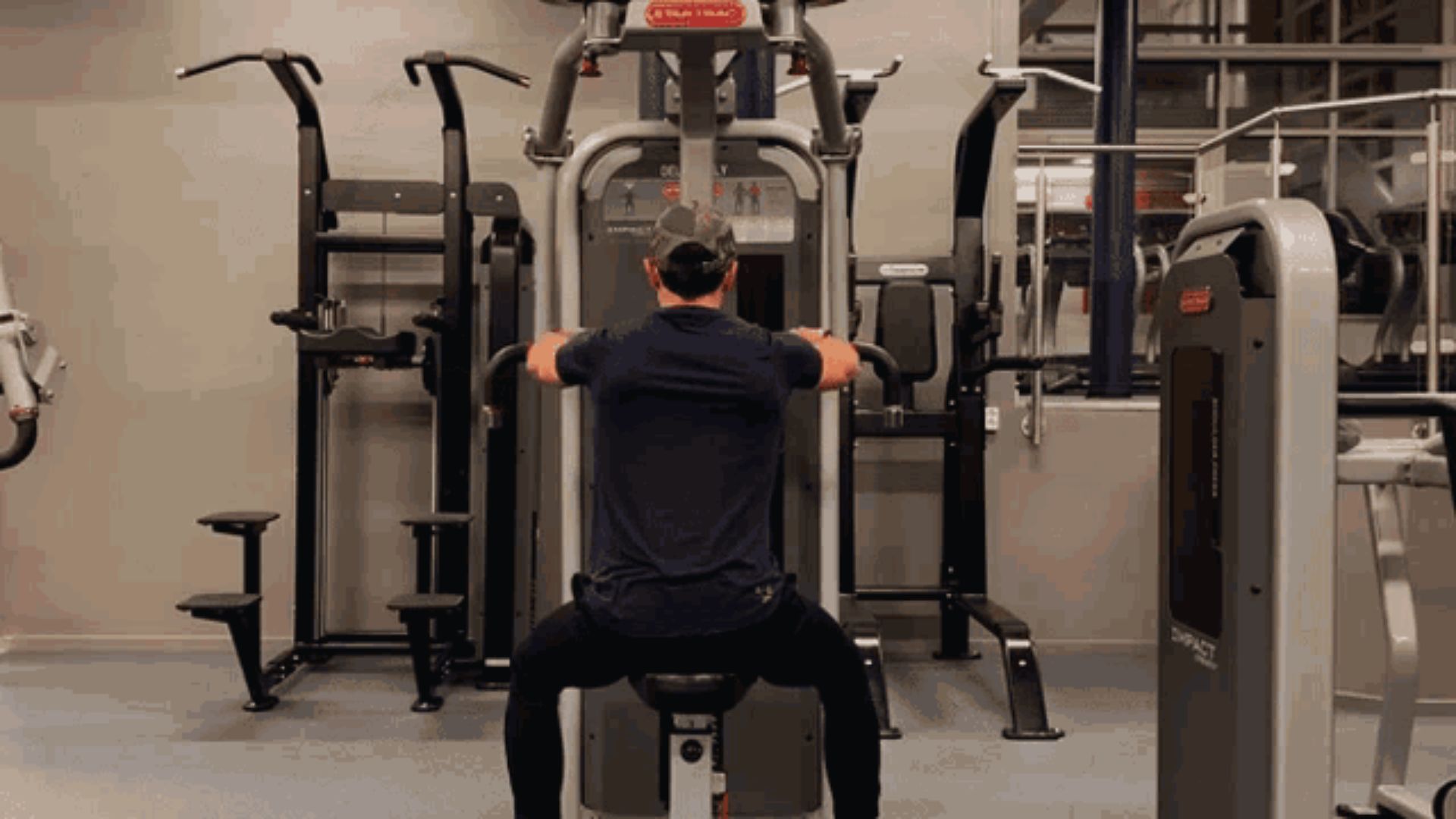
The rear delt fly machine is a seated piece of equipment that isolates your posterior deltoids. You sit facing the chest pad with handles at shoulder height and pull both handles back in a reverse fly motion.
The machine provides a fixed movement path that keeps constant tension on your rear delts. Unlike dumbbells, you don’t need to control the weight in multiple directions. This lets you focus purely on muscle contraction without balance challenges.
Your torso stays locked against the chest pad, which prevents momentum and keeps all the work on your rear delts. The fixed handles guide your arms through the proper movement path automatically.
Rear Delt Fly Machine Proper Form Step by Step

Correct setup and execution determines which muscles work and how effectively you build strength.
1. Seat and chest pad setup for correct alignment
Adjust the seat so the handles align with your shoulders when you sit down. Your shoulders should be at the same height as the pivot point of the handles.
Sit with your chest pressed firmly against the pad. Your sternum should make contact with the middle of the pad. Keep your feet flat on the floor with your knees bent at about 90 degrees.
2. Handle height and grip position
The handles should start in front of your shoulders at shoulder height. Most machines have numbered settings, so experiment to find what feels best.
Grab the handles with a neutral grip (palms facing each other) or a pronated grip (palms facing down). Use just enough pressure to control the handles without gripping too tightly.
3. Arm position and elbow bend
Keep a slight bend in your elbows throughout the entire movement. Your elbows should stay soft, not locked straight.
The angle at your elbow should stay constant from start to finish. Your upper arms should move in a horizontal plane. Pull your elbows straight back at shoulder height without letting them drop or rise.
4. Movement path for maximum rear delt activation
Pull the handles back until your hands are slightly behind the line of your torso. Focus on leading with your elbows, not your hands. Think about pulling your elbows toward the wall behind you.
Control the return to the starting position. Lower it slowly over 2 to 3 seconds. This eccentric phase builds muscle and prevents injury.
5. Breathing and tempo during each rep
Exhale as you pull the handles back. Inhale as you return the handles forward.
Use a controlled tempo like 1 second pull, 1 second squeeze, 2 seconds return. Find what lets you feel your rear delts working best.
Common Mistakes That Change the Muscles Worked
Small form errors shift tension away from your rear delts and onto other muscle groups.
Over-squeezing the shoulder blades
Focus on moving your arms backward, not forcing your shoulder blades together. Think about pulling your elbows back rather than squeezing.
Shrugging the shoulders and overusing the traps
Keep your shoulders down and away from your ears throughout the entire set. If you feel your traps burning more than your rear delts, reset your form.
Locking the elbows
Maintain a soft bend of about 10 to 20 degrees throughout the movement. Straightening your arms removes tension from the rear delts.
Using momentum instead of muscle control
Your chest should stay pressed against the pad from start to finish. If you need to use momentum, the weight is too heavy.
Gripping the handles too tightly
Hold the handles with just enough pressure to maintain control. A tight grip creates tension in your forearms and upper traps.
Who Should Use the Rear Delt Fly Machine?

This machine benefits specific types of lifters based on their experience level and training goals.
If you’re new to training and can’t feel your rear delts working, this machine is perfect. The fixed path teaches you what rear delt activation feels like.
Many people have overdeveloped front delts from too much pressing. The rear delt fly machine helps correct this imbalance by directly targeting the underdeveloped rear delts.
Strong rear delts help pull your shoulders back and improve your posture. If you sit at a desk for hours, rear delt training helps combat rounded shoulders.
Conclusion
Now you know exactly which rear delt fly machine muscles worked and how to set up the machine for maximum results.
I’ve used this exercise for years, and it’s one of the best tools for building stronger, more balanced shoulders. Start with lighter weight and focus on feeling your rear delts contract. Your shoulders will thank you later.
The key is consistency and proper form over heavy weight. I promise you’ll notice better posture and shoulder development within a few weeks. Try adding this to your next workout and see how it feels.
Drop a comment below and let me know how it goes for you.
Frequently Asked Questions
What muscles does the rear delt fly machine work?
The rear delt fly machine primarily targets your posterior deltoids. Secondary muscles include the rhomboids and middle trapezius, while the rotator cuff provides stabilization.
How many sets of rear delt flys should I do?
Aim for 3 to 4 sets of 10 to 15 reps for muscle growth. Train your rear delts 2 to 3 times per week with at least 48 hours between sessions.
Is the rear delt fly machine better than dumbbells?
The machine provides better isolation for beginners and removes the need for stabilization. Dumbbells offer more functional movement but require better mind-muscle connection.
Should I feel my rear delts burning during the exercise?
Yes, you should feel a strong contraction in the back of your shoulders. If you feel it more in your traps, adjust your form by keeping your shoulders down.
Can rear delt flys fix rounded shoulders?
Strong rear delts help improve posture by pulling your shoulders back. Combined with chest stretching and upper back training, rear delt work can help correct forward shoulder posture.


