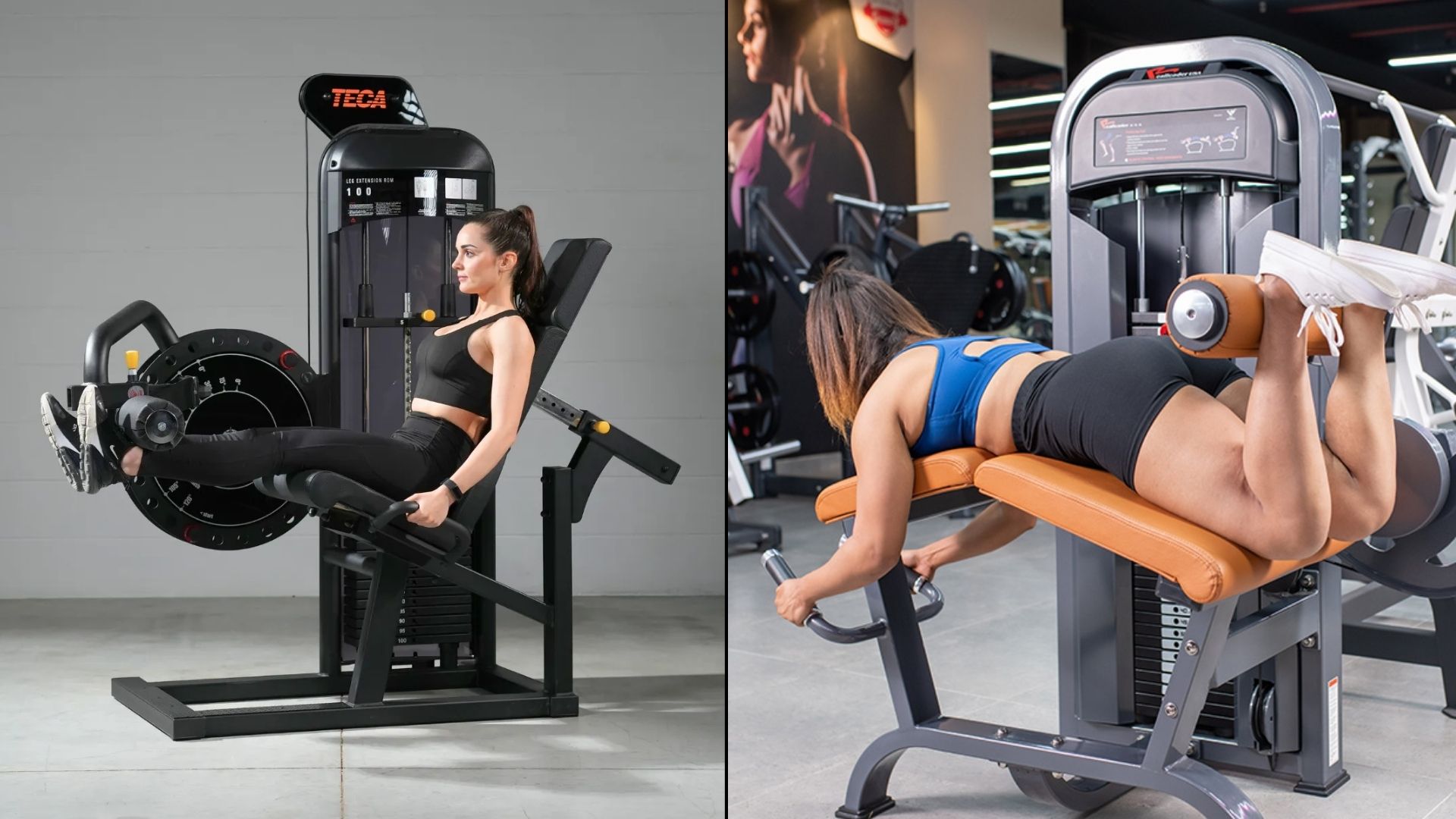
Do you ever struggle to figure out which machine really builds stronger legs?
In this blog, we’re stepping into leg extension vs leg curl to help you understand which exercise targets which muscles and why it matters.
From front thigh quads to back thigh hamstrings, knowing how each machine works can make your leg day safer and more effective.
As someone who’s trained countless clients and refined their routines, I’ll share practical tips you can actually use.
By the end, you’ll feel confident choosing the right exercises and avoiding common mistakes, making every rep count.
Let’s get started.
What Are Leg Extensions and Leg Curls?

Leg extensions and leg curls target your thighs, but focus on different muscles. Knowing how each works helps you train safely and effectively.
Leg Extensions Explained

Leg extensions are an exercise that focuses on your quadriceps, the muscles at the front of your thigh.
You perform them by sitting on a leg extension machine and straightening your knees against the resistance.
This isolates the quads and helps build strength and definition. Proper form includes keeping your back against the seat and moving slowly to avoid knee strain.
Leg Curls Explained
Leg curls focus on your hamstrings, the muscles at the back of your thigh.
The exercise is done by bending your knees against the resistance while lying down (lying leg curl) or sitting (seated leg curl).
Variations affect muscle activation slightly, but both strengthen your hamstrings safely. Always control the movement and avoid lifting your hips to protect your lower back.
Leg Extension vs. Leg Curl: Muscles Worked

Leg exercises target different muscles in your thighs. Knowing which muscles each machine works helps you balance your leg strength and avoid injuries.
Muscles Worked in Leg Extensions
Leg extensions mainly work your quadriceps, which are the front thigh muscles. This includes the rectus femoris, vastus medialis, vastus lateralis, and vastus intermedius.
They also engage small stabilizing muscles around the knee, helping improve overall leg control and strength.
Muscles Worked in Leg Curls
Leg curls focus on your hamstrings, located at the back of your thigh. The main muscles are the biceps femoris, semitendinosus, and semimembranosus.
Some variations also lightly engage the glutes, supporting hip strength and better overall posterior chain development.
Leg Extension vs. Leg Curl: Machine Worked
Each machine moves your legs differently, targeting specific muscles and affecting joint load.
Leg Extension Mechanics
Leg extensions involve straightening your knees while sitting on the machine. This knee extension movement isolates your quadriceps.
The resistance changes as you move, so controlling the weight through the full range of motion ensures the muscles are fully engaged without stressing your knees.
Leg Curl Mechanics
Leg curls involve bending your knees against resistance, either lying down or sitting. The exercise emphasizes hamstring contraction, with both eccentric (lengthening) and concentric (shortening) phases.
Controlled movement ensures maximum hamstring activation and prevents strain on your lower back.
Leg Extensions vs. Leg Curls: Benefits

Both exercises improve leg strength but focus on different muscles. Knowing the benefits helps you use them effectively in your workouts.
Leg Extension Benefits
Leg extensions mainly target your quadriceps, the front thigh muscles.
They help increase strength, improve knee stability, and assist in everyday movements like walking or climbing stairs.
This exercise is also useful in rehabilitation after minor knee injuries, as it isolates the quads safely.
Leg Curl Benefits
Leg curls focus on your hamstrings, the muscles at the back of your thighs. Strong hamstrings improve running, jumping, and overall athletic performance.
They also help prevent injuries by balancing front-to-back thigh strength and supporting hip stability.
Key Differences Between Leg Extensions and Leg Curls
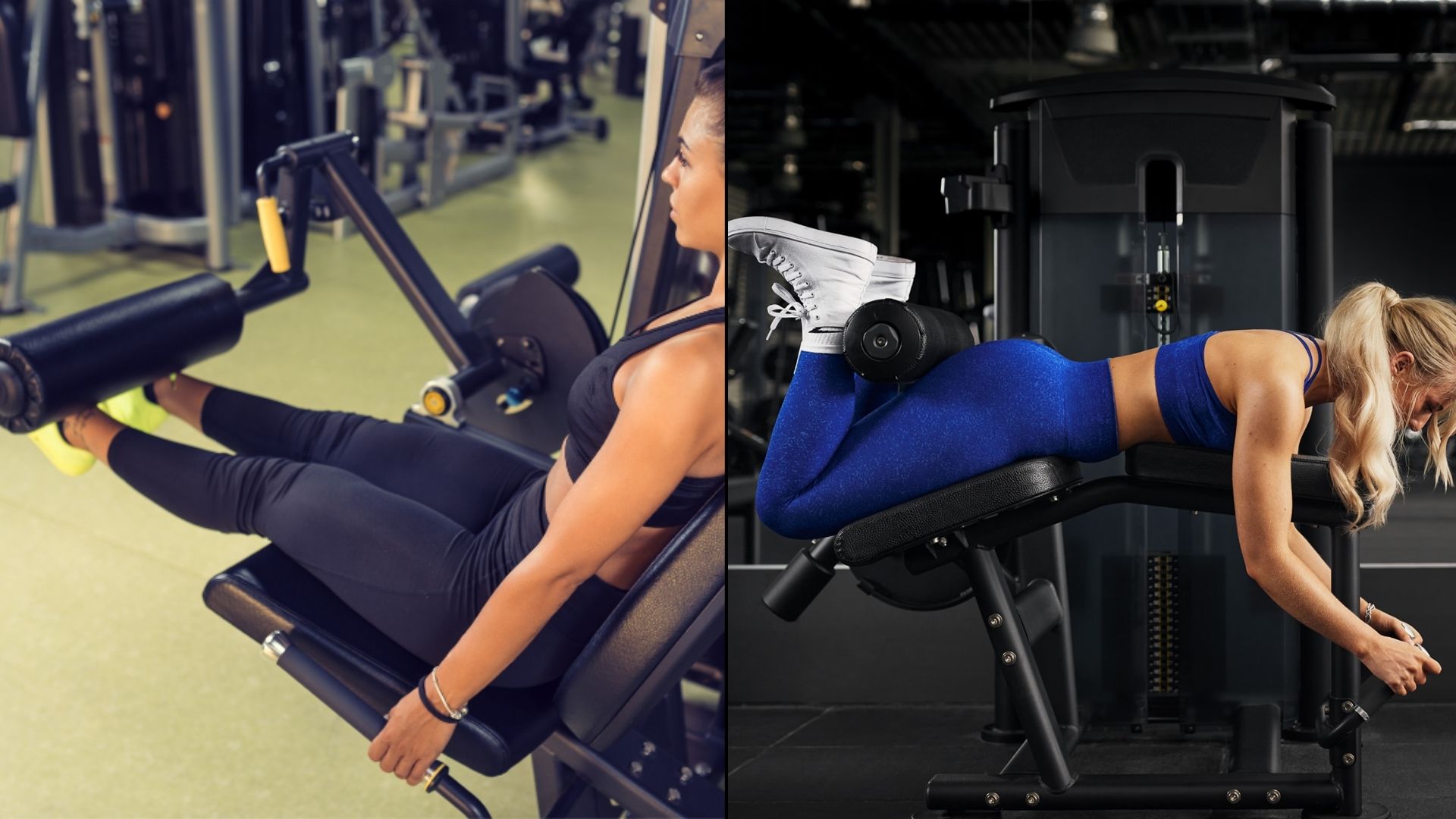
Leg exercises target different muscles and use different movement patterns. Knowing these differences helps you train smarter and avoid injuries.
Machine Setup and Body Position
Leg extensions are usually done seated, which isolates the quadriceps effectively. This makes it easier to focus on the front thigh without involving other muscles.
Leg curls can be performed lying down, seated, or standing. Changing the position alters which part of the hamstrings is worked and how the muscle is engaged.
Joint and Biomechanical Considerations
Leg extensions mainly involve the knee joint, focusing on straightening the leg. This isolates the quads and minimizes stress on other joints.
Leg curls involve knee flexion and sometimes hip movement. This makes them slightly more complex but effective for targeting the entire posterior chain.
Role in Functional Strength
Leg extensions build quad strength, which supports squats, lunges, and daily movements. Strong quads also help protect the knees from injury.
Leg curls strengthen hamstrings, balancing front-to-back leg muscles. This improves running, jumping, and overall athletic performance.
Leg Extension vs. Leg Curl: Which Should You Prioritize?

Leg exercises should match your goals to get the best results.
For Muscle Growth: Leg extensions target the quadriceps for front thigh growth and definition, while leg curls focus on hamstrings to build balanced leg muscles.
For Injury Prevention: Leg extensions strengthen the front of the thigh, and leg curls build the back, together preventing muscle imbalances that can lead to injuries.
For Athletic Performance: Leg curls help with sprinting, jumping, and explosive movements by strengthening the hamstrings, improving speed, and power.
For Rehabilitation: Leg extensions isolate the quadriceps, allowing safe strengthening, making them ideal for knee rehab or recovery from minor injuries.
Including the right exercise for your goal ensures stronger, balanced, and safer legs.
How to Incorporate Both Into Your Leg Routine
Balancing quads and hamstrings in your workouts is key for stronger legs. Including both exercises prevents imbalances and improves overall performance.
Step 1- Quad-Focused Day: Perform leg extensions followed by compound lifts like squats or lunges.
Step 2- Hamstring-Focused Day: Perform leg curls followed by deadlift variations or glute-ham raises.
Step 3- Balance Development: Make sure both quads and hamstrings are trained evenly throughout the week.
Step 4- Set Volume and Reps: Adjust sets and reps according to your strength and growth goals, typically 3-4 sets of 8-12 reps.
Finish by reviewing your routine to ensure full leg development and prevent imbalances.
Common Mistakes and How to Avoid Them
Proper form is key to getting results and preventing injuries.
|
Common Mistakes |
How to Avoid Them |
|
Locking knees during leg extensions |
Keep a controlled motion and avoid fully locking the knees. |
|
Using too heavy weights on leg extensions |
Start with a manageable weight and increase gradually. |
|
Arching the back during leg curls |
Maintain a neutral spine and focus on proper form. |
|
Incomplete range of motion on leg curls |
Perform a full range of motion slowly and controlled. |
Following these tips ensures safer workouts and better leg development.
Variations and Alternatives
Choosing the right exercises doesn’t always mean using machines. Alternatives can target the same muscles and add variety to your leg workouts.
Leg Extension Alternatives:
- Bulgarian split squats
- Step-ups
- Squats with emphasis on the quadriceps
Leg Curl Alternatives:
- Romanian deadlifts
- Glute-ham raises
- Swiss ball leg curls
Using these alternatives allows flexibility in your workouts and helps build strength at home or in the gym.
Conclusion
After spending time learning about leg extensions and leg curls, it’s clear that both exercises are essential for strong, balanced legs.
Understanding how each works helps you design a routine that fits your goals.
By including both exercises in your workouts, you can see real improvements in strength and stability, making leg extension vs leg curl decisions much easier and more effective.
Ready to take control of your leg day? Focus on proper form, track your progress, and enjoy the results you earn each week!
Frequently Asked Questions
Should You Do Leg Curl And Leg Extension On The Same Day?
You can do both in the same session or split across different days depending on your routine. Doing them together works well for a complete leg workout and balanced strength.
Alternatives For Home Workouts Without Machines
For home workouts, replace leg extensions with Bulgarian split squats, step-ups, or squats. Replace leg curls with Romanian deadlifts, glute-ham raises, or Swiss ball leg curls.
Can I Replace Squats With Leg Extensions Or Leg Curls?
No. Leg extensions and leg curls are isolation exercises and cannot fully replace squats, which work multiple leg muscles and improve overall leg strength and stability.
Which Is Better For Hamstring Growth?
Leg curls are best for hamstring growth because they directly isolate the hamstrings. Romanian deadlifts and glute-ham raises are also effective alternatives.
How Often Should I Include Leg Extensions And Leg Curls In My Routine?
Including leg extensions and leg curls 1–3 times per week per muscle group is effective, depending on your overall leg training volume and recovery.