Do you ever think that it takes a dozen different machines to build strong and defined legs? Well, a cable leg workout has everything to offer for complete lower-body development with only one multi-functional piece of equipment.
Such a training method works different muscle groups by keeping the muscles under constant tension because the cable will challenge the quads, hamstrings, glutes, and calves in a way that traditional weights cannot. Besides, you will increase your muscle mass, enhance your balance, and strengthen every angle of your legs.
Being an article for everyone from gym beginners to advanced lifters and heavy weights, cable training provides joint-friendly resistance that can be adjusted to your fitness level. You are the one who decides on the weight, the angle.
Why Train Legs With a Cable Machine?
Cable machines deliver consistent tension from the first inch of movement to the last. Unlike dumbbells or barbells, where resistance changes throughout the lift, cables keep your muscles working hard through the entire range of motion. This constant load creates better muscle activation and helps you feel each rep working exactly where it should.
Your joints stay safe, too. The adjustable pulley system lets you find angles that feel natural for your body structure, reducing strain on knees, hips, and ankles. You maintain better form because the cable guides your movement path, making it easier to focus on muscle contraction rather than balancing awkward weights.
Setup takes seconds, not minutes. Clip on an attachment, adjust the weight stack, and you’re ready to train. This efficiency makes cable leg workouts ideal for home gyms or busy schedules. You can complete a full lower-body session faster than traditional leg day while still hitting every muscle group with precision.
Leg Muscles Worked During Cable Training
Your cable leg workout targets five major muscle groups that work together to build powerful, balanced lower-body strength.
Quadriceps
Your quads dominate the front of your thighs and handle knee extension during every squat, lunge, and stepping movement. Cable exercises keep these muscles under tension longer than free weights, forcing them to work harder throughout each set.
Four separate muscles make up the quadriceps group, and cable training hits all of them from different angles. When you adjust pulley height or change your stance, you shift emphasis between the vastus muscles and rectus femoris.
Strong quads improve your athletic performance, protect your knee joints, and give your legs that powerful look. Cable squats and lunges build this strength while maintaining smooth, controlled resistance that feels easier on your joints than heavy barbell work.
Hamstrings
The backs of your thighs control hip extension and knee flexion, two movements essential for running, jumping, and lifting. Cable exercises isolate these muscles better than compound barbell movements, helping you build balanced leg strength and reduce injury risk.
Your hamstrings consist of three muscles that work together but respond differently to various exercises. Cable leg curls target the lower portion near your knees, while pull-throughs emphasize the upper hamstrings connecting to your glutes.
Balanced hamstring development protects your knees and lower back while improving your squat depth and deadlift power. Cable training lets you feel these muscles working with every rep, creating a mind-muscle connection that accelerates growth.
Glutes
Your glute muscles provide the power behind every hip drive movement, from standing up to sprinting forward. Cable exercises let you isolate these muscles with surgical precision, building strength and shape that free weights sometimes miss.
Three gluteal muscles work together to stabilize your pelvis, extend your hips, and control leg rotation. Cable kickbacks hit the gluteus maximus hard while abduction movements target the medius and minimus.
Strong glutes take pressure off your lower back and knees while improving your posture and athletic performance. Cable training keeps constant tension on these muscles, creating that burning sensation that signals real growth.
Calves
Your lower leg muscles balance your entire body and generate force through your ankles during every step. Cable calf raises provide smooth, adjustable resistance that builds strength and endurance in both the gastrocnemius and soleus muscles.
Most people neglect calf training because it feels awkward with barbells or dumbbells. Cable machines solve this problem by letting you position yourself comfortably while maintaining perfect balance.
Well-developed calves complete your leg physique and improve your performance in running, jumping, and lifting. The constant tension from cables forces your calves to work harder at the top of each rep, building both strength and definition.
Adductors and Abductors
Your inner and outer thigh muscles stabilize your legs during every movement and control side-to-side motion. Cable abduction and adduction exercises strengthen these often-neglected muscles, improving balance and preventing injuries that sideline many lifters.
The adductors pull your legs together while the abductors push them apart, creating opposing forces that keep your hips stable. Most leg exercises miss these muscles entirely, but cable machines let you target them directly with comfortable, natural movements.
Strong inner and outer thighs improve your squat stability, protect your knees during lateral movements, and create complete leg development. Cable training makes these exercises feel natural and effective rather than awkward and uncomfortable.
Key Benefits of Cable Leg Exercises
Cable leg workouts offer unique advantages that complement or even surpass traditional barbell and dumbbell training for many lifters.
- Constant muscle tension: Keeps your legs working hard from start to finish in every rep. The cable maintains resistance through movements where free weights would let tension drop, forcing your muscles to stay contracted longer and creating better growth stimulus.
- Adjustable resistance angles: Let you target muscles from positions impossible with fixed equipment. Moving the pulley high, middle, or low changes which muscle fibers work hardest, giving you complete control over your training stimulus and muscle development.
- Joint-friendly resistance: Reduces the compression forces that make barbell squats uncomfortable for some lifters. The cable’s smooth pull feels more natural on your knees, hips, and ankles while still providing enough resistance to build serious strength and size.
- Better mind-muscle connection: Comes from the constant feedback cables provide throughout each movement. You feel exactly where the tension sits, making it easier to maintain proper form and ensure target muscles do the work instead of letting momentum take over.
- Unilateral training options: Let you fix strength imbalances by working one leg at a time. Most people have one leg slightly stronger than the other, and cable exercises make it easy.
- Smaller stabilizer muscles: Get challenged during cable movements because you control the weight path without a fixed bar guiding you. These supporting muscles improve your overall leg strength, balance, and injury resistance in ways that machine exercises can’t match.
- Quick workout transitions: Save time by eliminating the need to load and unload plates or switch between multiple machines. You adjust one pin in the weight stack, swap attachments in seconds, and continue training without breaking your focus or letting your muscles cool down.
Complete Cable Leg Workout Routines
These structured programs progress from fundamental movements to advanced variations, giving you a complete cable leg workout plan for any experience level.
Beginner Cable Leg Workout

Start with these foundational exercises to learn proper form and build base strength. Goblet Squat (4×8) teaches you the squat pattern with front-loaded resistance that keeps your torso upright and spine safe. Standing Leg Curl (3×10) isolates your hamstrings without the complexity of bent-over movements. Standing Calf Raise (3×12) completes your lower legs with simple, effective resistance.
This routine takes about 25 minutes and hits every major leg muscle group without overwhelming you with too many exercises. Rest 90 seconds between sets to recover fully while keeping your workout moving. Focus on feeling each muscle work rather than rushing through movements or adding weight too quickly.
Train this program twice per week with at least two days between sessions. Your muscles need recovery time to grow stronger, and beginners often make faster progress with adequate rest than pushing too hard too soon. Add 5 pounds to each exercise once you complete all sets with perfect form.
Intermediate Cable Leg Workout

Progress to more exercises and training volume as your body adapts. Goblet Squat (4×8) remains your foundation for quad development. Pull-Through (4×10) adds serious hamstring and glute work with a hip-hinge pattern. Hip Abduction/Adduction (2×10 each) strengthens your inner and outer thighs for better stability. Calf Raise (3×12) maintains your lower leg development.
This cable leg workout takes 35-40 minutes and provides enough stimulus to build real muscle and strength. The added exercises target muscles your beginner routine might have missed, creating more complete lower-body development. Rest 60-90 seconds between sets, adjusting based on how recovered you feel.
Train this program 2-3 times per week, listening to your body’s recovery signals. Some weeks you might need extra rest, other weeks you’ll feel ready to push harder. Progress by adding small weight increments, extra reps, or reducing rest periods rather than always chasing heavier loads.
Advanced Cable Leg Workout

This comprehensive routine challenges every leg muscle with maximum variety. Cable Deadlift (3×8) builds posterior chain strength with heavy resistance. Cable Front Lunge (3×8) creates unilateral quad and glute power. Cable Kickback (3×10) isolates your glutes for shape and strength. Hip Abduction/Adduction (2×10) maintains hip stability. Standing Calf Raise (4×12) completes your lower legs with higher volume.
Expect 45-50 minutes to complete this full cable leg workout with proper rest periods. The exercise variety prevents boredom while ensuring every muscle gets challenged from multiple angles. Keep rest periods to 60 seconds to maintain workout intensity and create metabolic stress that promotes muscle growth.
Train this program 2-3 times weekly, rotating between higher and lower intensity sessions. One workout might push for heavier weights and lower reps, while your next session uses lighter loads for higher reps and better muscle pumps. This variation prevents plateaus and keeps your muscles responding.
Strength-Focused Cable Leg Routine

Build maximum power with heavier weights and lower rep ranges. Cable Deadlift (5×5) develops serious pulling strength through your entire posterior chain. Cable Front Squat (4×6) challenges your quads with front-loaded resistance that builds both strength and control. Cable Romanian Deadlift (4×6) isolates your hamstrings and glutes with strict form and heavy tension.
This program emphasizes neural adaptation and pure strength gains over muscle pump. Rest 2-3 minutes between sets to ensure complete recovery for maximum force production. Your muscles need full restoration of energy systems to lift heavy weights safely and effectively.
Use this routine during strength-building phases when size matters less than raw power. Progress slowly by adding small weight increments only after you complete all sets with solid form. Strength takes time to build, and patience with progression prevents injuries that derail your training.
Hypertrophy-Focused Cable Leg Routine

Maximize muscle growth with higher volume and moderate weights. Cable Squat (4×12) creates serious quad burn with extended time under tension. Cable Pull-Through (4×12) pumps blood into your hamstrings and glutes. Cable Lunge (3×10 each leg) builds unilateral size and strength. Cable Leg Curl (3×12) adds extra hamstring isolation. Hip Abduction/Adduction (3×12 each) completes your thighs with targeted inner and outer work.
This cable leg workout keeps rest periods shorter (45-60 seconds) to maintain muscle pump and metabolic stress. The higher rep ranges create that satisfying burn that signals growth stimulus. Your muscles stay engorged with blood throughout the session, delivering nutrients and creating the tension that promotes size gains.
Train this routine when building muscle mass is your primary goal. The increased volume and shorter rest create fatigue that some lifters find challenging at first. Your body adapts quickly, though, and soon you’ll handle this workload while watching your legs grow noticeably week by week.
Top Cable Leg Exercises for Muscle Growth
These five movements form the foundation of any effective cable leg workout, each offering unique benefits for complete lower-body development.
Cable Reverse Lunge and Front Lunge
Single-leg movements expose strength imbalances that bilateral exercises hide. Attach the cable low, hold the handle at chest height, and step backward or forward into a lunge position. Your front knee tracks over your toes while your back knee drops toward the floor.
The cable’s resistance pulls you off balance slightly, forcing your core and stabilizer muscles to work harder than free-weight lunges. This instability builds functional strength that transfers to sports and daily activities.
Alternate between reverse and front lunges across different workouts to vary the muscle emphasis. Reverse lunges feel easier on your knees while hitting your glutes harder. Front lunges challenge your quads more aggressively while testing your balance and coordination in different ways.
Cable Kickback and Hip Extension
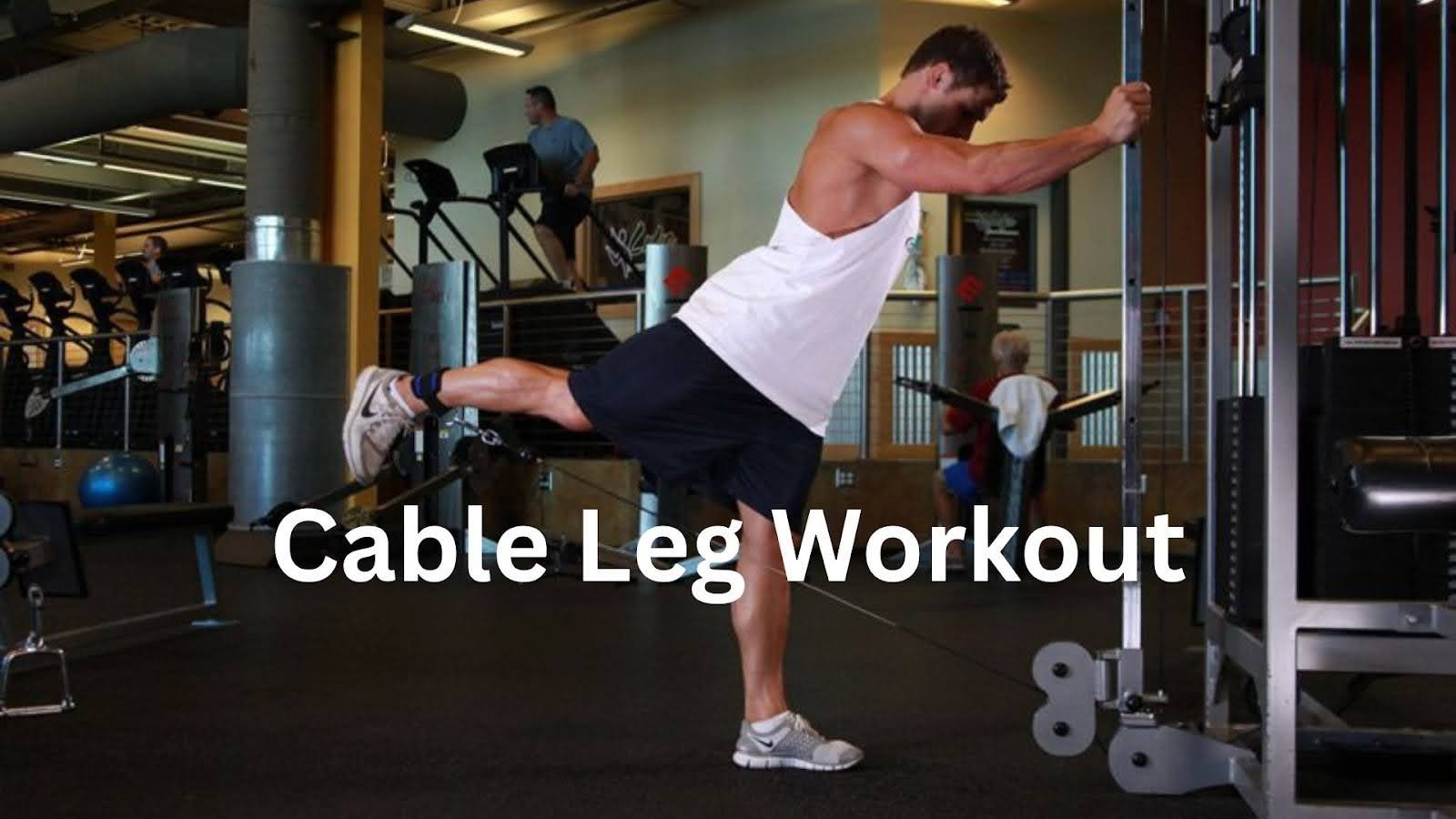
Isolate your glutes with movements that keep constant tension at the exact angle your glutes work best. Attach an ankle cuff low, face the machine, and extend your leg backward while keeping your core tight and hips square.
Most glute exercises let tension drop at the top of the movement, but cables maintain pull exactly when your muscle is most shortened. This constant resistance creates better muscle activation than free-weight alternatives.
Experiment with different torso angles to shift emphasis within your glutes. Leaning forward slightly hits the lower glutes harder, while standing upright targets the upper portion. Small adjustments create big differences in how the exercise feels and which muscle fibers get recruited most heavily.
Cable Hip Abduction and Adduction
Strengthen your inner and outer thighs with movements that directly target these often-neglected muscles. For abduction, attach the cuff to your outer ankle, stand sideways to the machine, and push your leg out against the cable’s resistance.
These exercises improve your squat stability by strengthening the muscles that keep your knees tracking properly. Weak abductors and adductors let your knees cave inward during heavy squats, increasing injury risk and reducing power output.
Start light and focus on controlled movements rather than swinging your leg with momentum. Your hip muscles respond better to strict form and higher reps than heavy, sloppy movements. The constant cable tension creates enough stimulus for growth.
Cable Leg Curl (Standing)
Target your hamstrings with an isolation movement that requires minimal setup and feels natural for most body types. Attach the ankle cuff low, face away from the machine, and curl your heel toward your glutes against the cable’s resistance.
Standing leg curls challenge your balance while isolating your hamstrings, creating functional strength that translates to better performance in compound movements. Your core works to stabilize your body while your working hamstring contracts fully.
Control the negative portion of each rep by lowering your foot slowly rather than letting the weight pull it down. This eccentric emphasis creates additional muscle damage that promotes growth.
Cable Calf Raise
Complete your lower leg development with an exercise that maintains constant tension throughout the full calf contraction. Hold a cable handle at chest height, step onto a platform or block with your toes, and raise onto your toes while the cable provides resistance.
The cable’s angle keeps tension on your calves even at full contraction, unlike calf raise machines, where resistance sometimes decreases at the top. This constant load forces your calves to work harder throughout the entire rep.
Pause briefly at the top of each rep to maximize muscle contraction before slowly lowering back down. This controlled tempo creates better calf development than bouncing through reps quickly.
Tips for Technique and Performance
Mastering proper form and strategic progression ensures your cable leg workout delivers maximum results while keeping you injury-free for long-term training success.
- Core engagement protects your spine: During every cable leg exercise,e by creates a stable foundation for force transfer. Brace your abs as if someone might punch your stomach, maintaining this tension throughout each set.
- Controlled movement speed: Keeps tension on your target muscles rather than letting momentum take over. Count two seconds up, pause briefly at peak contraction, then take three seconds to lower the weight.
- Pulley height experimentation: Reveals which angles work best for your body structure and training goals. Low attachments emphasize hip extension movements while high pulleys shift focus to your quads.
- Progressive overload tracking: Ensures consistent strength gains by systematically increasing training stress over time. Add 5 pounds when you complete all prescribed sets and reps with perfect form.
- Rest period consistency: Matters more than most lifters realize for achieving specific training adaptations. Shorter rests (45-60 seconds) create metabolic stress that promotes muscle growth.
Conclusion
Cable leg exercises provide total lower body development with just one versatile machine that can be used by any fitness level. The continuous tension, adjustable angles, and joint-friendly resistance make cables a perfect selection for muscle, strength, and stability growth without the setup complexity of traditional equipment.
These movements are excellent as solo training programs or as a great addition to your current leg routines. The effectiveness and safety of cable moves allow you to train intensely without joint wear and tear or time wasted on changing the equipment.
If you are new to cable training, start with the beginner routine and then move through intermediate and advanced programs as your strength increases. Different exercises can be mixed across your weekly sessions to stop boredom and, at the same time, ensure complete muscle development.
Frequently Asked Questions
What muscles does a cable leg workout target?
A cable leg workout effectively trains your quadriceps, hamstrings, glutes, calves, and inner and outer thighs. The adjustable pulley system lets you target each muscle group from multiple angles using different attachments and positions.
Can you build muscle with only cable leg exercises?
Yes, cables provide sufficient resistance and constant tension for serious muscle growth. The key is progressive overload through adding weight, increasing reps, or reducing rest periods over time.
How often should I do cable leg workouts?
Train your legs with cables 2-3 times per week, allowing at least 48 hours between sessions for recovery. Beginners should start with twice weekly and add a third session once adapted. Your muscles grow during rest periods, not workouts, so adequate recovery matters.
Are cable leg exercises better than free weights?
Cable exercises offer unique benefits like constant tension and adjustable angles, but work best when combined with free weights. Cables excel at isolation movements and safer joint positions, while barbells build maximum strength.
What weight should I use for cable leg exercises?
Start with resistance that allows 2-3 reps in reserve at the end of each set using perfect form. This approach builds strength while preventing injury from excessive loads. Add small increments weekly as you adapt, prioritizing form quality over heavy weights.