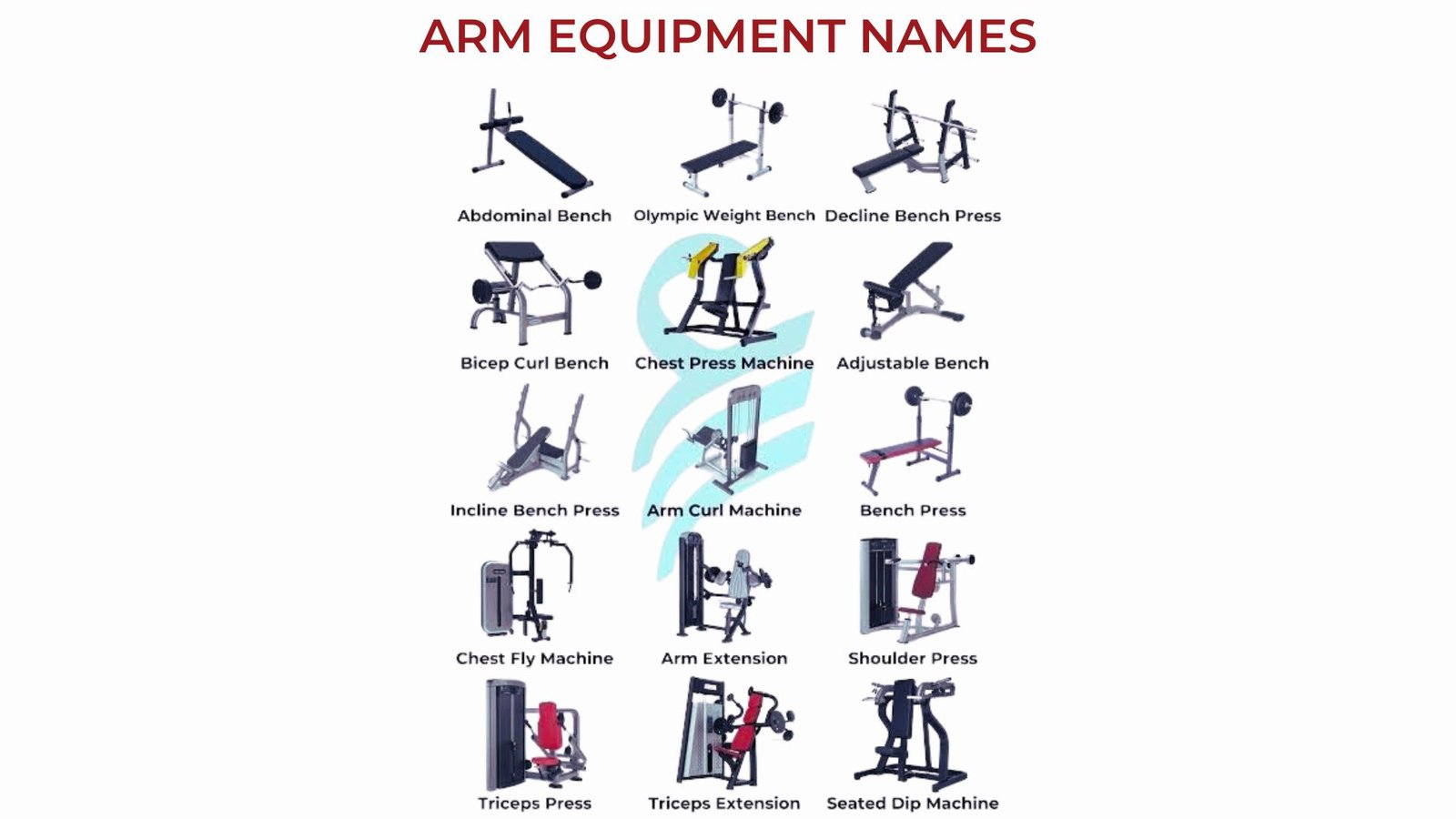
Walking into the gym and feeling confused about which arm machines to use? I get it, I’ve been there too. This guide breaks down 13 arm machines at the gym and names you need to know.
You’ll learn what each machine does, which muscles it works, and how to use them correctly. I’ve spent years training with these machines and helping others build stronger arms.
This article covers everything from bicep curl machines to cable systems, complete with workout plans for beginners and advanced lifters. Let’s make your next arm day simple and effective.
What Are Arm Machines at the Gym?
Arm machines are strength training equipment designed to target specific muscles in your arms and upper body. These machines guide your movement along a fixed path, making them safer and easier to use than free weights.
Most arm machines work your biceps, triceps, forearms, and shoulders. Some also hit your chest, back, and core muscles.
The machines utilize weight stacks, cables, or resistance systems that can be adjusted based on your strength level.
These tools help you build muscle, gain strength, and improve your arm definition. They’re perfect for people just starting out and for experienced lifters who want to focus on specific muscles.
13 Arm Machines at the Gym: Full List & Benefits
This complete guide covers all the important arm machines you need to build stronger biceps, triceps, and forearms effectively.
1. Bicep Curl Machine (Preacher Curl)

This machine targets your biceps directly with padded arm support that prevents swinging and momentum.
Primary muscles: Biceps brachii, brachialis
Benefits: Pure bicep contraction with no cheating. Safe for your lower back.
How to use: Adjust the seat so your armpits rest on the pad. Curl with palms up, pause at the top, and lower slowly.
Sets and reps: 3 sets of 10-12 reps
The preacher curl machine is ideal for isolating the biceps and building peak strength without relying on momentum.
2. Tricep Extension Machine

This machine builds the back of your arms by pushing down against resistance.
Primary muscles: Triceps brachii (all three heads)
Benefits: Works all tricep heads evenly. Safer than overhead movements for shoulder issues.
How to use: Sit with your back against the pad. Push down until arms are straight, then return with control.
Sets and reps: 3 sets of 12-15 reps
This machine develops the horseshoe shape in your triceps while protecting your shoulders from strain.
3. Cable Machine

The most versatile gym equipment. You can do dozens of arm exercises by adjusting pulley height and attachments.
Primary muscles: Biceps, triceps, forearms, shoulders (varies by exercise)
Benefits: Constant tension throughout movement. Works from any angle. Protects joints better than free weights.
Common exercises: Tricep pushdowns, bicep curls, hammer curls, face pulls
How to use: Attach your handle, set pulley height, and perform movements smoothly without letting the weight slam.
Sets and reps: 3-4 sets of 10-15 reps
Cables provide smooth resistance from any angle, making them ideal for targeting specific arm muscles effectively.
4. Hammer Curl Machine

Mimics hammer curls with added stability. Your palms face each other throughout.
Primary muscles: Brachialis, brachioradialis, biceps brachii
Benefits: Builds arm thickness better than standard curls. Improves grip strength. Less wrist stress.
How to use: Sit with your chest against the pad. Curl with palms facing each other and lower slowly.
Sets and reps: 3 sets of 10-12 reps
The neutral grip position makes this machine particularly effective for developing overall arm thickness and forearm strength.
5. Lat Pulldown Machine

Primarily a back machine, but it works the biceps and forearms heavily during pulling movements.
Primary muscles: Latissimus dorsi, biceps brachii, brachialis, rear deltoids
Benefits: Builds pulling strength. Works biceps through the full range. Best machine for working toward your first pull-up.
How to use: Adjust the knee pad, grab the bar wider than your shoulders, pull to your upper chest, and squeeze your shoulder blades.
Sets and reps: 3-4 sets of 8-12 reps
This pulling movement strengthens your biceps while building a wider back and improving overall upper body power.
6. Dip Machine

The assisted dip machine counterbalances your body weight to help you perform dips.
Primary muscles: Triceps, lower chest, anterior deltoids
Benefits: Builds serious tricep size. Works chest simultaneously. Adjustable assistance for all strength levels.
How to use: Set the weight stack (more weight = more help). Lower until elbows reach 90 degrees, push back up.
Sets and reps: 3 sets of 8-12 reps
Dips are one of the most effective tricep builders, and this machine makes them accessible to everyone.
7. Seated Row Machine

Primarily targets your back, but biceps and forearms work hard as secondary muscles.
Primary muscles: Middle back (rhomboids, traps), biceps, brachialis, forearms
Benefits: Builds upper back and arm thickness. Improves posture. Works the biceps from a different angle. Develops grip strength.
How to use: Sit with feet on the platform. Pull handles to torso, squeeze shoulder blades, and extend back out.
Sets and reps: 3-4 sets of 10-12 reps
Rowing movements strengthen your biceps and forearms while building a thicker, more defined upper back.
8. Smith Machine

A barbell fixed on vertical rails for controlled arm exercises.
Primary muscles: Varies can target triceps, biceps, shoulders, chest
Benefits: Guided bar path makes training alone safer. Easy to adjust weight. Good for injury recovery.
Common exercises: Close-grip bench press (triceps), upright rows (shoulders and biceps)
How to use: Adjust bar height, load plates evenly, rotate the bar to unhook, perform the exercise, and rotate to lock.
Sets and reps: 3-4 sets of 8-12 reps for arm work
The guided movement path lets you lift heavy safely while focusing entirely on your target muscles.
9. Arm Blaster Machine

Forces strict bicep curl form by supporting your elbows and upper arms.
Primary muscles: Biceps brachii, brachialis
Benefits: Eliminates cheating. Creates maximum bicep tension. Great for learning proper curl form.
How to use: Rest arms on the support. Curl with palms up without moving elbows forward. Squeeze at the top.
Sets and reps: 3 sets of 10-15 reps with lighter weight
This machine removes all momentum from your curls, forcing your biceps to do all the work for maximum growth.
10. Upper Body Ergometer (UBE)

Looks like a bicycle for your arms. You pedal with your hands instead of your feet.
Primary muscles: Shoulders, biceps, triceps, forearms, core
Benefits: Builds upper body endurance. Great warm-up tool. Low joint impact. Perfect for lower body injuries.
How to use: Adjust the seat, set the resistance, pedal forward or backward smoothly. Keep core tight.
Duration: 5-10 minutes for warm-up, 15-20 minutes for conditioning
This cardio machine warms up your entire upper body while building muscular endurance in your arms.
11. Assisted Pull-Up Machine

Counterbalances your body weight to help you perform pull-ups and chin-ups.
Primary muscles: Latissimus dorsi, biceps brachii, brachialis, forearms, rear deltoids
Benefits: Makes pull-ups accessible for everyone. Chin-ups hit biceps extremely hard. Builds functional strength.
How to use: Set weight (more = more help). Use a close, underhand grip for arm work. Pull until the chin passes the bar.
Sets and reps: 3 sets of 6-10 reps
Chin-ups on this machine deliver one of the most intense bicep workouts while building back strength simultaneously.
12. Chest Press Machine

Mainly works the chest, but triceps do significant pressing work.
Primary muscles: Pectorals, triceps brachii, anterior deltoids
Benefits: Builds tricep pressing strength. Safer than the bench press alone. Triceps work through the full range.
How to use: Adjust the seat so the handles align with the mid-chest. Press forward until arms are extended but not locked.
Sets and reps: 3-4 sets of 10-12 reps
Every pressing movement heavily engages your triceps, making this machine valuable for building arm size and strength.
13. Pec Deck / Rear Delt Machine

Two-function machine. One side works the chest, the other works the rear shoulders.
Primary muscles: Chest position (pectorals, front deltoids, biceps), rear delt position (rear deltoids, upper back, forearms)
Benefits: The Rear delt position builds grip strength. Chest position gives biceps isometric work. Improves shoulder health.
How to use:
For chest: Bring handles together in front.
For rear delts: Pull handles apart, squeeze shoulder blades.
Sets and reps: 3 sets of 12-15 reps
Both positions work your arms as stabilizers while building balanced shoulder development and a stronger grip.
How to Choose the Right Arm Machines?
Pick machines that match your goals and fitness level for the best results.
- Match machines to your goals and experience. Want bigger biceps? Use bicep curl machines, hammer curls, and lat pulldowns. For triceps, use extensions, dips, and presses. Beginners start with seated machines. Intermediate lifters add cables. Advanced lifters use all equipment.
- Check comfort and fit before training. Sit in the machine first. Can you reach handles easily? Does the seat adjust to your height? If it feels awkward, try a different machine.
- Target your weak points. If triceps lad, do more pressing. Weak forearms need more rows and pull-downs. Focus on areas needing extra work.
- Balance pulling and pushing equally. Do one tricep exercise for every bicep exercise. This prevents imbalances and builds better-looking arms.
- Test weight range and equipment condition. Make sure the machine challenges you. Avoid torn pads, sticky cables, or weird noises. Ask staff if something feels wrong.
Safety Tips for Using Arm Machines
Follow these simple rules to stay safe and get better results from every workout.
- Warm up for 5 to 10 minutes and adjust the machine before starting.
- Choose a weight you can control with good form.
- Lower the weight slowly and avoid letting it slam down.
- Exhale during the effort and inhale on the return.
- Keep your back supported, shoulders down, and core tight.
- Avoid locking your joints or stretching beyond a comfortable range.
- Use a firm but comfortable grip to protect your wrists.
- Stop right away if you feel sharp pain.
- Wipe down the equipment and avoid using your phone between sets.
Conclusion
Building strong arms doesn’t require fancy equipment or complicated routines. These 13 arm machines at the gym provide everything you need to develop your biceps and triceps effectively.
I’ve watched countless people convert their arms by staying consistent with these machines and following smart training plans.
Start with the beginner workout if you’re new to lifting, or challenge yourself with the intermediate plan if you have experience.
Pick three or four machines each session, focus on maintaining proper form throughout every rep, and gradually add weight as you get stronger.
Your arms will respond when you put in consistent effort. Drop a comment below sharing which machine is your favorite, or ask any questions about your arm training routine.
Frequently Asked Questions
How often should I train arms with these machines?
Train your arms 2-3 times per week with at least 48 hours of rest between sessions. This recovery time helps your muscles repair and grow stronger.
Can I build big arms using only machines?
Yes, machines provide enough resistance to build significant arm size. Adding some free weights helps, but machines work great as your main training tool.
What’s better for arms: cables or fixed machines?
Both work well. Cables give constant tension and variety. Fixed machines offer better isolation and a more convenient form. Use both for best results.
How much weight should I use on arm machines?
Pick a weight that makes your last 2-3 reps challenging but doable with good form. If you’re swinging or jerking, it’s too heavy.
Do arm machines work for women, too?
Absolutely. These machines work the same for everyone. Women get toned, defined arms from consistent training without getting bulky unless that’s their specific goal.