The dumbbell front raise is a shoulder exercise that builds strength in your front deltoids. I’ve been training clients for years, and I’ve used this movement to help hundreds of people develop stronger, more defined shoulders.
This guide covers everything you need to master the front raise. You’ll learn which muscles work during each variation, how to perform the exercise with perfect form, and how to avoid common mistakes.
I’ll show you the standing, incline, and single arm versions, plus when to use each one. You’ll also get programming advice for your experience level.
I’ve tested these techniques on myself and my clients with real results.
Dumbbell Front Raise Muscles Worked

Understanding muscle activation helps you get better results from every rep.
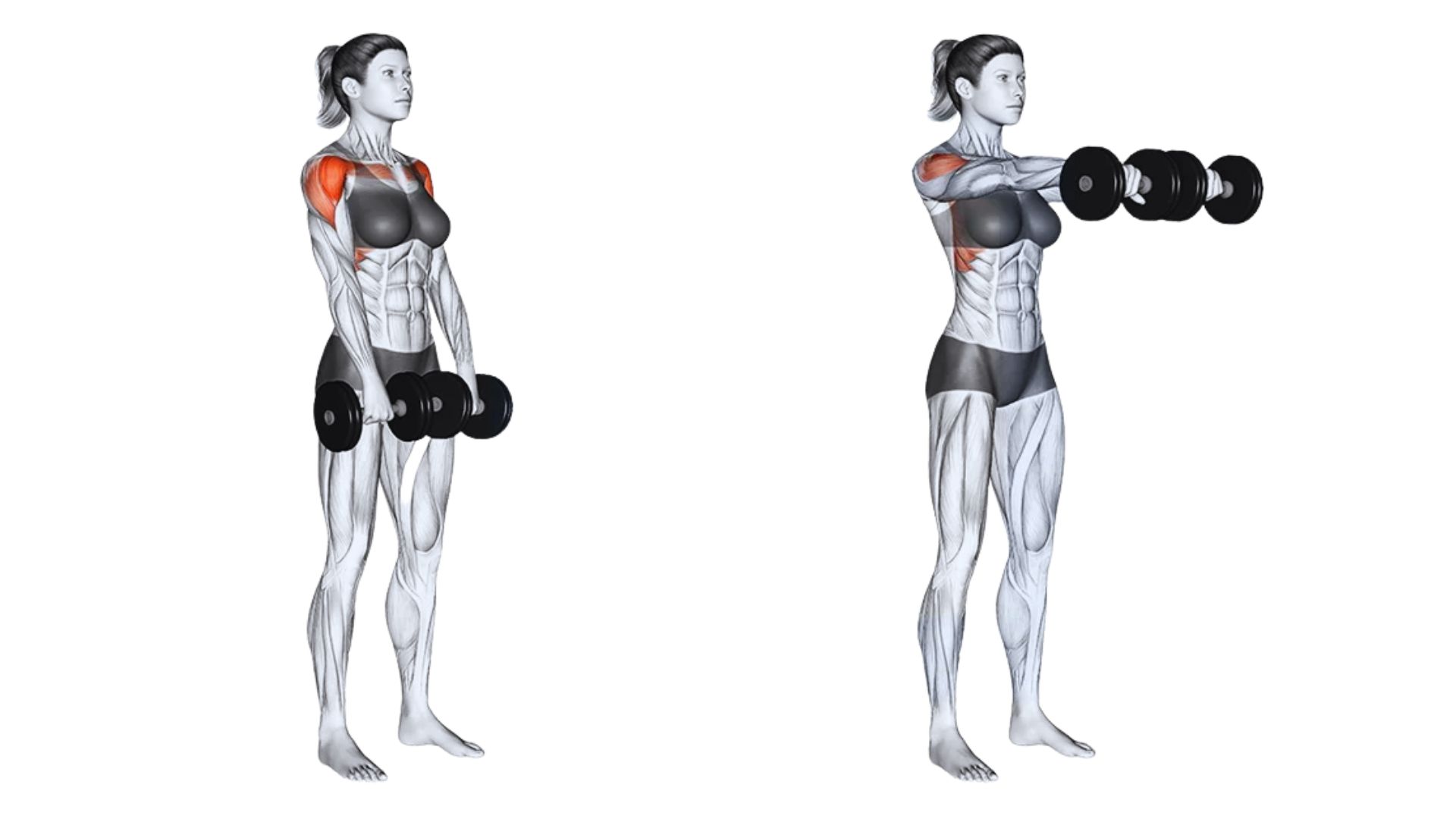
Your anterior deltoid does most of the work during front raises. This muscle sits on the front of your shoulder and lifts your arm forward and up.
When you raise the dumbbell from your thigh to shoulder height, your anterior deltoid contracts hard and builds both strength and size.
Your upper chest fibers help lift the weight during the first half of the movement. The upper trapezius stabilizes your shoulder blade to keep your shoulder in the right position.
Your core muscles prevent your lower back from arching and keep your torso steady. Your forearms grip the dumbbells through every rep.
How to Perform the Dumbbell Front Raise Correctly

Following the right technique ensures your front deltoids do the work while keeping your joints safe.
Step by Step Proper Form
Follow these steps to perform the front raise with perfect technique and maximum muscle activation.
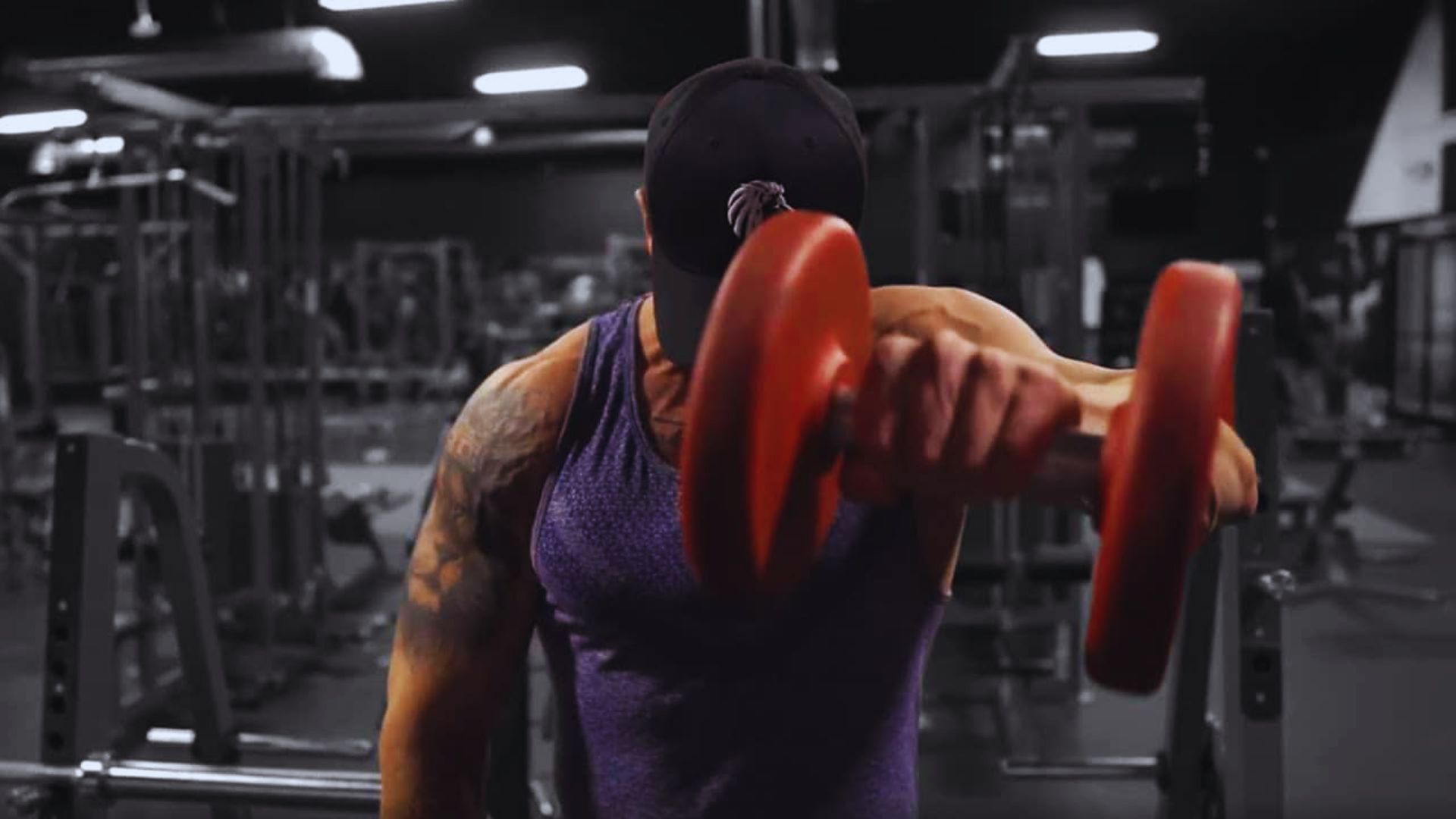
Starting position: Stand with feet hip-width apart. Hold a dumbbell in each hand with palms facing your thighs. Let your arms hang naturally with a slight bend in your elbows.
The lift: Raise both dumbbells forward and up in a smooth arc. Keep your arms mostly straight with that slight elbow bend locked in place. Lift until your arms reach parallel to the floor.
Top position: Your dumbbells should be at shoulder height. Your palms still face down toward the ground. Hold for a brief pause.
The lowering phase: Control the dumbbells back down along the same path. Resist gravity rather than just dropping the weight. Lower all the way back to your thighs.
Keep your torso still through the entire movement. Your shoulders do the work, not your back or legs.
Breathing and Tempo Guidelines
Breathe out as you raise the dumbbells. Breathe in as you lower them back down. This breathing pattern gives you stability and power.
Take two seconds to lift the weight. Pause for one second at the top. Take three seconds to lower it back down. This controlled tempo keeps tension on your muscles longer.
Avoid holding your breath, which can spike your blood pressure. Steady breathing keeps oxygen flowing to your working muscles.
Dumbbell Front Raise Variations and Muscles Worked
Each version of the front raise changes how your muscles work and how much they grow.
Standing Dumbbell Front Raise Muscles Worked

The standing version forces your core to work harder than seated variations. Your abs and lower back constantly fight to keep you from swaying or arching.
Your stabilizer muscles throughout your body engage more when you’re standing. Your legs, glutes, and core all contribute to keeping you balanced.
This variation burns more calories because more muscles work at once. It also builds functional strength that carries over to sports and daily activities.
Incline Dumbbell Front Raise Muscles Worked

Set an incline bench to about 45 degrees. Lie chest down against the pad. This position isolates your anterior deltoids more than the standing version.
The incline angle makes it harder to use momentum from your body. Your front shoulders must do all the work with less help from other muscles.
Your upper traps get less involved when you’re braced against a bench. This shift puts more tension specifically on your front deltoids.
Single Dumbbell Front Raise Muscles Worked

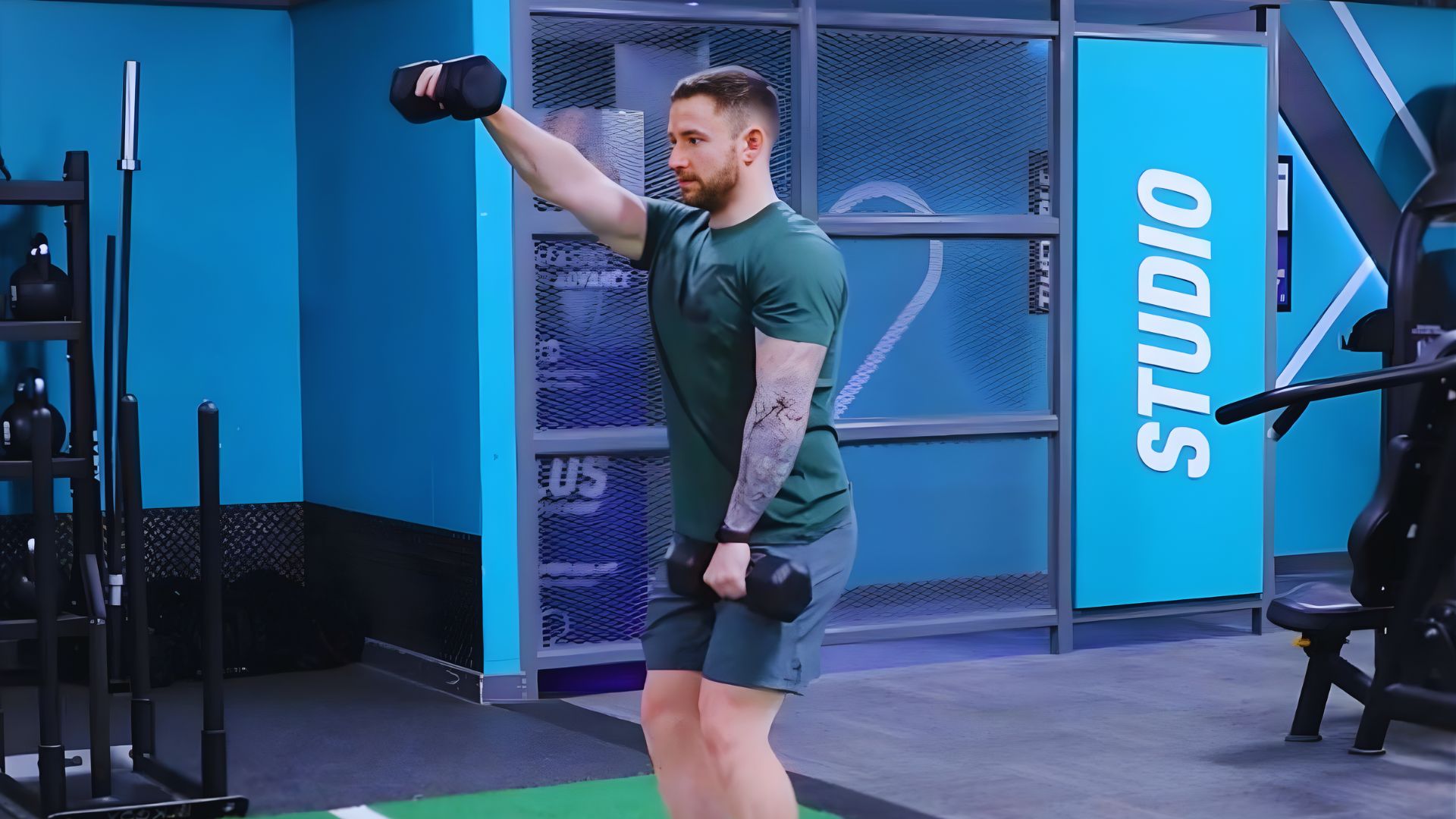
Hold one dumbbell with both hands or use one hand at a time. This creates unilateral muscle activation that reveals strength differences between sides.
Your weaker shoulder can’t hide behind your stronger one. Each side must pull its own weight, which evens out muscle imbalances over time.
Your core rotates slightly to stabilize against the off-center load when using one arm. This anti-rotation work builds core strength alongside shoulder strength.
Common Mistakes That Reduce Muscle Activation
I’ve watched people make these mistakes for years. Fixing them immediately improves results.
- Using too much weight forces you to swing and use momentum instead of letting your front deltoids do the work.
- Swinging the dumbbells with your hips or back defeats the purpose and puts unnecessary stress on your lower back.
- Raising above shoulder height shifts tension from your front deltoids to your upper traps and can cause shoulder impingement.
- Arching your lower back during the lift takes focus away from your shoulders and risks injury to your spine.
- Dropping the weight on the way down wastes the lowering phase, where your muscles build strength under control.
Dumbbell Front Raise vs Other Shoulder Exercises
Each exercise has a job. Understanding what front raises do best shows you where they fit.
Front Raise vs Lateral Raise
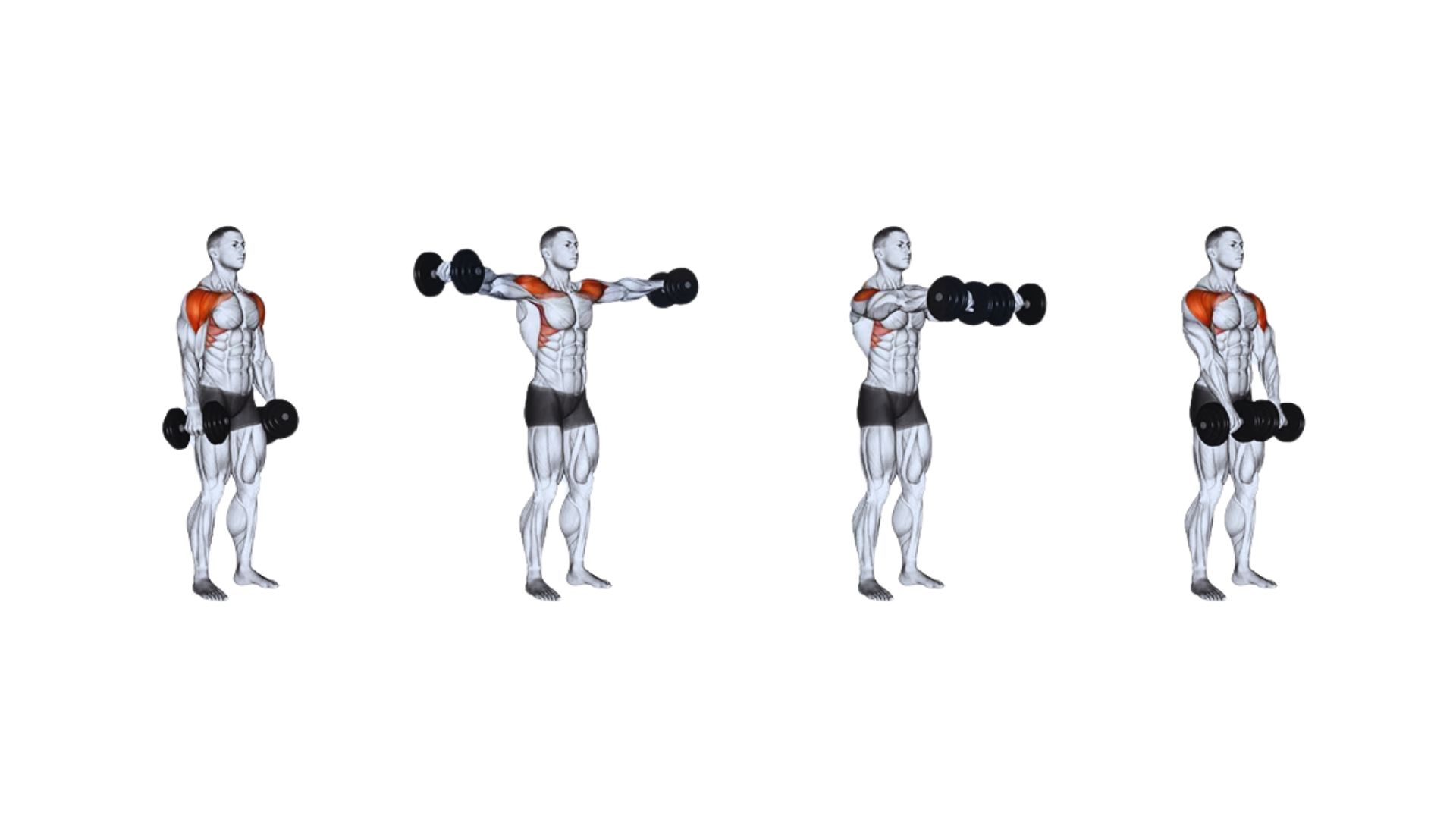
Front raises target your anterior deltoids at the front of your shoulder. Lateral raises hit your medial deltoids on the side of your shoulder.
Most people need more lateral raise work than front raise work. Your front deltoids already get hit hard during all pressing exercises like the bench press and overhead press.
Use front raises to add extra volume if your front shoulders lag. Use lateral raises to build width and the capped shoulder look.
Front Raise vs Shoulder Press

Shoulder presses are a compound movement that works multiple shoulder heads plus your triceps. Front raises isolate just your front deltoids.
Presses let you lift heavier weights and build overall shoulder strength. Front raises let you add targeted volume without taxing your whole body.
Build your program around presses first. Add front raises after for extra front deltoid work if needed.
Sets, Reps, and Programming Recommendations
The right volume and intensity depend on your training age.
Beginners should start with 2 to 3 sets of 12 to 15 reps once or twice per week. Focus on learning the movement pattern before adding weight. Rest 60 to 90 seconds between sets and place front raises after your main pressing work.
Intermediate and advanced lifters can work up to 3 to 4 sets with rep ranges from 8 to 15, depending on your goal. Use a heavier weight for lower reps to build strength and a lighter weight for higher reps for muscle endurance. Add different variations on different training days.
Many people get enough front delt work from pressing movements and can skip dedicated front raises unless their front shoulders need extra attention.
Who Should Modify or Avoid Dumbbell Front Raises
Some people need to adjust this exercise or find alternatives.
Stop doing front raises if you feel pain in your shoulder during or after the exercise. People with shoulder impingement or rotator cuff issues often struggle with this movement. See a physical therapist if shoulder pain persists.
Try cable front raises, plate raises, face pulls, or band pull-aparts as safer alternatives. These exercises work your shoulders without the same stress on your joints.
No single exercise is required for building muscle.
Conclusion
The dumbbell front raise builds strong, defined front shoulders when you do it right. I’ve seen people add real size to their delts just by fixing their form and choosing the right variation for their body.
Start with the basics. Master the standing version with light weight and perfect technique. Then add other variations as you progress.
Your shoulders will thank you for the focused attention. Try adding front raises to your next shoulder workout and feel the difference in your front delts.
Drop a comment below and tell me which variation you plan to try first. I read every response and often reply with specific tips.
Frequently Asked Questions
What muscles does the dumbbell front raise work?
The front raise primarily targets your anterior deltoids on the front of your shoulders. It also works your upper chest, upper traps, core, and forearms as stabilizers.
How many sets and reps should I do for front raises?
Beginners should do 2 to 3 sets of 12 to 15 reps with light weight. Advanced lifters can do 3 to 4 sets of 8 to 15 reps.
Should I do front raises if my shoulders hurt?
No, stop front raises if you feel shoulder pain. See a medical professional and consider safer alternatives like face pulls or band work instead.
Are front raises better standing or seated?
Standing front raises engage more core muscles and build functional strength. Seated or incline versions isolate the front deltoids better by removing momentum.
Do I need front raises if I already do overhead press?
Not necessarily. Overhead presses already work your front deltoids hard. Add front raises only if your front shoulders need extra volume or lag.