
Your shoulders hurt during or after push-ups, and you need them fixed. Maybe you’ve already tried resting, but the pain comes back the moment you start again. You’re not alone. Shoulder pain from push-ups is one of the most common workout complaints.
Here’s what you’ll learn: why your shoulders hurt in the first place, the specific form of mistakes causing the problem, and exactly how to fix it quickly. I’ll show you adjustments you can make today, stretches that actually help.
I’ve dealt with shoulder pain myself and worked through it without giving up push-ups completely.
This isn’t generic advice copied from somewhere else. It’s real solutions that come from experience and understanding how shoulders actually work during push-ups. Whether your pain is new or you’ve been dealing with it for months.
Understanding Shoulder Pain From Push-Ups

Push-ups look simple. But they put serious stress on your shoulder joint. When you lower your body, your shoulder bears compressive forces. These forces squeeze the joint from all sides. Your anterior (front) shoulder takes the biggest hit.
The weight of your entire upper body pushes down through a relatively small joint. Several things cause this pain. Poor form tops the list.
Limited mobility makes it worse. Fatigue multiplies the problem. And underlying injuries? They turn a basic exercise into something painful.
Think of your shoulder as a marble sitting on a table. It’s inherently unstable. The ball-and-socket design allows an incredible range of motion. But that mobility comes at a cost. You need strong muscles to hold everything in place.
During push-ups, you’re asking those stabilizing muscles to work overtime. They fight against gravity and compression simultaneously.
Unlike a bench press, where your back supports you, push-ups leave your shoulders completely exposed. No bench. No support. Just muscles preventing your joints from collapsing.
Hand placement matters enormously. Too wide? You’re stressing the front of your shoulder. Too narrow? You’re jamming the joint. Watch your elbows, flaring them out like wings strains your rotator cuff.
Tucking them too tightly crowds the joint space. Your posture affects everything. Forward head position puts extra weight on your shoulders. An arched lower back shifts your center of gravity. Fatigue sneaks up fast.
Step-by-Step Fixes to Reduce Shoulder Pain Fast
You don’t need to quit push-ups forever. You just need to fix what’s causing the pain. I’ll walk you through five practical fixes that work. Start with the first one and move through each step until your shoulders feel better.
1. Check and Correct Your Form

Form fixes everything. Seriously, most shoulder pain disappears when you adjust your position. Start by placing your hands directly under your shoulders or slightly wider.
Point your fingers straight ahead or angle them slightly outward. Keep your spine neutral from head to tailbone. No sagging hips. No arched back.
Your elbows should stay at about a 45-degree angle to your body, not flaring out like airplane wings.
Pull your shoulder blades back and down as you lower yourself. Engage your core and squeeze your glutes. This prevents your body from collapsing. Record yourself doing a push-up. You’ll spot problems immediately.
2. Modify Your Push-Up to Reduce Stress
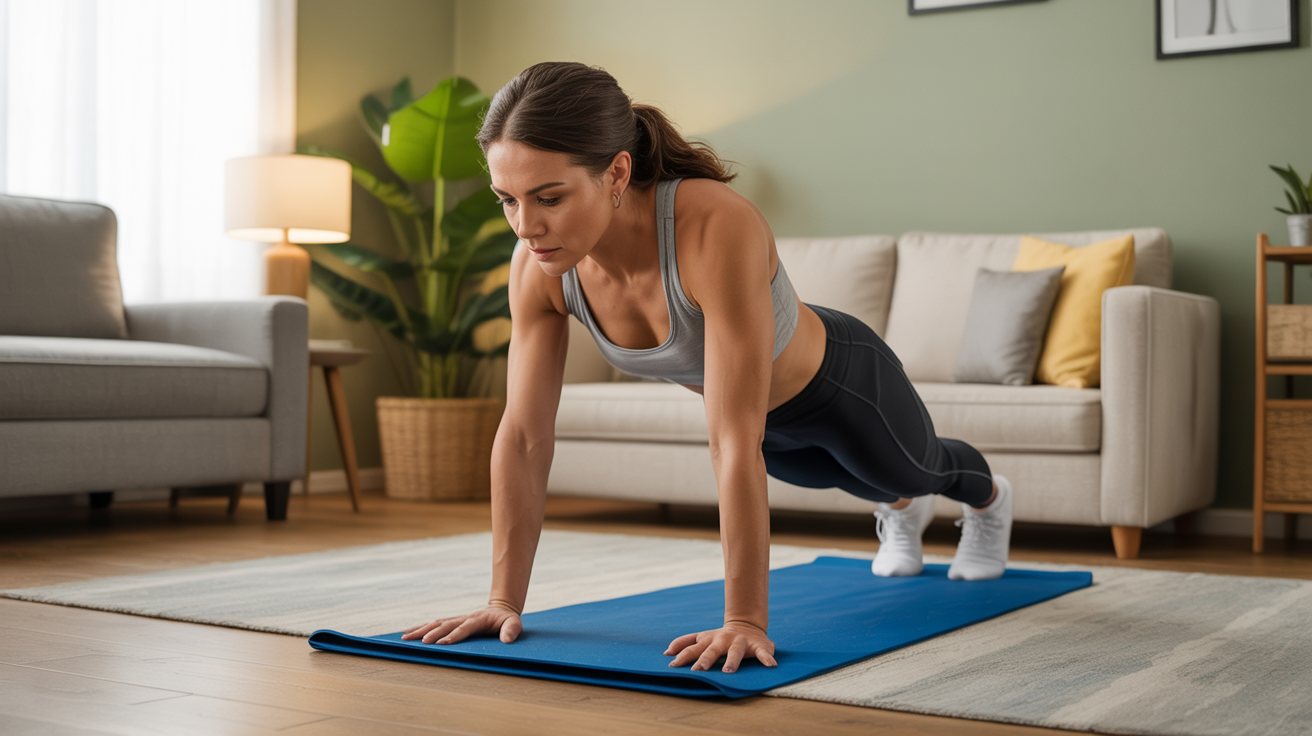
Standard push-ups might be too much right now. That’s okay. Drop to your knees. Knee push-ups cut the load dramatically.
Still too much? Move to the wall. Wall push-ups are incredibly gentle on your shoulders. You can also use an elevated surface, a bench, or a sturdy box.
Incline push-ups shift the angle of compression. Your shoulder joint handles the load much better when you’re more upright.
The higher the surface, the less stress. I recommend this modification for anyone returning from injury. Build strength here first. Then progress back to the floor.
3. Switch Movements to Reduce Overuse

Sometimes your shoulders need a break from push-ups entirely. Give them one. Replace push-ups temporarily with dumbbell lateral raises, dumbbell front raises, or neutral-grip pressing. Resistance band presses work great, too.
These movements target your shoulders without the heavy compression.
They relieve stress on repeatedly fatigued muscles. Your rotator cuff gets a break. Your anterior deltoid recovers.
Switch to these alternatives for two to three weeks. Then slowly reintroduce push-ups with perfect form. Your shoulders will feel stronger and more stable.
4. Strengthen Your Rotator Cuff

Your rotator cuff stabilizes everything. Weak rotator cuff muscles equal shoulder pain. Add external rotations with a resistance band to your routine. Include face pulls and band pull-aparts. Try YTW raises. They hit all the small stabilizer muscles at once.
Do these two to three times per week. Use lightweight or bands. Focus on control, not speed. Aim for 12 to 15 reps per set. Your rotator cuff needs endurance more than raw strength. Strong stabilizers mean pain-free push-ups. Build the foundation first. The push-ups will follow.
5. Address Pain Early, Not Later

Pain is your body’s alarm system. Listen to it. Dull soreness after a workout? Usually fine. But sharp pain during the movement? Stop immediately. Persistent discomfort that lasts for days? Not normal. Pain that affects daily activities, lifting a bag, reaching overhead, or sleeping on that side? You need to address this now.
Ignoring pain makes everything worse. A minor strain becomes a major tear. I’ve worked with people who pushed through shoulder pain for months. They ended up needing physical therapy or surgery. Don’t be that person. Rest when you need rest. Modify when you need modifications. Your shoulders will thank you later.
Exercises That Help Reduce Shoulder Pain (Rehab Focus)
Rehab doesn’t mean avoiding movement. It means choosing the right movements. I’m going to show you exercises that actually heal your shoulders instead of hurting them. These are proven progressions that take you from pain to strength.
Rehab Progression Position 1: Elevated Push Up Series

Elevation is your best friend right now. It reduces the load on your shoulders dramatically. The higher the surface, the easier the exercise. Start where you can complete 10 reps with zero pain, not even a twinge.
- Elevated Plank: Hold for 20-30 seconds, focus on the shoulder blade position
- Plank with Foot Lift: Lift one foot at a time, keeping core engaged
- Elevated Shoulder Taps: Tap opposite shoulder while maintaining stability
- Elevated Push-Ups: Full range of motion with perfect form
- Elevated Archer Push-Ups: Shift weight side to side, build unilateral strength
Master each exercise before moving to the next. When you can do 15 perfect reps, drop to a lower surface. Progress slowly. Your shoulders are healing, not racing.
Rehab Progression Position 2: Quadruped Series

Once elevated exercises feel easy, drop to all fours. The quadruped position is your next progression. It places a moderate load on your shoulders while teaching scapular control.
- Quadruped Rock Back: Sit your hips toward your heels, stretch your shoulders
- Quadruped Arm Lifts: Extend one arm forward, hold for 3 seconds
- Bird Dog: Opposite arm and leg, challenges stability
- Quadruped Shoulder Taps: Same as the elevated version, but harder
- Quadruped Push-Up Hold: Hover knees off the ground, brutal but effective
Focus on quality over quantity. Do 8 perfect reps instead of 15 sloppy ones. Your scapular stabilizers are learning new patterns. Give them time.
Rehab Progression Position 3: Plank-Based Exercises

Full planks prepare you for complete push-ups. They build total-body tension. Your shoulders learn to stabilize under real load. This is where strength meets control.
- High Plank Holds: 30-60 seconds, perfect position throughout
- Plank Shoulder Taps: Minimal hip rotation, maximum shoulder stability
- Plank Walk-Outs: Walk hands forward and back, a dynamic challenge
- Slow-Tempo Push-Ups: 3 seconds down, 3 seconds up
- Deficit Push-Ups: Increases range when you’re ready for more
Master the holds first. Then add movement. Then add tempo. Each step builds on the last. Your shoulders are getting stronger every single session.
Rehab Progression Position 4: Knee Push-Ups

Knee push-ups bridge the gap between planks and full push-ups. They reduce your body weight by about 50%. That’s a significant load reduction while maintaining the full movement pattern.
- Knee Push-Ups: Standard form, full range of motion
- Pause Knee Push-Ups: Hold at the bottom for 2 seconds
- Tempo Knee Push-Ups: Slow and controlled, no momentum
- Diamond Knee Push-Ups: Hands close together, triceps emphasis
- Wide Knee Push-Ups: Hands wider, more chest activation
Aim for 15 perfect reps before moving to full push-ups. If your shoulders hurt, you’re not ready yet. Stay here longer. There’s no shame in building a rock-solid foundation.
Rehab Progression Position 5: Full Push-Ups

You’ve earned this. Full push-ups are the final progression. But don’t abandon everything you learned getting here. Form still matters, maybe even more now.
- Standard Push-Ups: Hands under shoulders, elbows at 45 degrees
- Close-Grip Push-Ups: Targets triceps, reduces shoulder stress
- Archer Push-Ups: Shift weight to one side, build unilateral strength
- Tempo Push-Ups: 4 seconds down, explosive up
- Push-Up Plus: Regular push-up plus shoulder blade protraction at theoptopuild volume slowly. Add one rep per workout. Your shoulders have been through a lot. They’re strong now, but they need consistent, progressive work to stay that way.
How to Prevent Shoulder Pain During Future Push-Ups?

Prevention beats treatment every single time. You’ve done the work to fix your shoulders. Now let’s keep them healthy. These strategies will protect your shoulders for years to come.
- Warm Up Properly: Activate your shoulders before loading them, try band pull-aparts, arm circles, and scapular push-ups to prepare the joint and muscles for work.
- Keep Form Clean: Engage your core to prevent sagging, keep shoulder blades stable, avoid flaring elbows, and maintain a neutral head position throughout every single rep.
- Rest Days Matter: Overuse leads to irritation and breakdown. Take 1-2 rest days per week, especially if soreness lasts 48+ hours or your form starts breaking down.
Fast Relief Tips to Use Today
Your shoulder hurts right now. You need relief fast. Here’s what actually works: no complicated protocols, just simple strategies you can start immediately.
- Ice Then Heat: Apply ice for 15-20 minutes every few hours during the first 24-48 hours to reduce inflammation. After 48 hours, switch to heat to relax tight muscles and increase blood flow
- Gentle Mobility Work: Try slow arm circles, scapular glides against a wall, and light band work for your rotator cuff, external rotations, and face pulls with minimal resistance, promoting healing without stressing the joint
- Stop Push-Ups Temporarily: Avoid push-ups completely until you’re pain-free. Temporary avoidance isn’t weakness. It’s a smart recovery that gives your shoulder the break it needs to heal properly
Conclusion
Shoulder pain from push-ups doesn’t have to sideline your fitness goals. By focusing on proper form, warming up effectively, and strengthening the supporting muscles around your shoulder, you can eliminate discomfort and get back to training safely.
Remember, pain is your body’s signal that something needs adjustment. Whether it’s correcting your hand placement, building rotator cuff strength, or simply giving yourself adequate recovery time, these small changes make a big difference in how your shoulders feel.
Start implementing these fixes today, and you’ll notice improvement within just a few sessions. Have questions or tips of your own? Drop a comment below, I’d love to hear what’s worked for you. And if this helped, share it with a friend who might be dealing with the same struggle.
Frequently Asked Questions
What causes shoulder pain from push-ups?
Shoulder pain from push-ups usually stems from improper form, weak stabilizing muscles, or overtraining. Common culprits include hand placement that’s too wide, flared elbows, rounded shoulders, or inadequate warm-up. Poor scapular control and tight chest muscles can also contribute to shoulder discomfort during push-ups.
How do I fix my push-up form to prevent shoulder pain?
Keep your hands shoulder-width apart with elbows at 45 degrees to your torso. Engage your core, maintain a neutral spine, and retract your shoulder blades. Lower with control and avoid excessive flaring. Focus on scapular stability throughout the movement to protect your shoulders from strain.
Can I still do push-ups with shoulder pain?
Avoid push-ups if you have sharp or severe shoulder pain. Instead, try modified versions like incline push-ups, wall push-ups, or knee push-ups to reduce stress. These variations allow you to maintain strength while your shoulder heals. Resume regular push-ups only when pain-free.
What exercises help relieve shoulder pain from push-ups?
Focus on rotator cuff strengthening with exercises like band external rotations, face pulls, and scapular wall slides. Add doorway chest stretches and foam rolling for tight muscles. Shoulder dislocates with a resistance band and dead hangs also improve mobility and reduce shoulder pain from push-ups.
How long until shoulder pain from push-ups goes away?
With proper rest, form correction, and targeted exercises, mild shoulder pain typically improves in 1-3 weeks. More severe cases may take 4-6 weeks. Consistency with stretching, strengthening, and modified movements accelerates recovery. Persistent pain beyond six weeks warrants professional evaluation from a healthcare provider.