You’ve probably heard rowing works your whole body, but does it actually build abs? Most people assume it’s just for cardio or back muscles. They miss what’s really happening in your core during every stroke.
Here’s what you need to know. Rowing does work your abs, and it does it in ways sit-ups can’t match. In this article, I’ll show you exactly how your core engages during rowing, why it’s more effective than you think, and what you need to do to actually see results. You’ll get the real mechanics behind the movement and practical tips you can use right away.
I’ve spent years using rowing machines and studying how different exercises build muscle. This isn’t recycled fitness advice or promises about quick six-packs. It’s honest information about what rowing does for your core. Let’s clear up the confusion.
Why Rowing Is Good for Abs
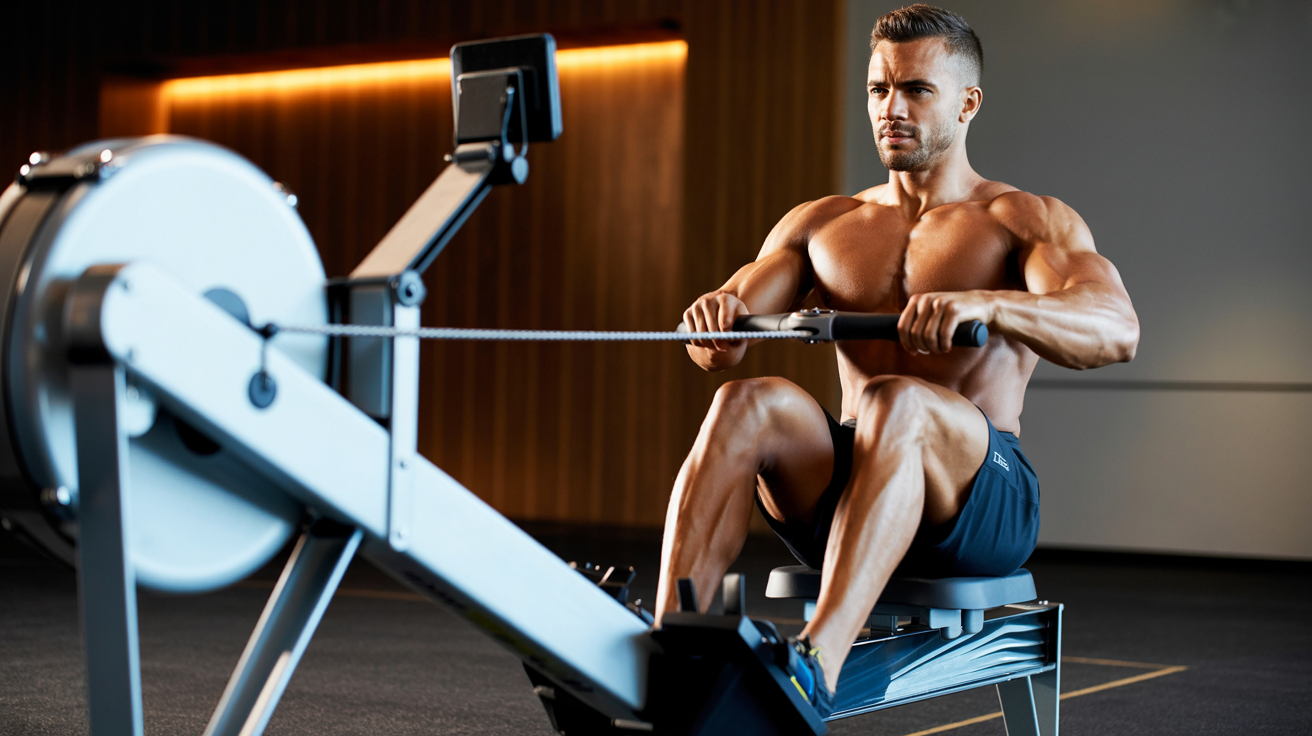
Rowing won’t beat up your joints. That’s the beauty of it. The machine glides smoothly, so there’s no pounding like running or jumping. But your core? It works constantly during every single stroke. Your abs act as the bridge between your legs and arms. Without a strong center, the power goes nowhere. Think of your core as a shock absorber that holds your entire body together while your legs push and your arms pull.
Here’s what I’ve learned: rowing fires up your entire core system. Your rectus abdominis, the “six-pack” muscle, supports your posture and helps you bend forward. But it’s not working alone. The transverse abdominis wraps around your spine like a weight belt, stabilizing everything deep inside. Your obliques keep you from tipping over or rotating sideways. Some muscles you can see, some you can’t, but they’re all working hard to keep you stable.
Most people think rowing is all legs and arms. Wrong. Your core stabilizes everything as your legs explode backward, and your arms pull. Without it, you’d crumple. The finish position is sneaky too, legs straight, leaning back slightly, handle at your chest. It basically mimics a boat pose from yoga, keeping your abs under tension while you’re technically “resting.” Instructors often throw in holds at the finish for 5-10 seconds, and that’s when you realize your abs have been burning the whole time.
How the Rowing Stroke Strengthens Abs?
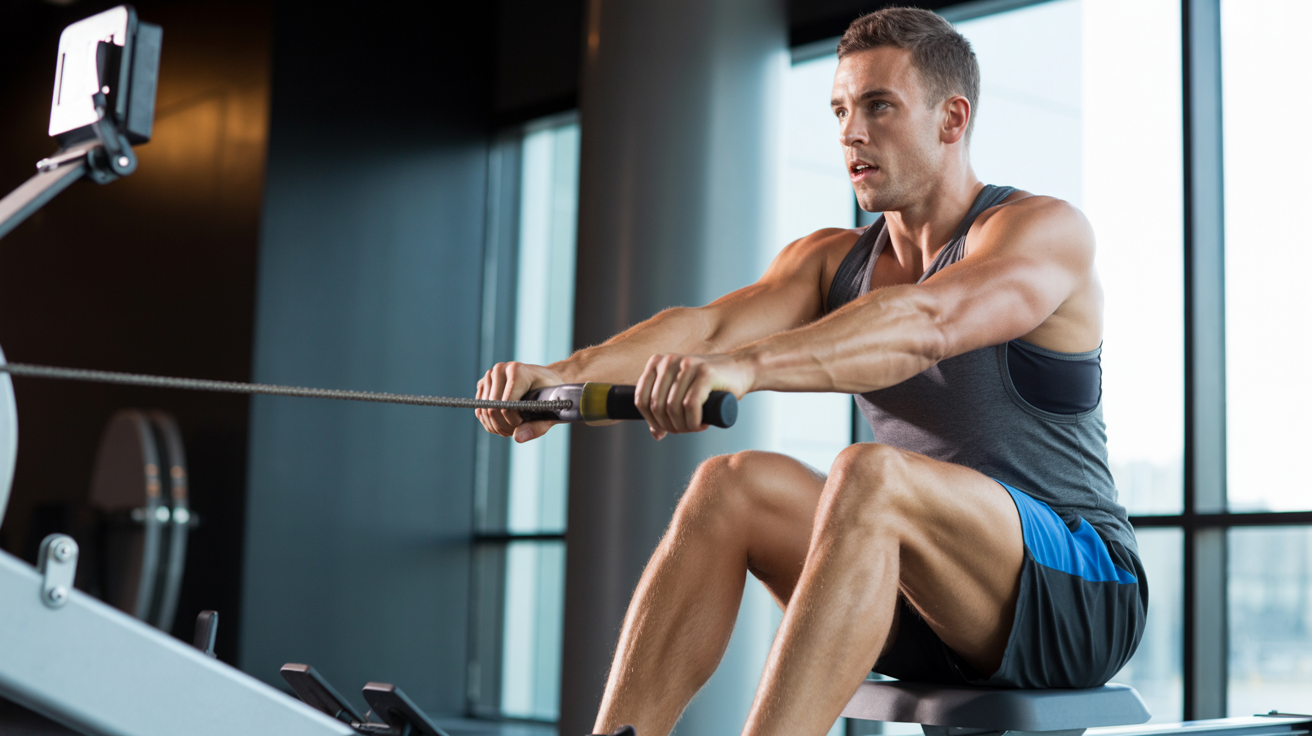
Every rowing stroke has three phases, and your abs work differently in each one. Here’s the breakdown. Understanding how your core activates during the drive, swing back, and recovery will help you maximize results and feel the burn in all the right places.
- Legs: Power at the bottom of the stroke, but your core is what catches and transfers that explosive force through your body. Without strong engagement through your midsection, you’d collapse under the load like a broken hinge. Power transfer happens in milliseconds, and your abs are the control center that makes it smooth instead of sloppy.
- Hip hinge: Activates your lower abdominals and obliques as you lean slightly backward during the swing back phase. This isn’t passive floppin’, it’s controlled movement that lights up your core. Your obliques fire to keep you from rotating sideways, and proper posture is everything here because slouching kills all that beautiful tension.
- Controlled movement: Trains muscular endurance because your abs never get a break during the recovery phase. You’re moving slowly forward, resetting for the next stroke, and your core stays engaged the whole time. Rowing at 20 to 34 strokes per minute means your abs are firing 20 to 34 times every 60 seconds, building stamina that carries over to everything else you do.
Five Reasons Rowing Works Your Abs

You might think rowing is just for your arms and legs. Think again. Your abs are getting hammered every single stroke, and here’s exactly why rowing builds core strength better than most exercises.
- Full-body engagement: Activates 86% of your muscles simultaneously, combining strength and cardio in one movement. This makes rowing incredibly efficient. Even a 20-minute session gives you maximum results because your core is working alongside everything else. No exercise does more with less time.
- Posture correction: Counteracts the damage from sitting, slouching, and staring at screens all day. When your posture improves, your core alignment gets better, and that means your abs activate more naturally and effectively during every movement, not just during workouts.
- Power generation requires constant core stability, or the entire stroke falls apart. A weak core means weak drive and reduced power transfer from your legs to your arms. Proper technique demands consistent engagement for every single stroke. Your abs can’t take a break.
- Dynamic movement: Challenges your core from multiple angles because the speed and intensity constantly change throughout the stroke. The long, athletic motion pattern isn’t static like a plank. It forces your abs to stabilize, transfer power, and adapt in real-time.
- Endurance building: Happens through repetition, training your core for sustained performance instead of just short bursts. A 15 to 45-minute rowing workout means hundreds of strokes, and that cumulative ab engagement builds the kind of stamina you can’t fake.
Techniques to Maximize Ab Engagement While Rowing

Good form isn’t just about preventing injury. It’s about making every stroke count. These five techniques will turn your rowing session into a serious core workout, no extra effort required, just smarter movement.
- Proper posture means keeping a neutral spine, engaged core, and relaxed shoulders from start to finish. Slouching kills core activation instantly, and overreaching forward strains everything. Your abs can’t fire correctly if your body is bent like a question mark, so sit tall and stay tight.
- Hip hinge is the secret to correct power transfer from your legs through your core to your arms. You’re pivoting at the hips, not rounding your back like you’re picking up a heavy box. This keeps the load on your abs instead of straining your lower back, and that’s where real core strength gets built.
- Controlled movements, in the recovery phase, are non-negotiable if you want results. Don’t rush the slide forward. You’re not in a race against yourself. Slow motion increases time under tension for your abs, which means more work, more burn, and better endurance over time.
- Finish holds add an extra layer of ab torture in the best way possible. Hold the finish position, legs straight, leaning back slightly, for 1 to 3 seconds before starting the recovery. This enhances tremble-inducing core stabilization and makes you realize just how hard your abs are working.
- Strategic resistance forces deeper core activation when you crank up the drag or damper setting. Higher resistance doesn’t just make you tired. It makes your abs work harder to stabilize the increased load. This is how you improve strength, not just endurance, and build a core that can handle serious power.
Rowing Workouts Specifically for Stronger Abs
You want visible abs? You need a plan. These rowing workouts target your core from every angle, some build strength, some build endurance, and some just make your abs scream for mercy.
1. Core-Focused Rowing Intervals
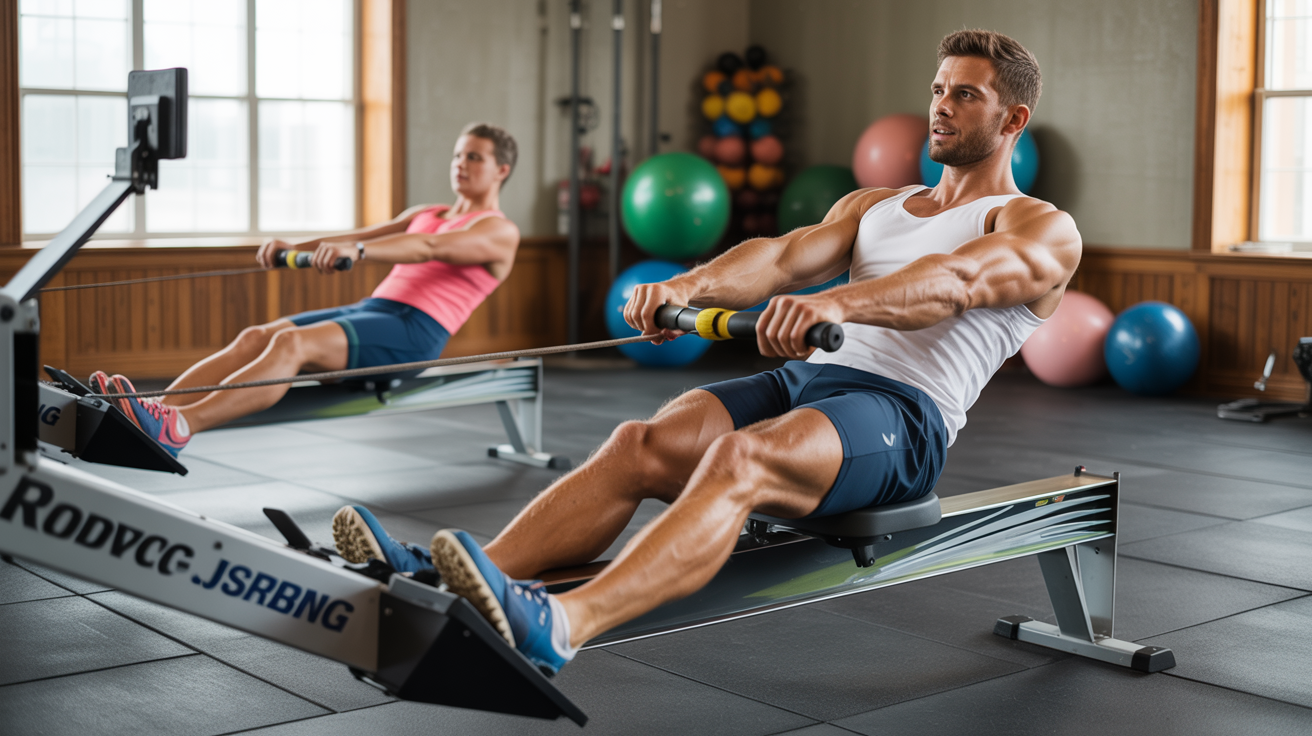
This workout is simple but brutal. You alternate between 30 seconds of strong, powerful drive and 30 seconds of controlled, slow recovery. No coasting allowed. The contrast between explosive power and deliberate control forces your core to work overtime.
Repeat this cycle 10 to 15 rounds, and you’ll feel it everywhere. Your abs stabilize during the drive, then stay engaged during the recovery. That’s 5 to 7.5 minutes of pure core activation with zero breaks.
2. Technique Drills That Target the Core

Drills aren’t just for beginners. They isolate specific parts of the stroke, so your core has nowhere to hide. Arms-and-body-only rowing removes the leg drive entirely, forcing your abs to do all the stabilization work. The pause-at-finish drill holds you at peak tension for 2 to 3 seconds every stroke.
Pick-drill sequences break down the stroke into pieces, arms only, then arms and body, then add legs. This fine-tunes your posture and core engagement because you’re moving deliberately instead of just flying through strokes. Slow and controlled wins here.
3. Long Steady-State Rows for Endurance
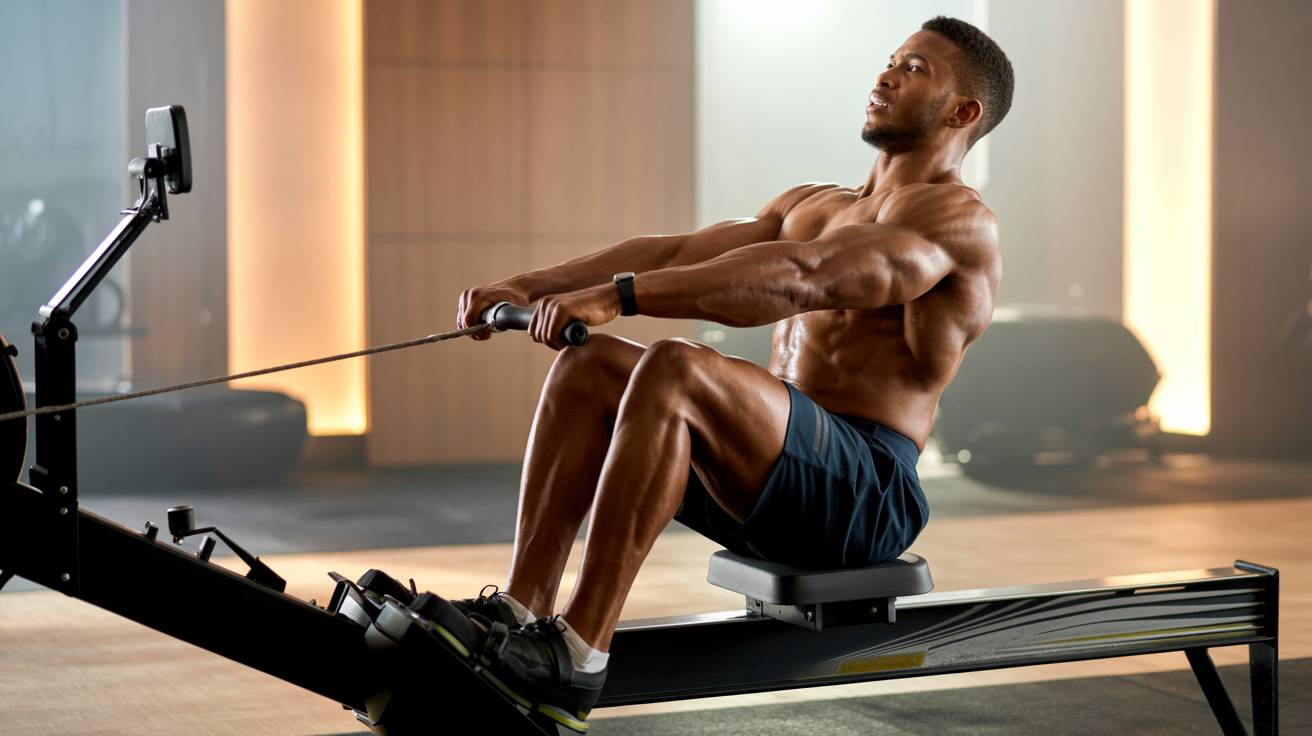
Set a timer for 15 to 45 minutes and row at a consistent, sustainable pace. No sprinting. No stopping. Just steady, continuous movement. This isn’t about intensity, it’s about duration. Your core fires with every single stroke, building deep endurance as the minutes pile up.
By minute 20, you’ll feel muscles you didn’t know existed. By minute 40, your abs will be cooked. This is how you train your core to perform under fatigue, and that endurance carries over to everything else you do.
4. Row + Core Superset Workouts

This format pairs rowing intervals with direct ab exercises for a one-two punch. Row hard for 3 to 5 minutes, then hop off and hit the floor for planks, Russian twists, leg raises, or hollow holds. The combination is lethal. Rowing works your abs through stabilization, then the floor exercises target them directly.
Repeat the cycle 3 to 5 times, and you’ve got a complete core destroyer. This builds both strength and definition because you’re attacking your abs from multiple angles. Visible results come faster when you combine compound movements with isolation work.
5. Pyramid Power Workouts

Start with 1 minute of rowing, then increase by 1 minute each round until you hit 5 minutes. Then work your way back down, 5, 4, 3, 2, 1. No rest between rounds. Your core has to maintain tension through the entire 25-minute workout, and there’s nowhere to hide.
The beauty of pyramids is variety. Your abs adapt to short bursts, then get tested by longer endurance rounds, then challenged again by short bursts when they’re already fatigued. This builds mental toughness along with physical core strength that lasts.
Common Mistakes That Reduce Ab Activation
Your form might be sabotaging your abs without you even knowing it. These mistakes are common. Fix them, and you’ll feel your core light up like never before.
- Arm-only rowing: Turns a full-body exercise into a weak upper-body pull that barely touches your abs. You’re skipping the leg drive and hip hinge, the two movements that force your core to stabilize and transfer power.
- Slouching or overarching: Your lower back destroys core engagement instantly. A rounded spine shuts off your abs, and an overarched back dumps all the tension into your lower back instead of your core, where it belongs.
- Rushing recovery: This means you’re sliding forward too fast, turning the stroke into sloppy cardio instead of controlled strength work. Slow down, your abs need time under tension to actually get stronger.
- Wrong resistance: Kills result from both directions. Too low, and your core has nothing to stabilize against. Too high, and your form breaks down because you’re grinding instead of flowing smoothly through each stroke.
- Holding your breath: Breathing randomly wastes half your core’s potential. Exhale during the drive phase when your legs push, it naturally engages your deep core muscles and makes the power transfer way more efficient.
Conclusion
So, is rowing good for abs? Absolutely. Your core is working the entire time you row, stabilizing your body and transferring power with every stroke. It’s not just cardio, it’s a solid core workout that builds real functional strength.
You’ve got your answer now. Rowing hits your abs differently than crunches or planks, and that’s actually a good thing. Add it to your routine and focus on proper form, especially that strong finish position. Your abs will thank you.
Give rowing a real shot if you haven’t been taking it seriously for core work. Mix it with your other ab exercises and see how your midsection responds. If you’ve got questions or your own rowing experience to share, drop a comment below. I’m curious what works for you. And if this helped clear things up, pass it along to someone else.
Frequently asked questions
Is rowing good for abs or just cardio?
Rowing is both cardio and a core workout. Your abs work constantly to stabilize your body and transfer power from your legs to the handle. Every stroke engages your entire core, especially during the finish position. It’s not isolated ab work like crunches, but it builds real functional strength.
Can you get a six-pack from rowing?
Rowing strengthens your abs, but visible six-pack abs come from low body fat. Rowing burns calories and builds core muscle, which helps, but you’ll need proper nutrition too. Think of rowing as building the abs underneath, while the cardio helps reveal them. Diet is still the biggest factor.
How long should I row to work my abs?
Start with 15-20 minute sessions, focusing on proper form over speed. Your abs work throughout the entire rowing motion, so quality matters more than duration. As you get stronger, work up to 30-45 minutes. Even short sessions build core strength when your technique is solid.
Is rowing better than planks for abs?
They work your abs differently. Planks are static holds that build endurance. Rowing is dynamic, working your abs through movement while also providing cardio. The best approach is to use both. Rowing builds functional core strength, while planks add that stability and endurance.
What rowing technique works the abs the most?
Focus on the finish position where you lean back slightly with the handle pulled to your ribs. Your core has to work the hardest here to maintain stability and posture. Also, drive powerfully with your legs first, then engage your core to transfer that power. Proper sequencing maximizes AB engagement.