
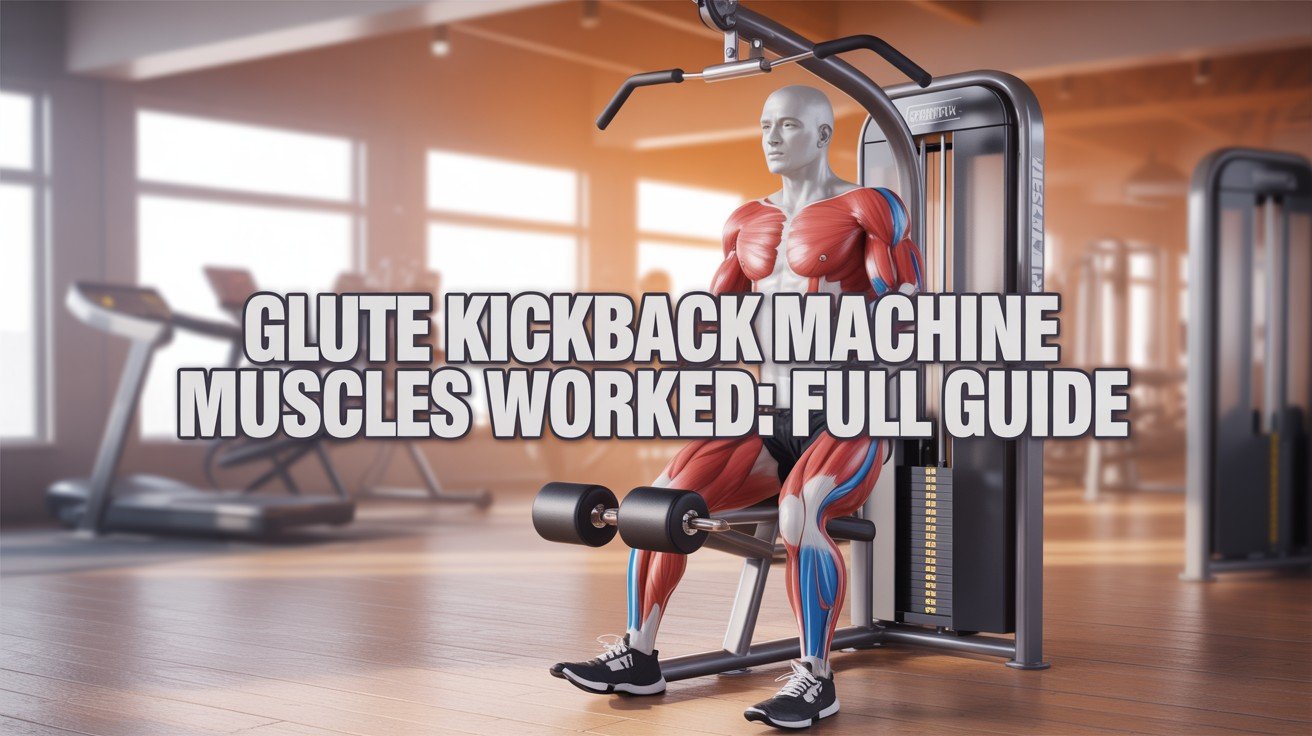
You’ve probably seen people at the gym using that angled machine, kicking their legs back, and feeling the burn in their glutes. But what is really going on? Which muscles are doing the work, and does it actually help build your butt?
The glute kickback machine is a favorite for isolating and shaping the glutes. It might look simple as you push your leg back, but there is much more happening beneath the surface. This move activates several muscles, not just your glutes, and your technique determines how effective it is.
In this guide, you will find how the glute kickback machine works, which muscles it targets, and how to use it for the best results. You will also learn the right form, common mistakes to avoid, and simple tips to make every rep count.
What Is the Glute Kickback Machine?
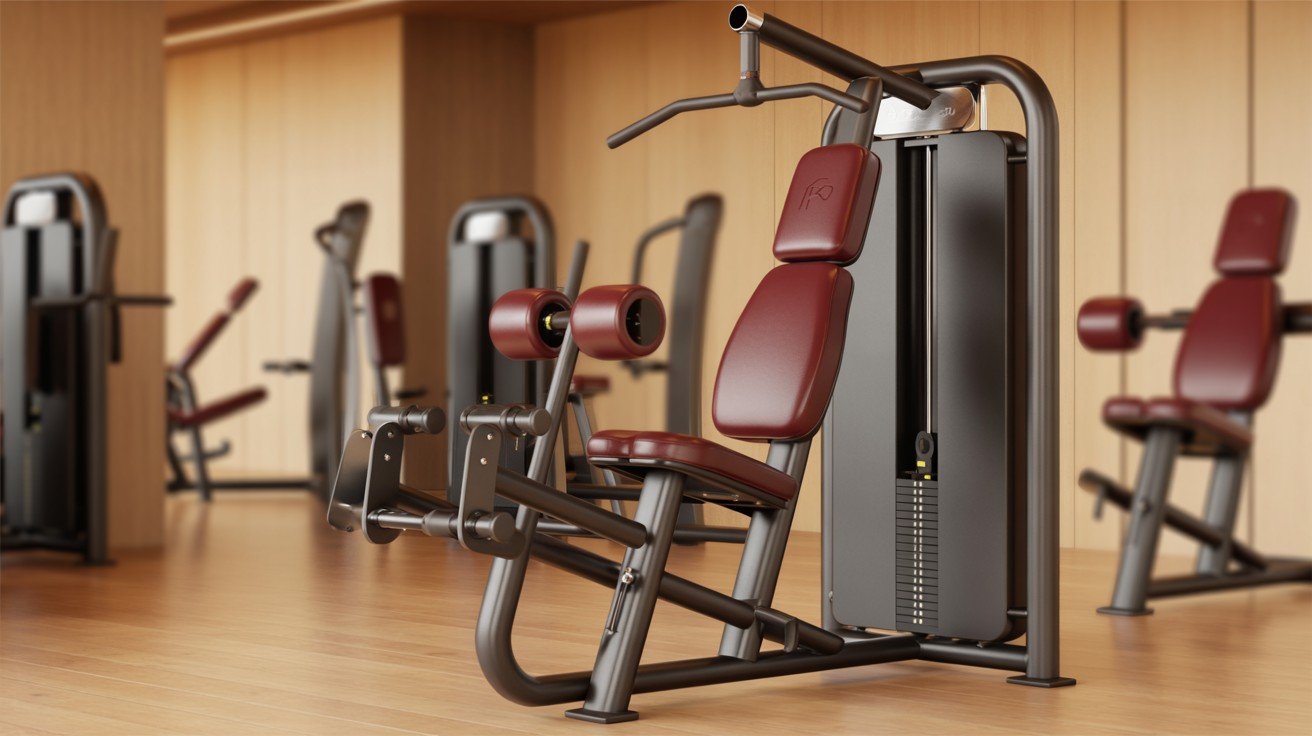
Before we dive into muscles, you need to understand what this machine actually does. The glute kickback machine is built specifically to isolate and target your glutes through one simple movement.
How Does the Machine Work?
The glute kickback machine is a resistance-based tool designed to isolate and strengthen your gluteus maximus. It’s one of the few machines that puts your glutes front and center.
You might hear different names: glute kickback machine, donkey kick machine, or glute extension machine. They all describe the same equipment. The movement involves pushing one leg backward against resistance in a controlled motion. You place your forearms or chest on a padded support, then press one leg back with your heel, making contact with the pad.
The machine creates constant tension on your glutes throughout the entire range of motion. This setup removes momentum and keeps the focus exactly where you want it: your butt.
Glute Kickback Machine Muscles Worked
Now, let’s break down exactly which muscles fire when you use this machine. Understanding what’s working helps you maximize your results and fix your form.
Primary Muscles
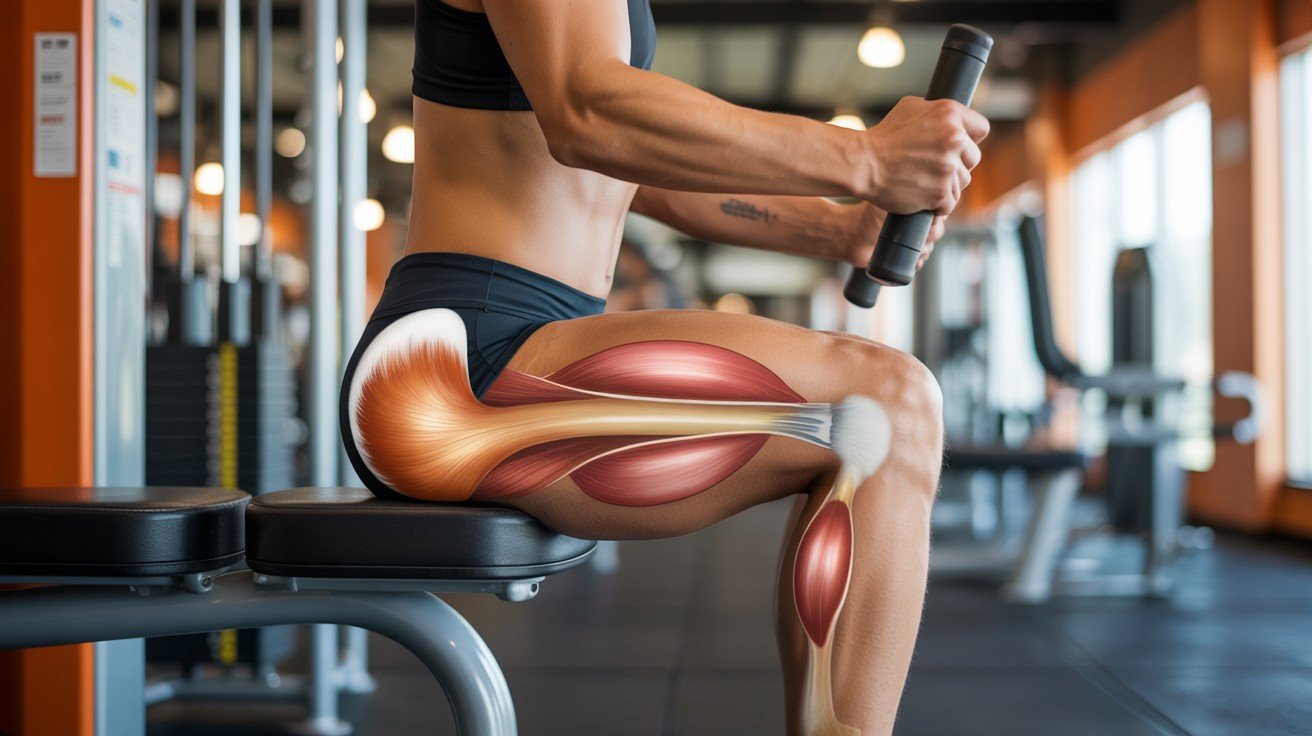
Your gluteus maximus does the heavy lifting. This is the main mover during every kickback rep.
The gluteus maximus is responsible for hip extension and creates that round, full glute shape. It’s the largest and strongest muscle in your entire lower body. The gluteus medius provides stability and shapes the upper side of your glutes. It assists in abduction and external rotation of your hip. The gluteus minimus is a deep stabilizer that supports balance during single-leg movements.
All three glute muscles work together on the kickback machine. The maximus drives the movement. The medius and minimus stabilize and support.
Secondary Muscles Engaged
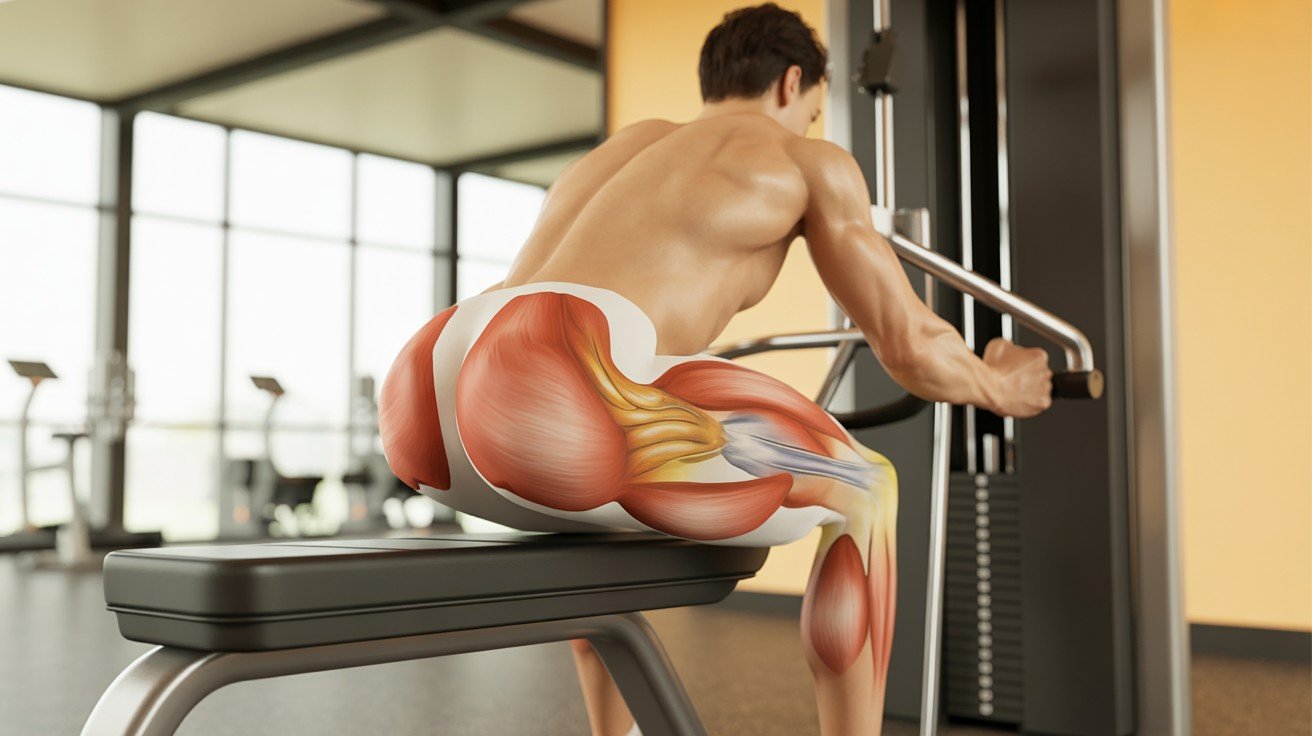
Your glutes lead the movement, but other muscles work hard to support and stabilize your body throughout each rep.
The hamstrings support hip extension but play a secondary role when your form is correct. Your core muscles fire constantly to maintain spinal stability. The transversus abdominis acts like a weight belt. The rectus abdominis and obliques help prevent rotation or over-arching. Your lower back muscles, like the erector spinae and multifidus, keep your spine neutral under load.
The quadratus lumborum and iliopsoas stabilize your hips and spine throughout the movement. Strong stabilizers let you focus all your force into your glutes instead of compensating.
How to Use the Glute Kickback Machine Properly?
Knowing which muscles work is one thing. Using the machine correctly is what actually builds your glutes. Small form adjustments make a huge difference in results.
- Adjust the chest or forearm pad to a comfortable height that supports your upper body, then place your heel on the pedal with a slight bend in your working knee.
- Keep your hips square and spine neutral without twisting or arching your back to ensure proper glute engagement from the start position.
- Engage your glutes first, then push the pedal backward and upward in a controlled motion, avoiding any swinging or momentum.
- Pause and squeeze your glute hard at the top for one to two seconds, where the contraction and growth happen, then slowly return under control.
- Perform three to four sets of 12 to 15 reps per leg to balance muscle growth with enough volume to properly fatigue the glutes.
- Maintain core tightness throughout every rep to protect your lower back and prevent your spine from moving around, which steals tension from your glutes.
- Push through your heel and imagine lifting from your glutes while keeping your hips parallel to prevent uneven activation and ensure both glutes work equally.
Programming the Glute Kickback Machine
Knowing how to use the machine is one thing. Knowing when and how often to program it makes the difference between random workouts and real progress.
Frequency
Training your glutes two to three sessions per week is optimal for muscle activation and growth. This frequency balances stimulus with recovery.
Your glutes need time to repair and grow between sessions. Training them every day doesn’t allow proper recovery. Less than twice per week doesn’t provide enough stimulus for growth. Two to three weekly sessions hit the sweet spot where you challenge your muscles without overworking them.
When to Include It
The timing of kickbacks in your workout matters. You can use them as an activation or as a finisher, depending on your goals.
Use kickbacks as a glute activation drill before squats or hip thrusts. Two light sets of 15 reps wake up your glutes and improve their firing during heavy compound lifts. Alternatively, program kickbacks as a finisher for maximum burn and muscle fatigue. After your heavy work is done, kickbacks pump blood into your glutes and create metabolic stress that drives growth.
Sample Workout Integration
Here’s how to structure a complete glute workout with the kickback machine. This sequence maximizes both strength and hypertrophy.
Start with hip thrusts for four sets of 10 reps. This builds overall glute mass with heavy weights. Move to Romanian deadlifts for three sets of 8 reps to hit your glutes and hamstrings together. Add a glute kickback machine for three sets of 15 reps per leg as your isolation work. Finish with banded lateral walks for two sets of 20 steps to burn out your glute medius.
This structure moves from heavy compound lifts to lighter isolation work. You build strength first, then add volume and metabolic stress for complete glute development.
Expert Tips for Better Results
These advanced strategies take your glute kickbacks from good to great. Small tweaks create big differences in muscle activation and growth.
- Actively think about contracting your glutes throughout every rep, as visualization improves muscle fiber recruitment by up to 30% according to EMG research.
- Focus mentally on the muscle you’re working to send stronger signals from your brain, activating more muscle fibers for greater growth.
- Don’t raise your leg too high, as overextending causes back arching and shifts tension away from your glutes into your lower back.
- Stop once you feel a full glute contraction at the top since quality contraction beats excessive range, and going beyond adds nothing to glute activation.
- Use a slow, controlled pace of two seconds pushing out, one second hold at the top, and two seconds returning to create constant tension.
- Avoid fast reps that reduce time under tension and rely on momentum instead of muscle force, as your glutes need prolonged tension to grow.
- Gradually increase resistance by five to ten pounds every week or two, or add bands and ankle weights for variety to prevent adaptation and keep growth happening.
Common Mistakes to Avoid
Most people sabotage their results without realizing it. Avoiding these mistakes turns the kickback machine into a real glute builder.
- Using too much weight reduces glute engagement by forcing hamstrings and lower back to compensate, while your glutes barely work.
- Allowing your lower back to arch leads to injury and less isolation by shifting tension away from your glutes into your spinal erectors.
- Keeping your spine neutral throughout every rep ensures tension stays on your glutes instead of other muscle groups taking over.
- Twisting your hips or swinging your legs reduces stability and effectiveness, so keep your hips square and parallel to prevent uneven glute activation.
- Neglecting to pause at the top wastes the best part of the exercise since the squeeze at peak contraction for one to two seconds is where growth happens.
Conclusion
The glute kickback machine muscles worked include your gluteus maximus, medius, and minimus, along with help from your core and stabilizers. It is one of the best ways to isolate and strengthen your glutes for better shape and balance.
Now that you know the right form, rep range, and common mistakes to avoid, try using kickbacks at the end of your leg workout. Focus on slow, controlled reps, drive through your heel, and squeeze at the top for that deep glute activation.
While the kickback machine will not replace squats or hip thrusts, it pairs perfectly with them for complete glute development. Give it a try in your next session and feel the difference. Have you noticed better glute growth or activation from using it? Share your experience below.
Frequently Asked Questions
What muscles does the glute kickback machine work?
The glute kickback machine primarily targets your gluteus maximus, gluteus medius, and gluteus minimus. Secondary muscles include hamstrings for hip extension support, core muscles for stability, and lower back muscles for posture maintenance. Proper form with heel pressure maximizes glute activation while minimizing other muscle involvement.
Does the glute kickback machine build or tone glutes?
The machine builds glutes when used with progressive overload and adequate resistance. Use a challenging weight for 12 to 15 controlled reps to trigger muscle growth. Lightweight with fast reps only activates muscles without building size. Combine kickbacks with compound lifts for maximum glute development.
How often should I use the glute kickback machine?
Train with the glute kickback machine two to three times per week for optimal muscle growth and recovery. Use it as a finisher after compound lifts or as an activation drill before heavy squats. Allow 48 hours between sessions for proper muscle recovery and adaptation.
Is the glute kickback machine better than hip thrusts?
Both serve different purposes. Hip thrusts build overall glute mass with heavy loading. Kickbacks isolate and refine glute shape with focused activation. The best approach combines both exercises: hip thrusts for foundation mass and kickbacks for finishing work and symmetry correction.
Should I press with my heel or toes on the kickback machine?
Always press through your heel, never your toes. Heel pressure emphasizes glute activation and maximizes hypertrophy. Toe pressure activates quads more than glutes, defeating the exercise’s purpose. Remember: toes equal quads, heels equal glutes. Drive through your heel every rep.


