Want to build serious shoulder and tricep strength? You’re in the right place.
Vertical push exercises are the fastest way to develop upper-body power. This article breaks down the best movements to build muscle and strength in your shoulders, triceps, and upper chest. You’ll learn proper form, avoid common mistakes, and learn which exercises deliver real results.
I’ve spent years training athletes and regular gym-goers, and I’ve seen what actually works. No gimmicks or overcomplicated routines here. These are proven exercises that pack on strength when you do them correctly. Whether you’re pressing dumbbells overhead or mastering handstand push-ups, you’ll get straightforward guidance you can trust. Let’s get you stronger, starting today.
Understanding Vertical Push Movements

I’m talking about exercises where you push the weight straight up. You’re moving resistance overhead, think shoulder press or handstand push-ups. Your shoulder and elbow work together. You can use dumbbells, barbells, or machines. The key? Everything moves in line with your spine.
Your deltoids do the heavy lifting here. All three parts work: front, side, and rear. Your triceps straighten your arms. The upper chest and traps add stability. But there’s more. Your rotator cuff protects your shoulder joint. Your core keeps your body rigid. The serratus anterior and rhomboids control your shoulder blades as they rotate upward.
Three things happen when you press overhead. Your shoulder flexes or abducts. Your elbow extends. Your shoulder blade rotates upward while staying stable. All of these movements must coordinate. That’s why vertical pushing builds real-world strength h, you’re training multiple joints to work as one system.
Fundamental Technique and Setup
Getting the setup right determines everything that follows. Most mistakes happen before you even start pressing. I’m going to break this down into three phases you need to master.
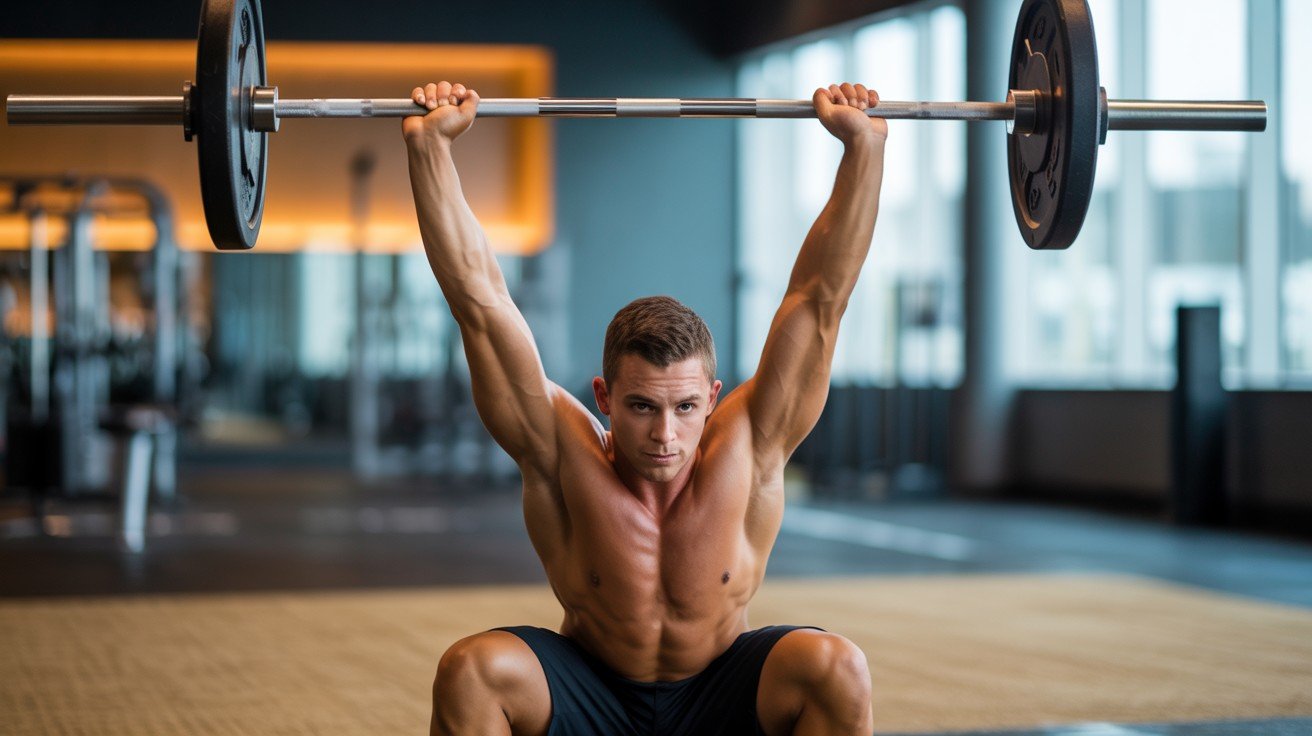
- Pre-Ascent (Setup Phase): Brace your core and squeeze your glutes to stop your lower back from arching too much, position your elbows slightly forward and down, stack your wrists directly above your elbows, and pull your shoulders down and back to create a stable base.
- Ascent (Pressing Phase): Drive the weight in a straight vertical path with no curving or drifting forward, keep your spine neutral without letting your lower back hyperextend, and lock out completely at the top with full elbow and shoulder extension.
- Descent (Lowering Phase): Lower the weight with constant tension without just dropping it, keep your shoulders from rolling forward to maintain stability, and fight gravity the entire way down with your muscles engaged.
Common Cues for Proper Form
I use these reminders with every press. They keep your technique sharp when fatigue sets in:
- “Shoulders down and back”: Prevents shrugging and instability while creating a solid foundation.
- “Ribs down engage your abs”: Stops excessive arching and protects your lower back from strain.
- “Wrists over elbows”: Maintains proper joint alignment and reduces wrist stress throughout the press.
- “Press straight up, not forward”: This ensures a vertical path and maximizes shoulder engagement, rather than allowing the chest to take over.
Top Vertical Push Exercises for Strength and Mass
These seven exercises form the foundation of any solid pressing program. I’ve arranged them from most essential to most specialized. You don’t need all of them, but knowing what each one does helps you build a complete training plan.
1. Overhead Shoulder Press (Barbell/Dumbbell)
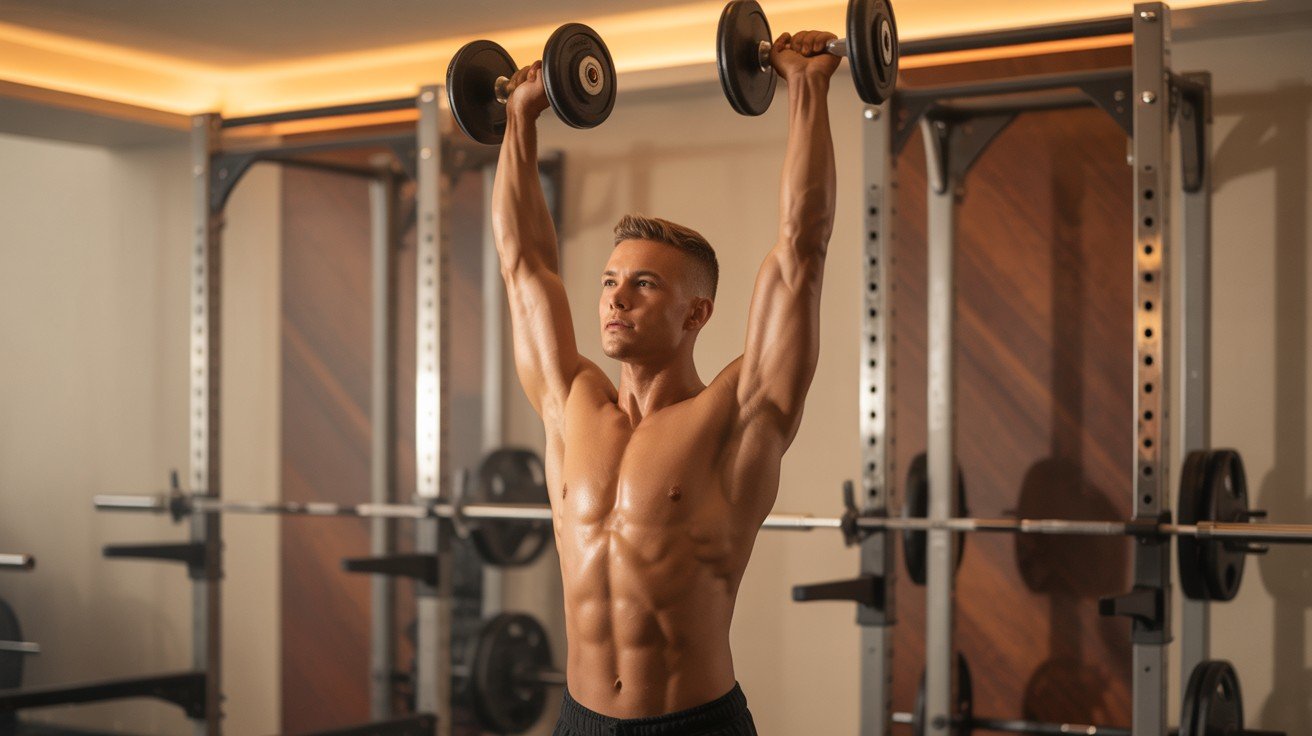
This is the king of vertical pressing movements. It’s where you build real shoulder mass and strength. Here’s how it works:
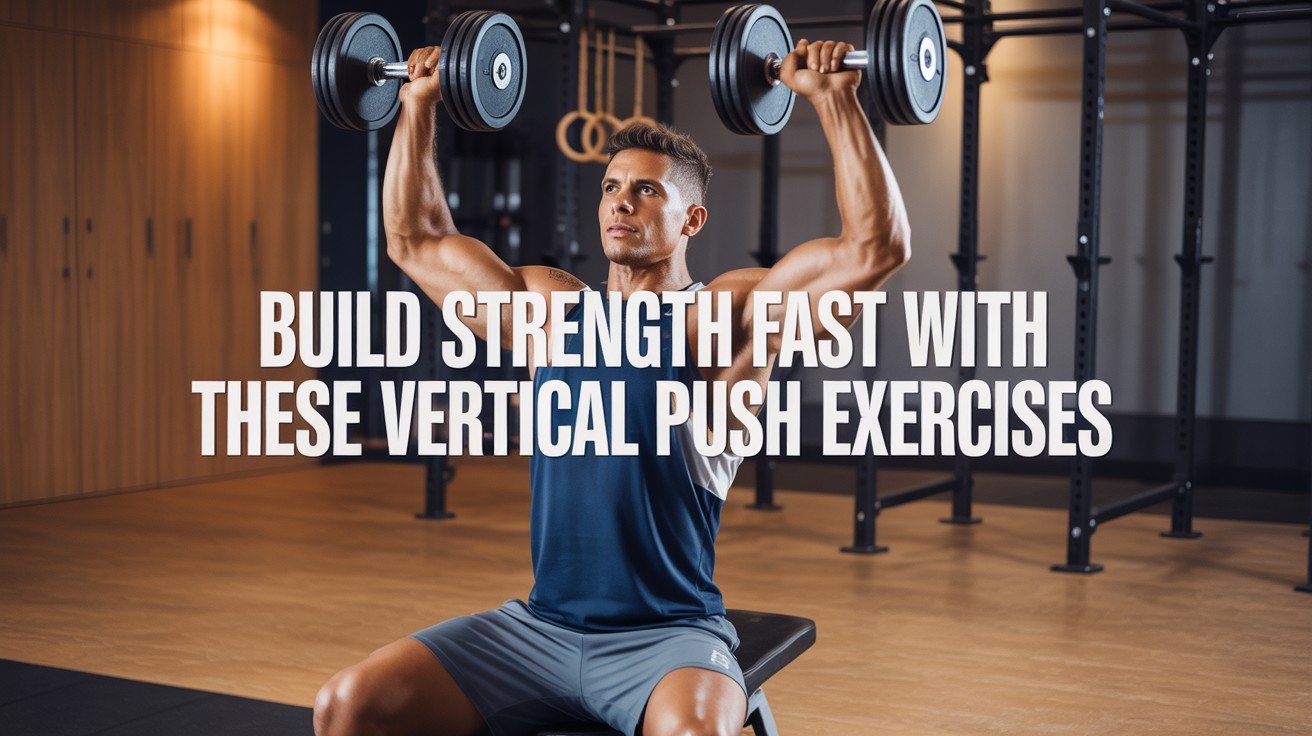
- Overhead Shoulder Press: Hold weights at shoulder level with palms forward, press overhead until arms are fully extended, and lower back to shoulder height while keeping your core tight and spine neutral throughout the entire movement.
The benefits go beyond muscle size. You’ll build shoulder mass, enhance mobility, and improve your posture. Try standing versus seated, use a neutral grip, or switch to kettlebells for variety.
2. Arnold Press

Arnold Schwarzenegger created this for a reason. The rotational wrist movement hits your front and side delts harder than standard presses. Here’s the execution:
- Arnold Press: Start with palms facing you and dumbbells in front of your face, rotate your wrists outward as you press overhead, and reverse the motion to return while maintaining control throughout.
This movement increases delt width through a full range of motion. The rotation adds time under tension. Your shoulders work harder. That’s why it builds mass.
3. Dumbbell Thrusters
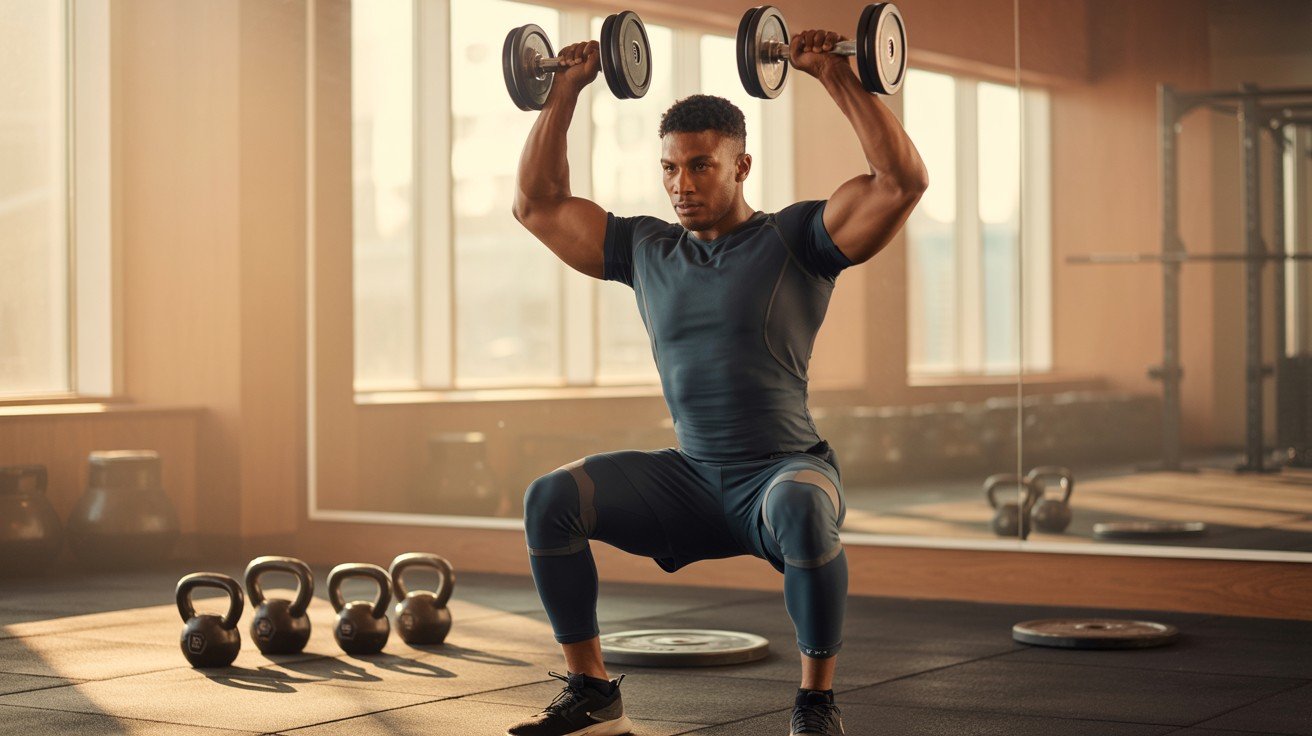
This is a compound power movement that burns everything. It combines a squat with an overhead press in one explosive motion. Here’s the technique:
- Dumbbell Thrusters: Hold dumbbells at your shoulders and squat deeply, drive upward while pressing the weights overhead explosively, and let your legs power the press as you stand.
Thrusters build total-body strength and coordination. They burn massive calories and train your deltoids, triceps, quads, glutes, and core simultaneously. One exercise trains multiple movement patterns. That’s efficiency.
4. Dumbbell Snatch

This is a hybrid push-pull exercise with explosive power. It’s an athletic movement that demands speed and coordination. Here’s how to perform it:
- Dumbbell Snatch: Start with a dumbbell between your feet, explosively lift it to overhead position in one smooth motion, and switch arms each rep while maintaining balance and control.
This enhances power, coordination, and athletic performance. It’s not just about muscle size. You’re training your body to move fast under load while working your shoulders, traps, hamstrings, and quads together.
5. Z Press
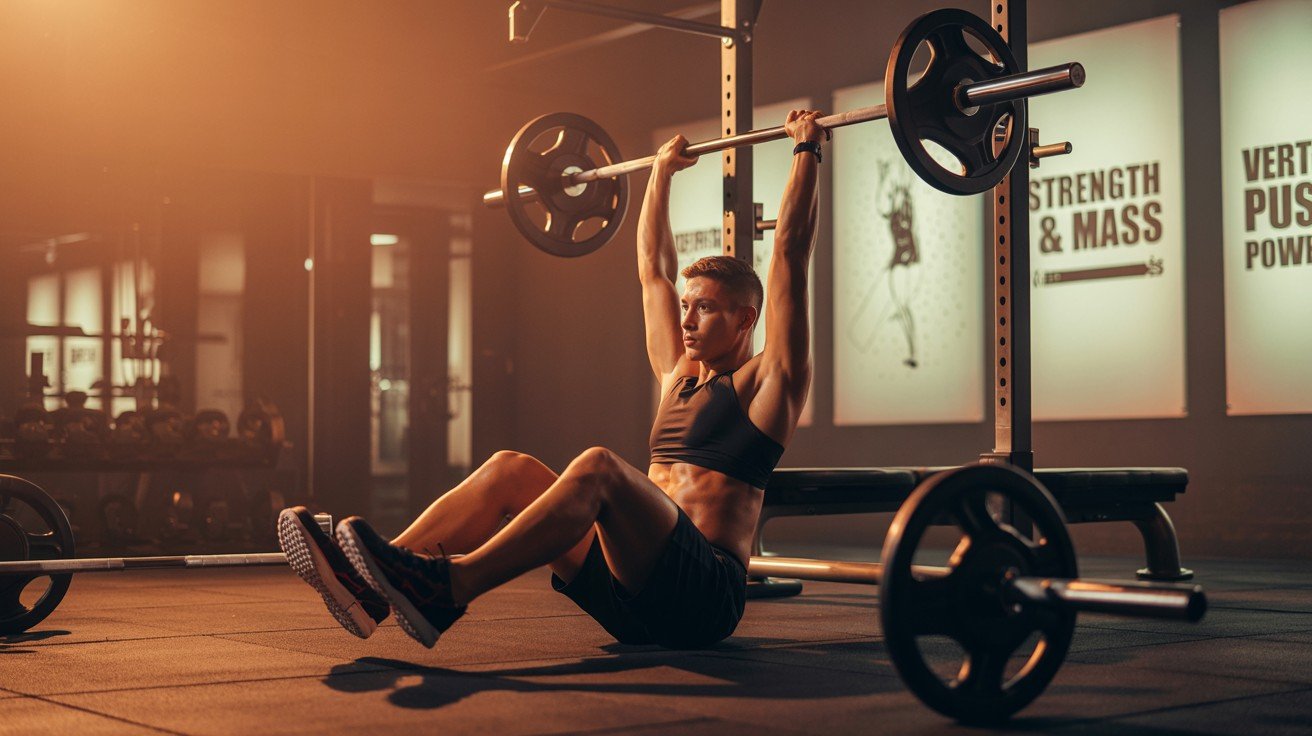
This core-intensive variation exposes weaknesses fast. No momentum allowed. Your core works overtime to keep you stable. Here’s the setup:
- Z Press: Sit on the floor with legs extended, press dumbbells or a barbell overhead while maintaining an upright torso, and fight to keep your back straight without any leg drive to help.
This improves shoulder strength, core stability, and posture. Start with light to moderate weights. The balance demand is significant. Your abs will feel this as much as your shoulders.
6. Overhead Tricep Extension
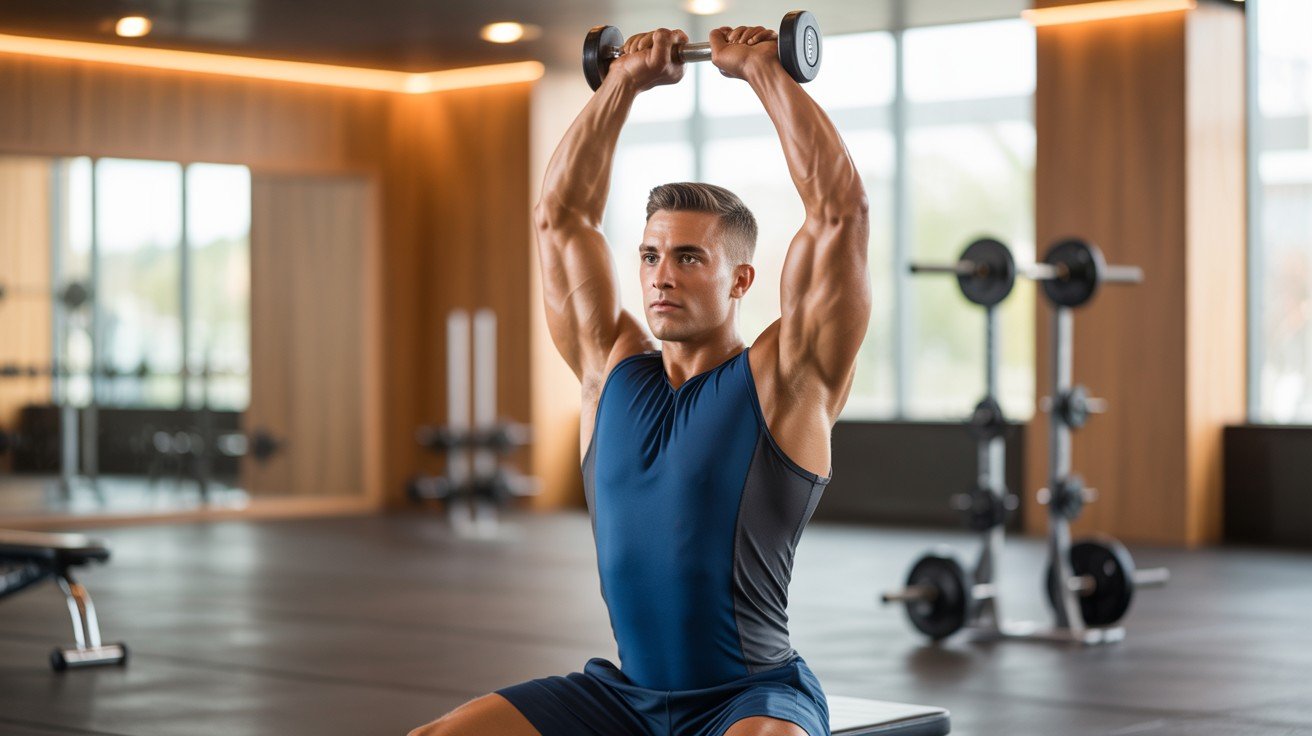
This isolates your triceps within a vertical push pattern. It’s a focused movement that targets arm strength specifically. Here’s the technique:
- Overhead Tricep Extension: Hold one dumbbell overhead with both hands, lower it behind your head by bending your elbows, and extend your arms back up while keeping your elbows pointing forward the entire time.
This builds tricep size and lockout strength for presses. Strong triceps mean heavier overhead presses. Your arms finish what your shoulders start. Don’t skip this movement.
7. Landmine Press

A barbell anchored at one end creates a unique pressing angle. The angled path is easier on your shoulders than straight vertical pressing. Here’s how to do it:
- Landmine Press: Press the barbell upward at a diagonal using one arm, stand or kneel for the movement, and control the arc as you push up and bring it back down smoothly.
This is ideal for those with limited shoulder mobility. Try the W Press or add rotation for oblique activation. It’s a safer option that still builds serious strength without the joint stress.
Benefits of Incorporating Vertical Push Exercises
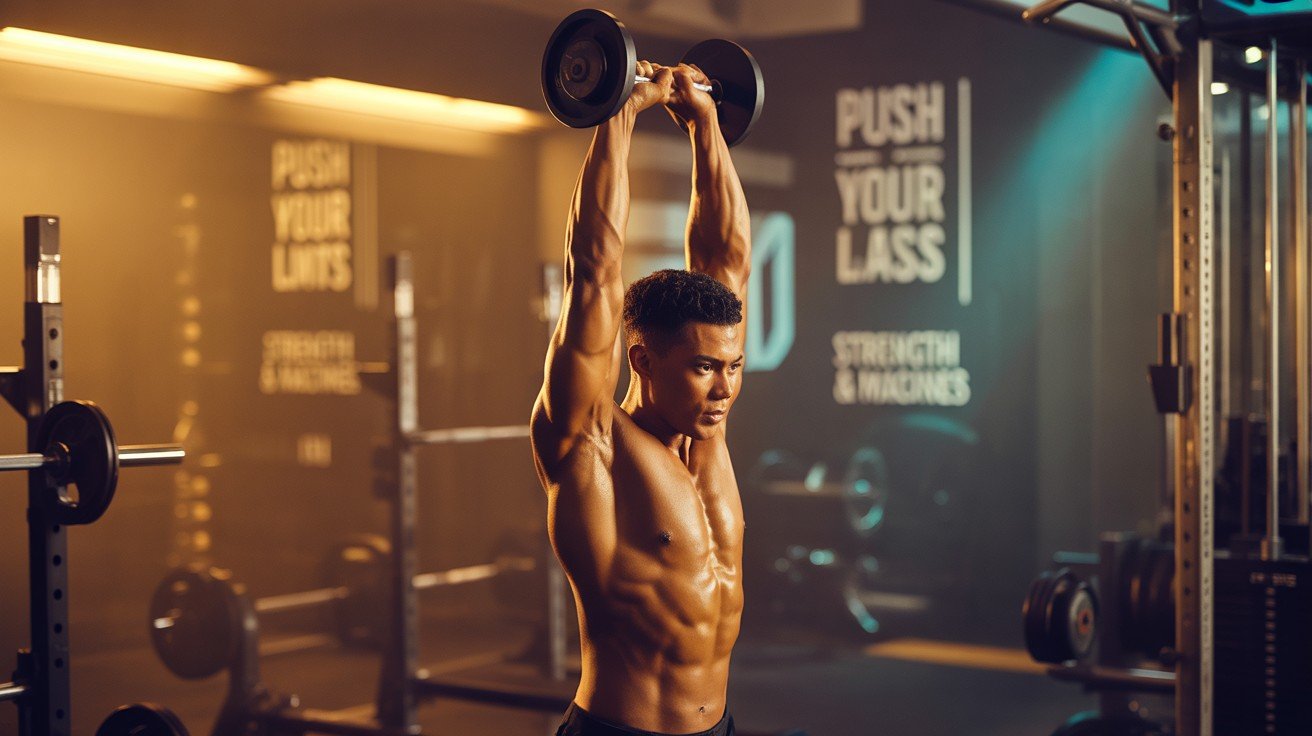
Vertical pushing does more than just build muscle. I’m going to show you why these movements are essential for any training program. Each benefit impacts your body differently.
- Increased Upper Body Size and Definition: These movements engage all major pushing muscles, including delts, triceps, upper pecs, and traps, while encouraging hypertrophy through progressive overload as you gradually add weight over time.
- Improved Functional and Athletic Strength: Vertical presses build stability for everyday tasks, including lifting, pushing, and throwing, while strengthening the kinetic chain from your shoulders down through your core for better force transfer.
- Enhanced Shoulder Health and Mobility: These exercises strengthen stabilizing muscles to reduce the risk of impingement or instability while balancing development between your anterior and lateral delts for complete shoulder protection.
- Core Stability and Postural Control: Standing presses and Z presses demand constant core bracing throughout the movement while encouraging proper spinal alignment and trunk control that carries over to daily life.
Programming Tips for Best Results
Smart programming makes all the difference between spinning your wheels and making real progress. I’m going to give you the exact framework that works. Follow these five rules.
- Frequency: Train vertical pushes 1-2 times per week to allow proper recovery between sessions while giving your shoulders enough stimulus to grow without overtraining or causing joint stress.
- Sets & Reps for Strength: Use 4-6 reps for 4-5 sets when building maximum strength, rest 3-4 minutes between sets, and focus on adding weight to the bar every session.
- Sets & Reps for Hypertrophy: Use 8-12 reps for 3-4 sets when building muscle size, rest 60-90 seconds between sets, and focus on feeling the muscles work rather than just moving weight.
- Progressive Overload: Gradually increase load or volume weekly by adding 5 pounds, doing one more rep, or completing an extra set to force your body to adapt and grow stronger over time.
- Balance Your Training: Pair vertical pushes with vertical pulls like pull-ups or lat pulldowns to maintain muscular balance, prevent shoulder injuries, and ensure your back muscles keep up with your pressing strength.
Conclusion
You now have everything you need to build serious strength. Vertical push exercises are straightforward, effective, and deliver results when you stay consistent.
Start with the basics like overhead presses and dips. Focus on proper form before adding weight. Track your progress each week, and you’ll see real improvements in your shoulders and triceps. These movements work because they challenge your muscles in ways that build functional strength you can use everywhere.
Pick two or three vertical push exercises from this guide and add them to your next workout. Your upper body will thank you. If you found this helpful, share it with a training partner who needs it. Got questions about form or programming? Drop a comment below, I’d love to help you out.
Frequently Asked Questions
What are vertical push exercises?
Vertical push exercises are movements where you push weight directly overhead or upward against gravity. Examples include overhead presses, military presses, and handstand push-ups. These exercises primarily target your shoulders, triceps, and upper chest, building strength and muscle in your upper body’s pressing muscles.
How often should I do vertical push exercises?
Train vertical push exercises 2-3 times per week with at least one rest day between sessions. This gives your muscles time to recover and grow stronger. Beginners should start with twice weekly, while experienced lifters can handle three sessions if they manage volume properly.
What’s the best vertical push exercise for beginners?
The seated dumbbell shoulder press is ideal for beginners. It provides back support, allows you to use lighter weights, and helps you learn proper pressing form safely. You can also adjust weight easily between sets as you build strength and confidence.
Can vertical push exercises build big shoulders?
Yes, vertical push exercises are essential for building shoulder size and strength. Overhead pressing movements directly target all three deltoid heads, especially the front and middle delts. Combine them with proper nutrition and progressive overload for the best muscle-building results.
Do I need a spotter for vertical push exercises?
A spotter isn’t always necessary, but it helps with heavy barbell overhead presses. For dumbbell work, you can safely drop weights if needed. If training alone, use a power rack with safety pins or stick with weights you can control confidently throughout each set.