Ever grabbed a barbell and wondered exactly how much that bar weighs? You’re not alone. Whether you’re tracking your lifts or just getting started, knowing the weight of your bench press bar matters for recording accurate progress.
Here’s what you’ll learn: the weight of standard bars, Olympic bars, and specialty bars. We’ll clear up the confusion so you can log the right numbers and track your real strength gains. No guessing, just facts.
I’ve spent years in gyms using different equipment, and I get how frustrating it is when nobody explains the basics. This guide gives you straight answers you can actually use. You searched for bar weights because accuracy matters to you. Let’s get into it.
Why Bar Weight Matters
I learned this the hard way at my gym. A beginner walked up to the squat rack. He loaded two 45-pound plates on each side. He thought he was lifting 180 pounds total. But he forgot about the bar. The standard Olympic bar weighs 45 pounds. His actual lift? 225 pounds. That’s a huge difference.
Here’s why this matters for you. When you track your lifts, you need exact numbers. Write down 225 pounds, not 180. Your strength progression depends on it. Small, steady increases build real strength. Add 5 pounds next week, then 5 more the week after.
Incorrect assumptions create problems. Underestimate the weight? You might add too much too fast. That leads to strain or injury. Overestimate it? Your progress looks slower than it really is. Know your bar weight. Load the correct plates. Track everything accurately.
Standard Bench Press Bar Weight
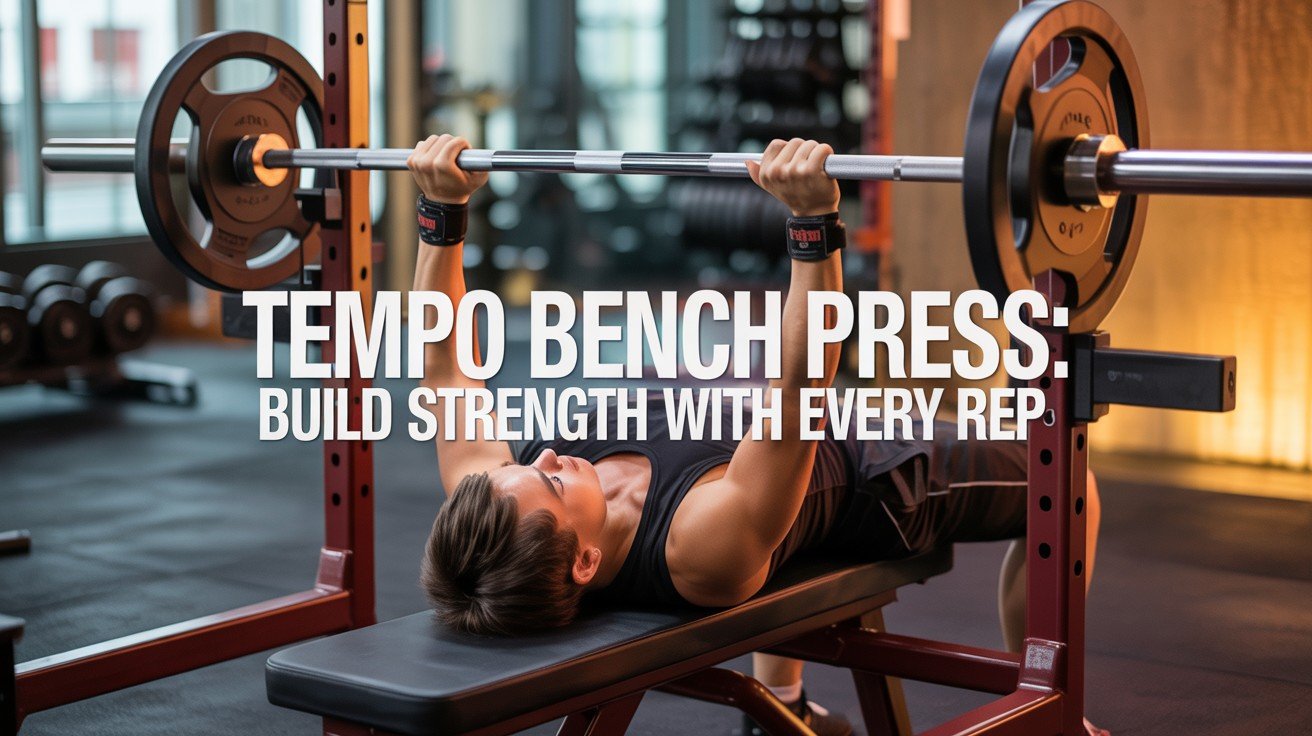
Walk into any gym and you’ll see the same bar on every bench. It’s the Olympic standard. Most lifters use this bar without knowing its exact weight. Let me break it down for you.
The Olympic Standard Bar (Most Common)
This is the bar you’ll find everywhere. LA Fitness has it. Gold’s Gym has it. Your local CrossFit box? Same bar.
- Weight: 45 lbs (20.4 kg)
- Length: 7 feet (2.2 meters)
- Load capacity: 600-1,000 lbs or more
- Diameter: 28-29 mm for standard grip
Women’s Olympic Bar
Not everyone uses the 45-pound bar. Women often train with a lighter option. I’ve seen plenty of beginners start here, too.
- Weight: 35 lbs (15-16 kg)
- Length: 6.6 feet (2.01 meters)
- Diameter: 25 mm (thinner for better grip)
- Best for: Female athletes and lighter training sessions
Other Common Bench Press Bar Types
Not all bars are created equal. You’ll find different types depending on where you train. Each bar serves a specific purpose. Let me show you what else is out there.
Standard 1-Inch Bar
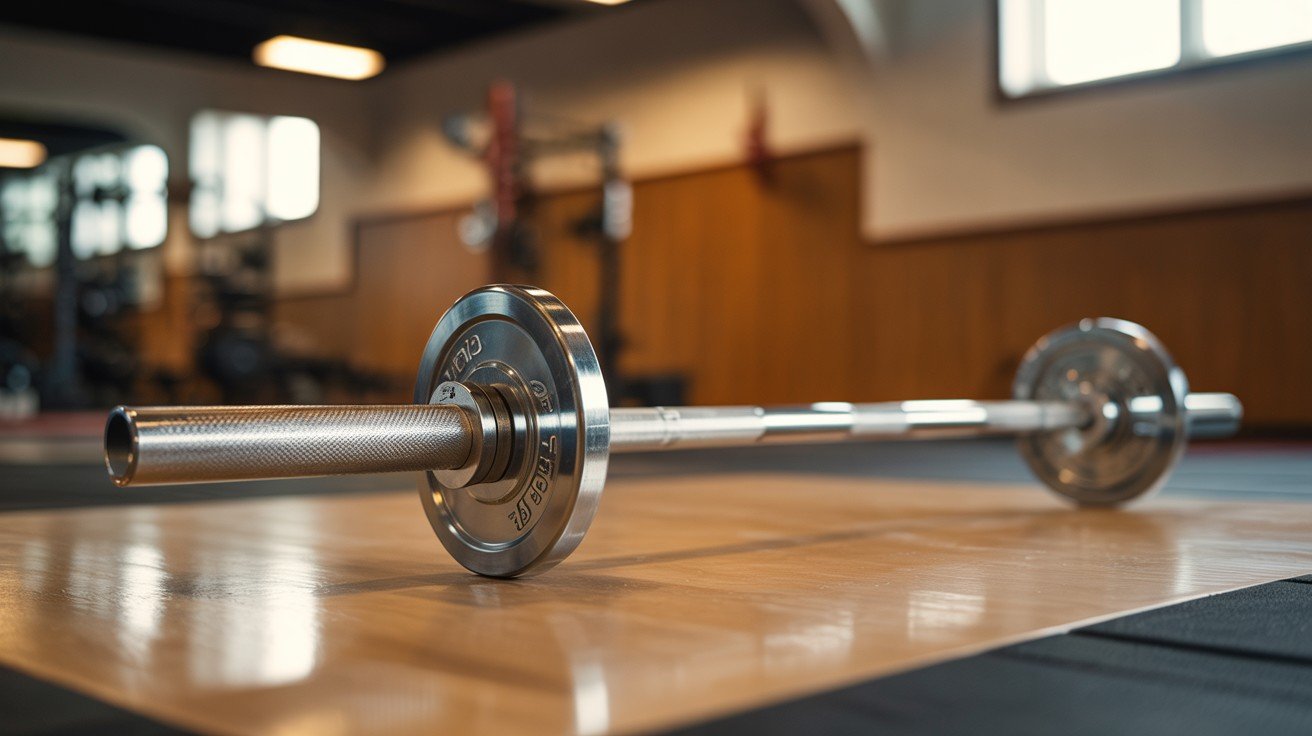
Check your home gym or your friend’s garage setup. You might find this bar instead of the Olympic version. It’s lighter and cheaper.
- Weight: 15-25 lbs (7-11 kg)
- Load capacity: 200-300 lbs max
- Sleeve diameter: 1 inch (not Olympic-sized)
- Best for: Budget setups and casual lifters
Powerlifting Bar
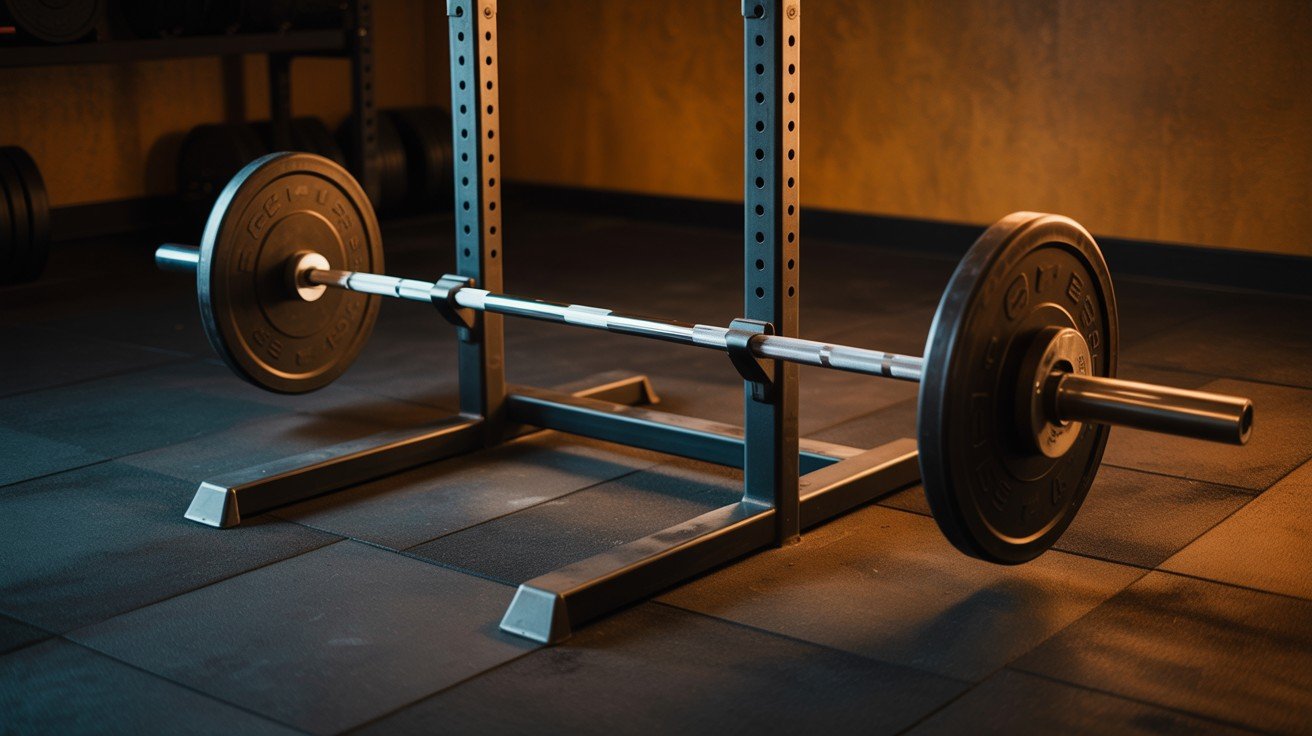
Walk into a powerlifting gym and you’ll feel the difference immediately. These bars are built for serious weight. I prefer them for max effort days.
- Weight: 45 lbs (20 kg)
- Build: Thicker and stiffer than Olympic bars
- Knurling: Aggressive texture for better grip
- Purpose: Heavy bench press, squat, and deadlift
Technique or Training Bar
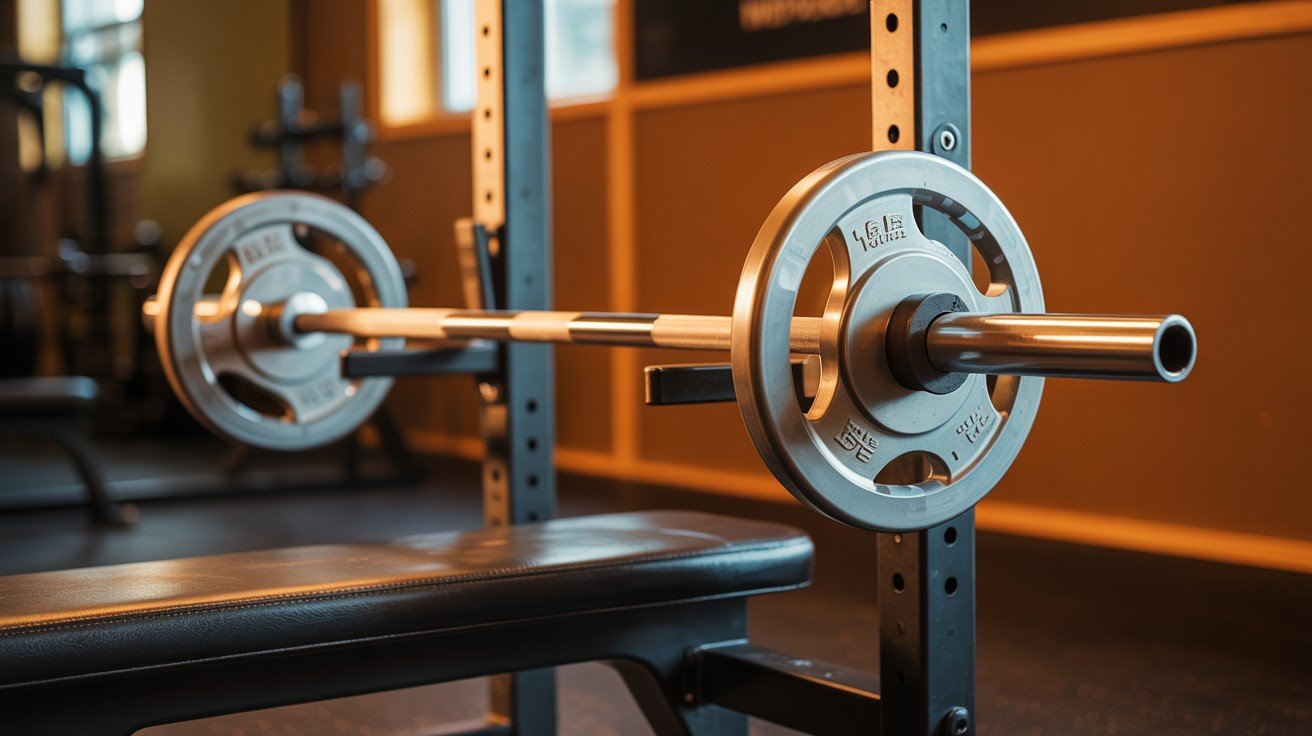
I recommend this bar to every beginner who walks through my door. It’s perfect for learning proper form. No ego lifting here.
- Weight: 10-20 lbs (5-10 kg)
- Purpose: Form practice and rehabilitation
- Users: Complete beginners and injury recovery
- Benefit: Build technique before adding plates
Specialty Bars and Their Weights
Your gym might have bars that look strange. They’re not broken. They’re designed to solve specific problems. These specialty bars can change your training completely.
Swiss or Multi-Grip Bar
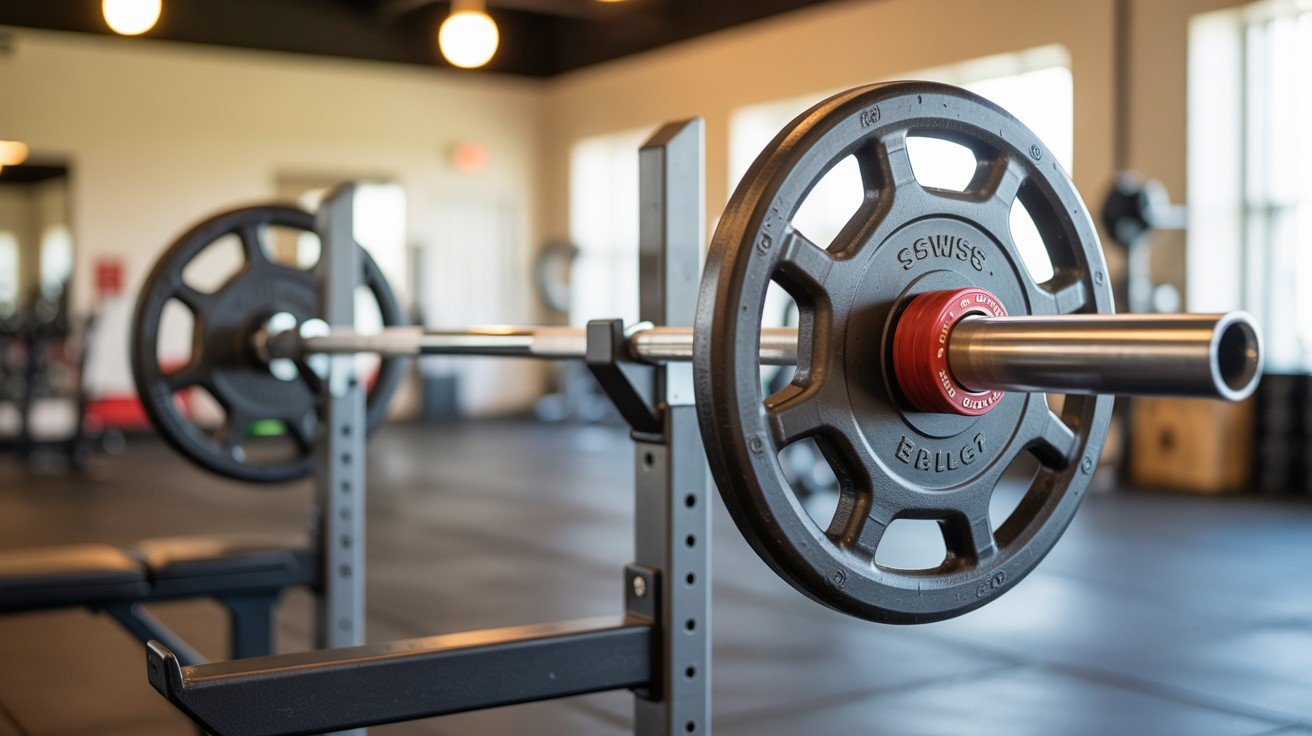
I love this bar for shoulder-friendly pressing. It has multiple handles at different angles. You can rotate between them during your workout.
- Weight range: 35-55 lbs (16-25 kg)
- Design: Multiple neutral hand positions
- Benefit: Reduces shoulder and wrist strain
- Best for: Lifters with joint issues
Cambered Bar
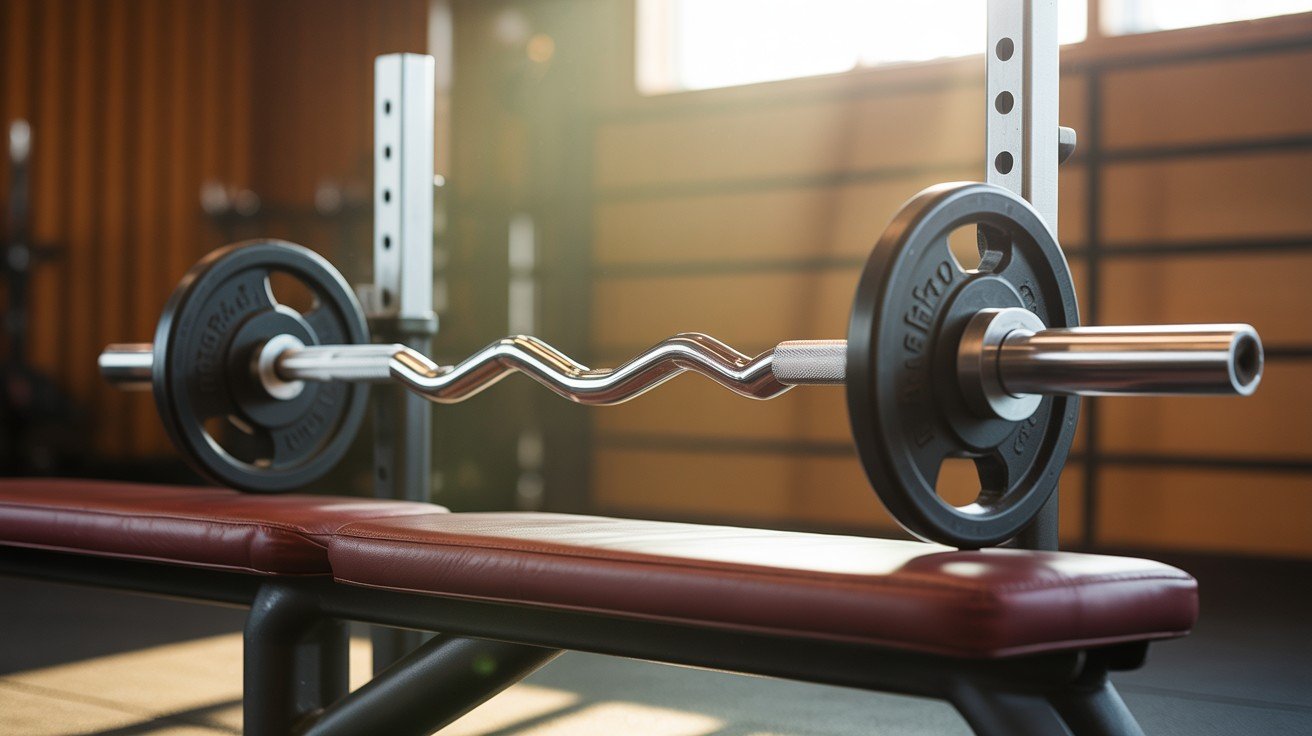
This bar looks weird at first. It has a big curve in the middle. But that curve serves a purpose, a greater range of motion.
- Weight: 85 lbs (38.5 kg)
- Design: Curved shape for deeper stretch
- Use: Advanced strength training
- Effect: Chest stretches lower at the bottom
Trap or Hex Bar
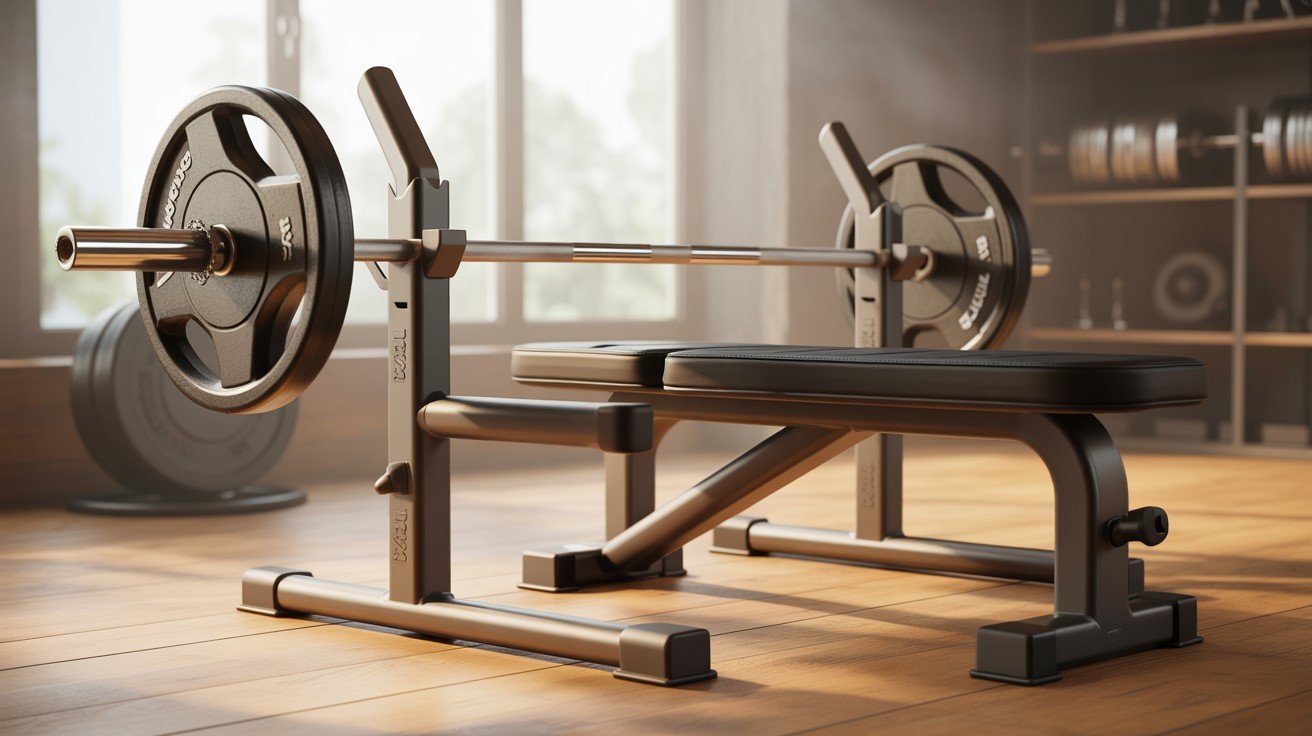
You’ll see this bar in the deadlift area mostly. But some lifters get creative with pressing variations. The hexagonal shape changes everything.
- Weight range: 45-65 lbs (20-30 kg)
- Primary use: Deadlifts and shrugs
- Secondary use: Pressing variations
- Design: A Hexagonal frame that you stand inside
How to Tell How Much a Bench Press Bar Weighs
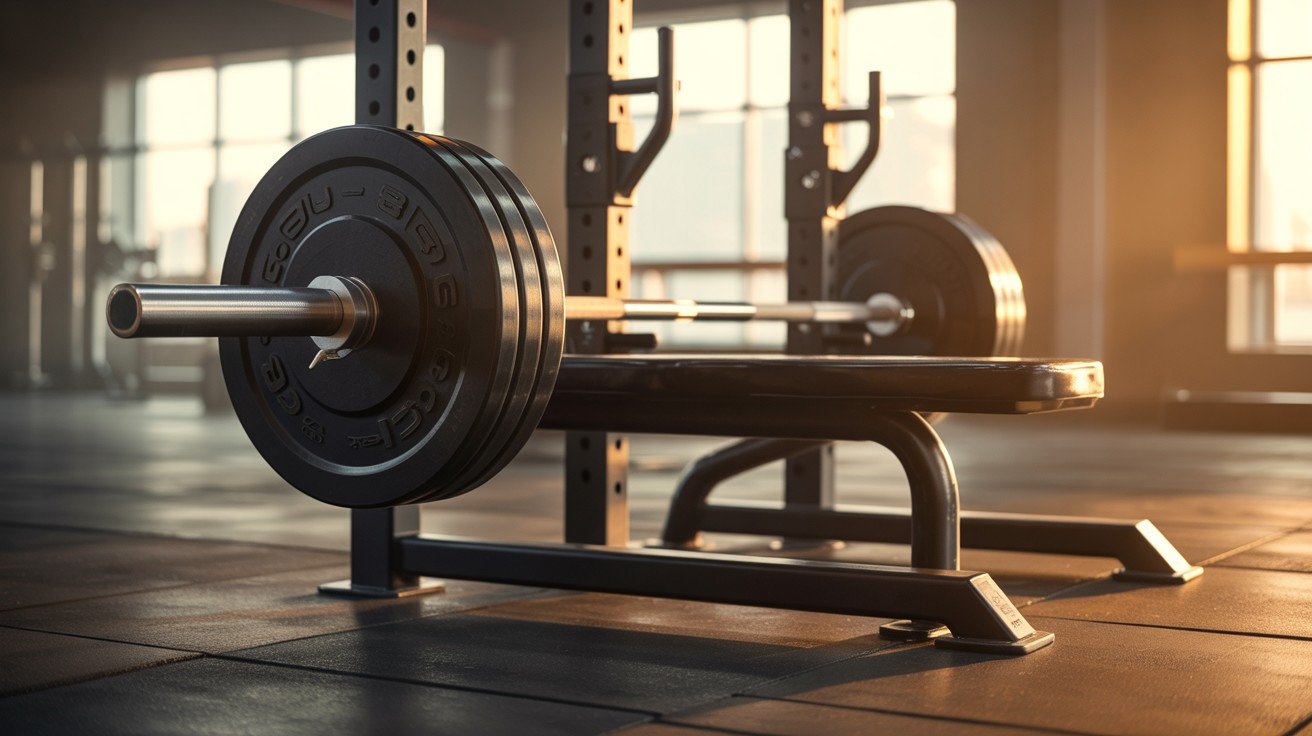
You don’t have to guess. There are simple ways to find out exactly what you’re lifting. Here’s what I do when I’m unsure.
- Look for manufacturer markings: Most bars have the weight engraved or printed near the collar where you load plates.
- Ask a trainer or gym staff: They know their equipment, especially in commercial gyms with multiple bar types.
- Weigh the bar yourself: Use a gym scale at home place the bar evenly across it for an accurate reading.
- Compare by feel and size: Olympic bars have thicker 2-inch sleeves standard bars fit only 1-inch plates.
- Test the diameter: Wrap your hand around the sleeve if it’s significantly thicker, you’re holding an Olympic bar.
How To Choose A Bench Press Bar
Picking the right bar changes everything. Match the bar to your goals, not the other way around. Here’s what I consider every time.
- Check your experience level first: Beginners need lightweight technique bars (10-25 lbs) to build proper form. Advanced lifters can handle Olympic or power bars (45 lbs) for heavier loads.
- Consider your training goals: If you’re focused on strength and competition, choose a power bar with aggressive knurling. For general fitness and versatility, stick with the standard Olympic bar.
- Listen to your body: Joint pain or shoulder issues mean you need a Swiss bar or multi-grip bar. The neutral grip positions reduce strain while keeping you training.
- Test the bar’s load capacity: Home gym bars often max out at 200-300 lbs, which works for beginners. Serious lifters need bars rated for 600-1,000 lbs or more to handle progressive overload.
- Feel the knurling and diameter: Aggressive knurling gives better grip, but can tear up your hands. Thinner bars (25 mm) fit smaller hands better, while standard bars (28-29 mm) work for most people.
Choosing the Right Bar for You
The bar you use matters just as much as the weight you lift. Your experience level and goals determine which bar fits best. Let me help you pick the right one.
- Beginners: Start with a standard 1-inch bar or a lightweight technique bar (10-25 lbs). These lighter options let you practice form without fatigue. Master the movement pattern first, then progress to heavier bars once you can complete 20 perfect reps.
- Regular Lifters: The Olympic bar is your best choice for consistent progress. It weighs 45 lbs, works for all compound lifts, and is found in every commercial gym. This bar grows with you, from your first plate to multiple plates per side.
- Powerlifters or Strength Athletes: You need a power bar built for maximum loads. It has minimal whip, aggressive knurling for grip, and can handle 500+ lbs without flexing. The bar stays stiff when you’re grinding out heavy singles and triples.
- Joint or Shoulder Concerns: Swiss bars or cambered bars reduce strain while keeping you in the gym. The neutral grip positions eliminate wrist rotation and shoulder discomfort. I switched during elbow rehab and never looked back. You can train hard without pain.
Conclusion
So, how much does a bench press bar weigh? Now you know it depends on what type you’re using. Standard bars run about 15-25 pounds, while Olympic bars hit 45 pounds for men’s and 35 pounds for women’s. You’ve got the facts you need.
No more guessing when you log your workouts. You can finally track your real numbers and see your actual progress over time. Whether you’re at a big gym or working out at home, you know what you’re lifting.
Questions about other gym stuff? Leave a comment and I’ll help you out. If this cleared things up for you, share it with someone else who’s been wondering the same thing.
Frequently Asked Questions
How much does a standard bench press bar weigh?
A standard bench press bar typically weighs between 15-25 pounds. These bars are common in home gyms and smaller fitness centers. They’re shorter and thinner than Olympic bars, making them easier to handle for beginners.
How much does an Olympic bench press bar weigh?
An Olympic bench press bar weighs 45 pounds for men’s bars and 35 pounds for women’s bars. These are the standard bars you’ll find in most commercial gyms and are used in powerlifting competitions.
Do all gym bars weigh 45 pounds?
No, not all gym bars weigh 45 pounds. While Olympic bars are 45 pounds, you’ll also find standard bars (15-25 pounds), women’s bars (35 pounds), and specialty bars like EZ curl bars that weigh differently.
How much does a Smith machine bar weigh?
Smith machine bars typically weigh between 15-25 pounds, though the counterbalance system reduces the effective weight you’re lifting. Some Smith machines have bars that feel as light as 10 pounds due to this assistance.
Why does knowing the bar weight matter?
Knowing the bar weight helps you track your true lifting numbers accurately. When you log your workouts, you need to include the bar’s weight plus the plates to measure real progress and program your training correctly.