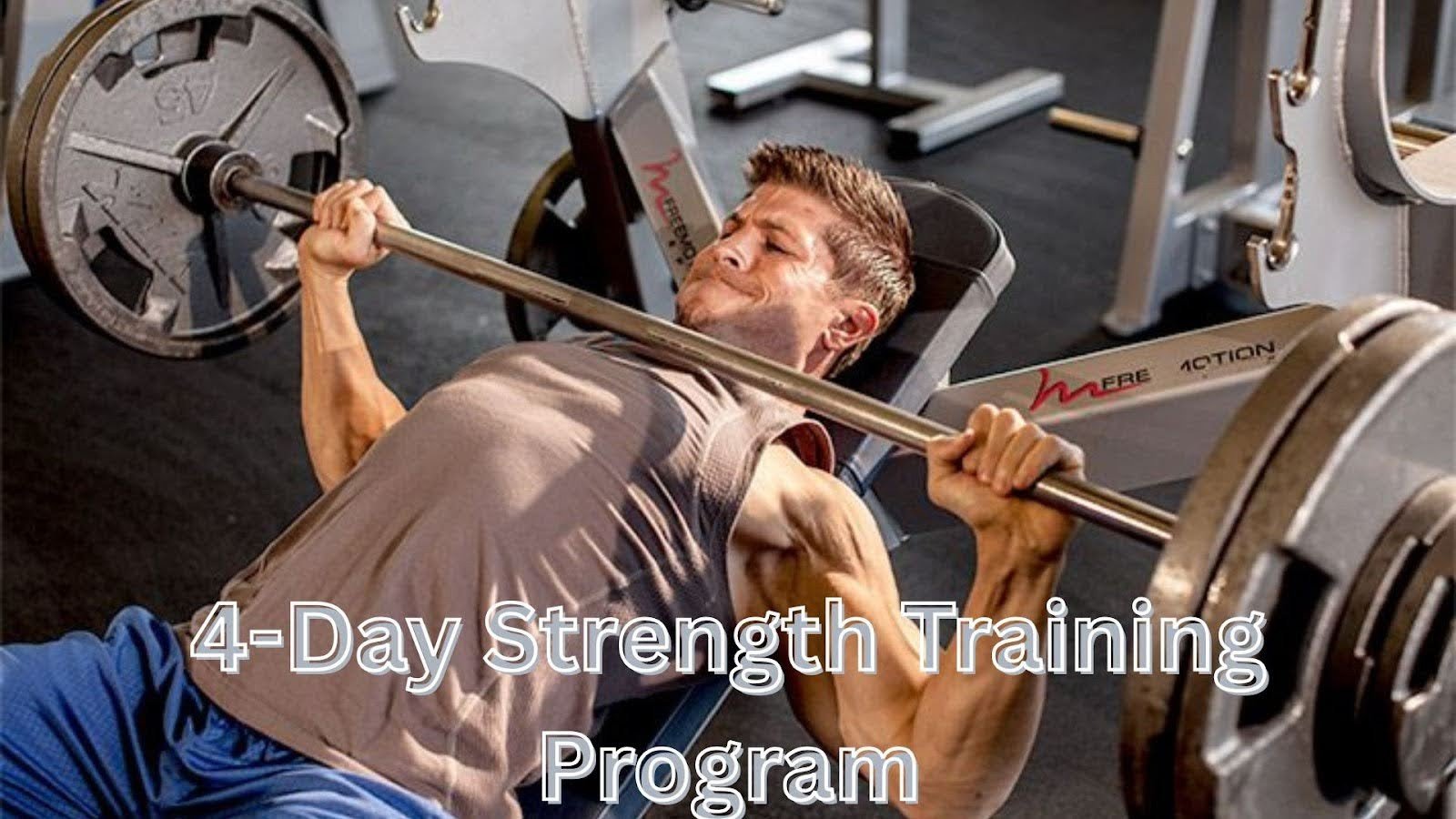
Are you repeating the same weight lift without making any progress for weeks? A 4-day strength training program fixes this problem by giving your muscles what they really need: intense work and proper rest. It is this recovery from the work that growth actually takes place.
The majority of gym goers who lift fail because they either overtrain or don’t push hard enough. Four focused sessions per week are the ideal solution. You will work hard enough to stimulate muscle growth, but you will also rest enough to recover and grow.
The guide will help you to train the bo. This schedule, this tried-and-true method, imparts the integration of heavy compound movements with targeted isolation exercises. Progressive overload is what makes you stronger continuously.
What Is a 4 Day Strength Training Program?
A 4-day strength training program splits your weekly training into four distinct sessions. Each workout targets specific muscle groups with purpose and intensity. This structure prevents random training and builds systematic progress.
The beauty lies in its organized approach. You train hard for four days, then recover for three days. This gives intermediate lifters the perfect frequency for muscle growth. Your muscles get hit with enough stimulus to grow, plus enough rest to actually repair and strengthen.
This program works through three core principles: progressive overload (gradually lifting more), controlled volume (enough sets to grow without burnout), and recovery balance (rest when needed). These principles work together to build both size and strength consistently.
Why 4 Days Is Ideal for Muscle and Strength Gains
Training four days weekly activates muscle protein synthesis multiple times without crushing your recovery ability. Research shows muscles need 48 to 72 hours to fully recover from intense training. This schedule gives you exactly that window.
Compare this to three-day programs, which may lack enough frequency for optimal growth. Five or six-day splits often lead to overtraining and burnout. The 4-day strength training program sits perfectly in between, giving you maximum gains with manageable fatigue.
Your muscles grow during rest, not during workouts. Four training days with three recovery days means you’re building strength through smart work, not just hard work. This frequency maximizes hypertrophy (muscle growth) while keeping your joints healthy and your energy high for each session.
The 4 Day Strength Training Split Options
Your goals determine your best split. Choose based on your experience level, recovery capacity, and whether you want balanced development or specialized focus.
Push/Pull Split: Balanced Strength and Recovery
Push days work your pressing muscles: chest, shoulders, and triceps all fire together in natural movement patterns. Pull days target your back, biceps, and even glutes through rowing and pulling motions. This split mirrors how your body actually moves.
The major advantage here is reduced overuse injuries. When you bench press on Monday, your back muscles rest completely. Two days later, when you deadlift, your chest gets recovery time. Back-and-forth approach suits intermediate lifters perfectly.
Your weekly layout might look like: Monday (Push), Tuesday (Pull), Thursday (Push), Friday (Pull). This gives each muscle group 72 hours between sessions. You’ll build balanced strength across your entire body without any muscle group lagging.
Upper/Lower Split: Full Body Power and Growth
This split divides your body horizontally. Upper days blast your chest, back, shoulders, and arms. Lower days demolish your quads, hamstrings, glutes, and calves. Both sections get trained twice weekly for maximum growth.
This approach shines for lifters wanting overall power. You can go heavy on squats on Monday, then still hit them hard again on Thursday. Same with bench press and rows. Hitting major muscle groups twice weekly triggers more frequent muscle protein synthesis.
A typical week: Monday (Upper), Tuesday (Lower), Thursday (Upper), Friday (Lower). Each workout includes both compound and isolation movements. This 4-day strength training program builds full-body strength while allowing for serious intensity in each session.
Bro Split: Targeted Muscle Isolation for Size
Each training day focuses on one or two muscle groups exclusively. Monday might be chest only, Tuesday back only, Thursday shoulders, Friday legs. This extreme focus allows maximum volume per muscle group.
The mind muscle connection improves dramatically when you perform 15 to 20 sets for one body part. You feel every fiber working. Pumps become massive. This approach maximizes hypertrophy for those chasing size above all else.
Bodybuilders and physique athletes love this split. It allows them to annihilate each muscle, then give it a full week to recover and grow. The downside is lower frequency per muscle group, but the massive volume per session compensates effectively.
The Core 4 Day Strength Training Program for Mass Gain
This complete program builds serious muscle through strategic exercise selection and progressive overload. Each day follows a specific structure designed to maximize growth.
Day 1: Back and Biceps (Pull)

Start with deadlifts, the king of back builders. Pull heavy weight from the floor to build thickness across your entire posterior chain. Follow with barbell rows and weighted pull-ups to add width and detail. These compound movements form your foundation.
After heavy work, shift to targeted movements. Lat pulldowns, cable rows, and face pulls hit your back from different angles. This ensures complete development. Your biceps already got work from pulling, now finish them with barbell curls and hammer curls.
End with a five-minute burnout: high-rep cable rows or band pull-aparts. This floods your muscles with blood and triggers additional growth signals. Keep rest periods short. The pump will be intense, pushing your muscles to adapt and grow stronger.
Day 2: Chest and Triceps (Push)

Bench press variations form your foundation. Start with a flat barbell bench for overall mass, then move to the incline dumbbell press for upper chest development. These heavy presses build the bulk of your chest muscle.
Add dips for lower chest and overall pressing power. Dips work your chest, shoulders, and triceps simultaneously. Follow with cable flies or pec deck to isolate and fully fatigue your chest fibers. Feel the stretch and contraction on every rep.
Triceps get direct attention next. Close-grip bench press, skull crushers, and rope pushdowns build arm mass. Finish with a five-minute triceps burnout using high rep overhead extensions. Your arms will be screaming, but this final push creates serious growth stimulus.
Day 3: Quads, Hamstrings, and Calves (Lower)

Squats dominate leg day. Back squats build overall leg mass and strength. Go heavy but maintain perfect form. Your quads, glutes, and hamstrings all work together to move serious weight.
Follow with leg press for additional quad volume without taxing your lower back. Romanian deadlifts hammer your hamstrings and glutes. Leg curls isolate your hamstrings completely. Walking lunges add functional strength and unilateral development.
Calves need direct work since they’re stubborn. Standing calf raises for gastrocnemius, seated calf raises for soleus. Finish with five-minute leg burnout: high rep goblet squats or leg extensions.
Day 4: Shoulders, Traps, and Forearms (Accessory Power)

Overhead press builds shoulder strength and mass. Military press or push press both work excellently. Press heavy weight overhead to build powerful, round shoulders.
Lateral raises build shoulder width. Front raises hit anterior delts. Face pulls keep your rear delts developed and your shoulders healthy. Shrugs build massive traps. Heavy barbell or dumbbell shrugs create that powerful upper back look.
Forearms often get neglected, but they matter for grip strength. Wrist curls and reverse wrist curls build forearm size. Farmer carries build a functional grip. End with a five-minute shoulder burnout: high rep lateral raises or band work. Your shoulders will be pumped and primed for growth.
Tips for Recovery, Nutrition, and Supplements
Recovery determines whether your hard training actually builds muscle or just beats you down. Smart nutrition and strategic supplementation accelerate your results.
- Rest Strategy: Schedule at least one complete rest day after two training days. Active recovery, like walking or light stretching, helps on off days. Listen to your body and take full rest when needed.
- Caloric Surplus: Eat 300 to 500 calories above maintenance to support muscle growth. Your body needs extra energy to build new tissue. Track your intake for 2 weeks to understand your needs.
- Protein Intake: Consume 0.8 to 1 gram of protein per pound of body weight daily. Spread this across 4 to 5 meals for optimal muscle protein synthesis. Quality sources include chicken, beef, fish, eggs, and dairy. Protein builds and repairs your muscle fibers after intense training.
- Carbohydrates and Fats: Carbs fuel your workouts and replenish glycogen stores. Eat 2 to 3 grams per pound of body weight. Healthy fats support hormone productionn, aim for 0.3 to 0.5 grams per pound. Both macros matter for strength and recovery.
- Strategic Supplementation: Whey protein helps hit daily protein targets conveniently. Creatine monohydrate (5 grams daily) boosts strength and muscle fullness. BCAAs support recovery during long workouts.
Conclusion
The 4-day strength training program can bring substantial muscle growth and strength increases by using a clever training frequency. You exert yourself just enough to cause an adaptation, but you also get enough rest to actually grow. It is this equilibrium that results in steady progress from week to week.
Success is achieved through consistency, proper form, and sufficient recovery. Progressive overload is the process of gradually increasing the weight or the number of reps over time. Your nutrition has to be in line with your training intensity. Recovery days should be equal in importance to training days.
Don't keep wasting time with random workouts. Implement this tried-and-tested program right away and get muscles by smart training rather than just longer gym sessions. The stronger, leaner version of you is waiting.
Frequently Asked Questions
How long should I follow a 4-day strength training program?
Follow this program for at least 12 to 16 weeks to see significant results. Muscle growth takes time and consistency. After 4 months, you can switch splits or adjust exercises to prevent plateaus and keep progress going.
Can beginners use a 4-day strength training program?
Beginners can start with this program if they know proper exercise form. However, a 3-day full-body routine often works better initially. Once you have 6 to 12 months of consistent training, this four-day split becomes highly effective.
What if I miss a workout day?
Simply continue with the next scheduled workout. Do not try to cram two sessions into one day. Consistency over weeks matters more than perfect attendance. If you miss frequently, consider switching to a 3-day program that fits your schedule better.
How much weight should I lift in this program?
Choose weights allowing 1 to 2 reps left in the tank on compound lifts. For isolation exercises, train closer to failure. Progressive overload means adding small amounts of weight or extra reps each week while maintaining excellent form throughout.
Do I need to take supplements for this program to work?
Supplements are not required for success. Proper nutrition from whole foods, adequate protein intake, sufficient calories, and good sleep matter far more. Supplements like creatine and whey protein can help, but will not compensate for a poor diet or inconsistent training.